Biography · Book club
John Adams book club questions
Here are 12 book club questions for John Adams by David McCullough, ordered to open easily and end somewhere worth arguing about. Copy them, print them, or bring them up one at a time.
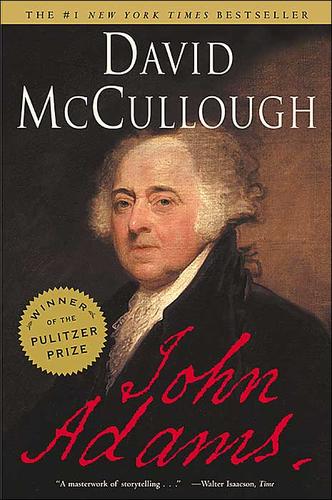
David McCullough's biography of John Adams, published in 2001, was a commercial phenomenon that spent years on bestseller lists and won the Pulitzer Prize.
David McCullough · 2001 · 18h 45m
Full summary and key takeaways →The 12 questions
- 1.
McCullough has been criticized for writing too sympathetically. Where in the biography do you feel his admiration shaping what he includes and what he minimizes?
- 2.
Adams kept the country out of war at significant political cost. What does the ability to absorb short-term loss for long-term benefit look like in political leadership today?
- 3.
The Adams-Abigail correspondence is extraordinary. What does it reveal about the relationship between private partnership and public service?
- 4.
How does Adams's defense of the Boston Massacre soldiers connect to his later constitutional thinking?
- 5.
Hamilton effectively controlled Adams's cabinet. What does that episode suggest about executive authority and cabinet loyalty?
- 6.
Adams was genuinely skeptical of popular democracy. Is that skepticism a liability or a useful counterweight in the founding era's arguments about government?
- 7.
The Alien and Sedition Acts allow prosecution of speech critical of the government. How does McCullough's treatment of that episode sit with his generally favorable portrait?
- 8.
What does Adams's vice presidency under Washington — a position he found deeply frustrating — reveal about the original design of that office?
- 9.
Adams and Jefferson reconciled in old age after years of bitterness. What made that reconciliation possible, and what does it say about the political nature of their earlier conflict?
- 10.
McCullough relies heavily on letters. How does reading a biography built around personal correspondence differ from reading one built around public documents and political analysis?
- 11.
Adams is often described as too honest for politics. Is that an admirable trait or a failure of practical judgment?
- 12.
What does this biography tell you about being the second of anything — the second president, the second founding father, the man who came after Washington?
How to run the discussion
- Pick six to eight, not all of them. An hour of real discussion covers fewer questions than anyone expects, and racing the list is what makes a book club feel like homework.
- Open with what people noticed, not what they concluded. Asking for a verdict first hardens opinions before anyone has heard each other.
- Let the disagreement run. The questions below that split a room are the ones worth the time; the ones everyone answers the same way can be skipped.
- Ask the quiet person a specific question. A direct, narrow question is far easier to answer than an open invitation to contribute.
Themes worth steering toward
If the conversation stalls, these are the threads that usually restart it.
Common questions
What are good book club questions for John Adams?
Here are 12 book club questions for John Adams by David McCullough, ordered to open easily and end somewhere worth arguing about. The strongest openers ask what each reader noticed rather than what they concluded, and the discussion usually turns on founding era, political courage, marriage and partnership.
How long should a book club discussion of John Adams last?
Most groups run 60 to 90 minutes of actual discussion. That is roughly six to eight questions, not all of them, so pick the ones that suit your group rather than working down the list in order.
What are the main themes in John Adams?
Founding era, Political courage, Marriage and partnership, Constitutional government, Legacy. Those are the threads most likely to divide a room, which makes them the useful places to steer a discussion that has gone quiet.
Picking the next one? See books like John Adams or questions for other book club picks.
