On Writing: A Memoir of the Craft by Stephen King is a 2000 memoir book about writing, creativity, craft. Read a great deal and write a great deal. These two habits, practiced consistently over years, are the foundation of everything else King teaches.
Summary
On Writing is Stephen King's memoir of the writing life combined with a practical toolkit for writers. The book is structured in three parts: C.V. (an autobiographical account of his early life and the experiences that shaped him as a writer), Toolbox (the craft fundamentals), and On Writing (the practice of the craft itself). King completed the book after being nearly killed by a van while walking on a rural Maine road; the final section, written during his recovery, describes both the accident and his return to writing.
The autobiographical sections are the most widely beloved. King describes his childhood reading and writing obsessions, his early rejection letters, his years of financial struggle, his marriage to novelist Tabitha King, and the drinking and drug use that consumed most of his most productive early period. The personal material is vivid and honest in a way that makes the subsequent craft advice feel earned rather than prescriptive.
The toolbox section gives King's fundamentals: read a great deal, write a great deal, avoid passive voice and adverbs, write with the door closed (first draft) and with the door open (revision). King's vocabulary instruction — building a toolbox of strong verbs, specific nouns, precise adjectives — is among the most practically useful writing advice available in any single book.
King is explicit about his process: he writes two thousand words per day, every day, and has done so for decades. He doesn't outline; he writes toward the situation and lets characters and story emerge. He reads constantly, in every genre, treating it as the professional baseline rather than a hobby. On Writing functions as both a specific craft guide and a meditation on what it means to commit seriously to a discipline over the course of a life.
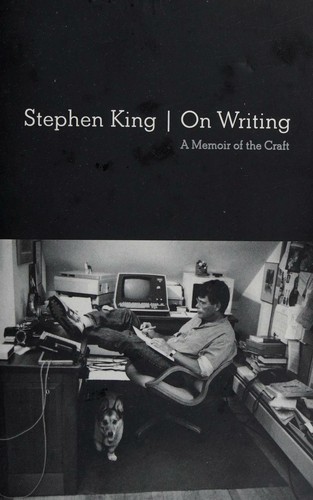
Talk to On Writing: A Memoir of the Craft like its author wrote you back.
Get the ideas that fit your life — not generic summaries.
- Chat with the book
- Audiobook-style main ideas
- Adapts to your life and goals
- Helps you take action
Key takeaways
- 1.
Read a great deal and write a great deal. These two habits, practiced consistently over years, are the foundation of everything else King teaches.
- 2.
The first draft should be written with the door closed — for yourself only, without an imagined audience. The second draft opens the door and invites the reader in.
- 3.
Kill adverbs. They are typically the sign of a weak verb. Replacing 'whispered softly' with 'murmured' makes the prose stronger. The same logic applies to passive constructions.
- 4.
Plot is a last resort — it produces mechanical, predictable fiction. King's preferred approach is to put interesting characters in a difficult situation and watch what they do.
- 5.
Two thousand words per day, every day. Not when inspired, not on a schedule of convenience, but daily. This is the discipline behind King's extraordinary output.
- 6.
The writer's toolbox has levels: vocabulary, grammar, style, and the hardest to teach — the elements of storytelling itself. You build the toolbox before you need to draw on it.
- 7.
Revision is where writing happens. The first draft is excavation; the second draft is craftsmanship. Don't revise until the first draft is complete.
- 8.
Writing is telepathy: you take what is in your mind and transfer it, as vividly and precisely as possible, into the reader's mind. Specificity and sensory detail are the transmission mechanism.
Discussion questions
Use these on your own, with a book club, or as chat starters in Superbook. Book club version, ready to copy or print →
- 1.
King says to write two thousand words per day, every day, not just when you feel inspired. What does your current writing or creative practice schedule look like? Is it daily?
- 2.
He argues that the first draft should be written for yourself only. Where do you carry an imagined audience while writing that you could put down?
- 3.
King's advice to kill adverbs and passive constructions is about the strength of the underlying verb. Look at something you've written recently. How many adverbs could be replaced with stronger verbs?
- 4.
He describes his years of drinking as both creatively productive and existentially destructive. What does his story suggest about the relationship between creative intensity and personal cost?
- 5.
King doesn't outline. He starts with a situation, populates it with characters, and follows. What does that approach suggest about trust in the process versus control of the outcome?
- 6.
On Writing was completed after King was nearly killed. How does proximity to death appear in the book, and how does it affect how you read the advice?
- 7.
He says revision is where writing actually happens. How does your own revision process compare to what King describes? Do you revise too early or not enough?
- 8.
King reads constantly — hundreds of books a year — treating it as professional baseline. How much do you read in the field you work in or create in? Is that reading feeding your output?
- 9.
His toolbox metaphor suggests that craft is built before it's needed. What is the equivalent of vocabulary and grammar in your professional or creative field? Are you building it?
- 10.
The autobiographical sections reveal that King wrote some of his best books while barely functional from substance abuse. What does that suggest about the relationship between the quality of a life and the quality of creative output?
- 11.
King says writing is telepathy — transferring a specific mental image into another mind. What do you lose in transmission? What specific and concrete details could you add to your most important written communication?
Themes
Frequently asked questions
-
Is On Writing worth reading even if you're not interested in fiction?
Yes. The craft principles — specificity, strong verbs, active voice, reading widely — apply to any written communication. The autobiographical sections are compelling regardless of your genre interests. Many professional writers in fields other than fiction cite it as the most useful writing book they've read.
-
How long does it take to read On Writing?
About four to five hours. The book is well-paced and the autobiographical sections pull you forward. It can be read straight through in a long sitting.
-
What is the most useful craft advice in On Writing?
The adverb rule is the most immediately applicable: find every adverb in your writing, ask whether it's compensating for a weak verb, and replace the verb. This single exercise produces a measurable improvement in most people's writing.
-
How does On Writing compare to Bird by Bird?
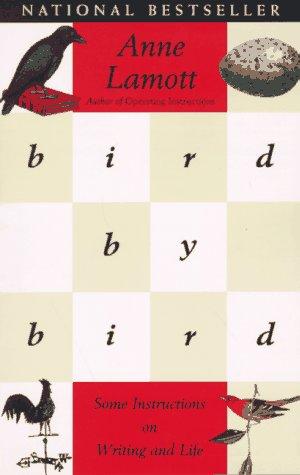
Both are memoir-plus-craft-instruction. King is more technically focused — the toolbox metaphor structures specific craft advice. Lamott is more psychologically focused on the experience of writing and the management of fear. King's voice is more declarative; Lamott's is more confessional. Both are excellent.
-
Who should read On Writing?
Anyone who writes regularly — fiction, nonfiction, essays, or professional writing — and wants to improve the clarity and specificity of their prose. Also recommended for anyone interested in the biography of a writer who developed extraordinary discipline over a lifetime.