Memoir · Book club
Just Mercy: A Story of Justice and Redemption book club questions
Here are 11 book club questions for Just Mercy: A Story of Justice and Redemption by Bryan Stevenson, ordered to open easily and end somewhere worth arguing about. Copy them, print them, or bring them up one at a time.
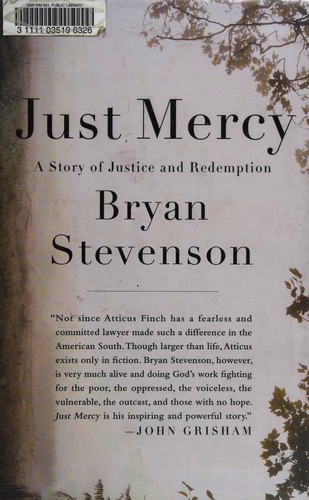
Bryan Stevenson's memoir of his career as a capital defense attorney in Alabama, and specifically of his years working on the case of Walter McMillian — a Black man wrongly convicted of murder and sentenced to death in Monroe County, Alabama — is simultaneously a riveting legal narrative and a sustained moral argument about the American criminal justice system's treatment of the poor and of Black defendants.
Bryan Stevenson · 2014 · 6h 40m
Full summary and key takeaways →The 11 questions
- 1.
Stevenson argues that proximity to suffering creates moral obligation. Do you agree? What are the limits of that obligation?
- 2.
The McMillian case involved multiple instances of prosecutorial misconduct. What does the book suggest about accountability for prosecutors who act badly?
- 3.
Stevenson asks readers to consider whether a society can be judged by how it treats its most vulnerable members. What is your answer to that question based on what the book documents?
- 4.
The book advocates against life sentences for children. What is your view of that position? Does the book convince you?
- 5.
Stevenson is a successful Harvard-trained lawyer who chose to work on behalf of people who had no other advocates. What does that choice suggest about legal education and professional identity?
- 6.
The death penalty is the backdrop of most of the cases in the book. Does the book argue for abolition? Does it need to?
- 7.
Walter McMillian was innocent of the crime for which he was convicted. Are there cases in the book where the client may have been guilty? How does Stevenson handle those?
- 8.
The book ends with some victories and many ongoing losses. Is it a hopeful book or a discouraging one?
- 9.
Just Mercy was widely assigned in college courses after its publication. What does it contribute to a student's education that a course in criminal law might not?
- 10.
Stevenson describes experiences of racial profiling and disrespect that he experienced personally as a Black professional. What do those personal experiences add to a book primarily about his clients?
- 11.
What does the book suggest about the role of individual lawyers in producing systemic change?
How to run the discussion
- Pick six to eight, not all of them. An hour of real discussion covers fewer questions than anyone expects, and racing the list is what makes a book club feel like homework.
- Open with what people noticed, not what they concluded. Asking for a verdict first hardens opinions before anyone has heard each other.
- Let the disagreement run. The questions below that split a room are the ones worth the time; the ones everyone answers the same way can be skipped.
- Ask the quiet person a specific question. A direct, narrow question is far easier to answer than an open invitation to contribute.
Themes worth steering toward
If the conversation stalls, these are the threads that usually restart it.
Common questions
What are good book club questions for Just Mercy: A Story of Justice and Redemption?
Here are 11 book club questions for Just Mercy: A Story of Justice and Redemption by Bryan Stevenson, ordered to open easily and end somewhere worth arguing about. The strongest openers ask what each reader noticed rather than what they concluded, and the discussion usually turns on justice, race, law.
How long should a book club discussion of Just Mercy: A Story of Justice and Redemption last?
Most groups run 60 to 90 minutes of actual discussion. That is roughly six to eight questions, not all of them, so pick the ones that suit your group rather than working down the list in order.
What are the main themes in Just Mercy: A Story of Justice and Redemption?
Justice, Race, Law, Mercy, Poverty. Those are the threads most likely to divide a room, which makes them the useful places to steer a discussion that has gone quiet.
Picking the next one? See books like Just Mercy: A Story of Justice and Redemption or questions for other book club picks.
