Literary fiction · Book club
Kafka on the Shore book club questions
Here are 12 book club questions for Kafka on the Shore by Haruki Murakami, ordered to open easily and end somewhere worth arguing about. Copy them, print them, or bring them up one at a time.
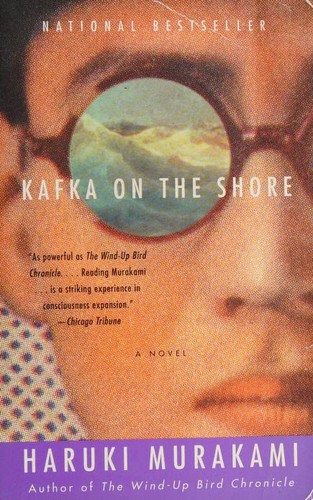
Kafka on the Shore runs two parallel narratives that eventually, obliquely, converge.
Haruki Murakami · 2002 · 11h 0m
Full summary and key takeaways →The 12 questions
- 1.
Kafka is told he will kill his father and sleep with his mother and sister. Does he? The novel is deliberately ambiguous. What do you think happened, and does the ambiguity matter?
- 2.
Nakata can talk to cats but cannot read. What is Murakami saying about different kinds of knowledge and perception through that contrast?
- 3.
The novel is full of Western cultural references — Beethoven, Kafka, Carver. What does it mean that Murakami uses these as building blocks for a story that is distinctly Japanese?
- 4.
Oshima is a transgender man who acts as Kafka's guide. The novel treats his gender with relative matter-of-factness for 2002. Does that characterization feel complete to you, or does Oshima serve more as an archetype than a person?
- 5.
The narrative threads don't fully converge or resolve. Did that frustrate you, or did it feel right for the kind of story Murakami is telling?
- 6.
Colonel Sanders as a philosophical figure in a raincoat is one of the novel's stranger inventions. What does it add that a more conventional character couldn't?
- 7.
Saeki is a woman frozen in grief for a dead lover. How does her story mirror and comment on Kafka's? What are the two of them to each other?
- 8.
The wartime incident that damaged Nakata is described obliquely through a soldier's testimony and never fully explained. What is Murakami doing with that piece of history?
- 9.
Compare Kafka on the Shore to Norwegian Wood as Murakami novels. What happens when you take away the realism and replace it with dream-logic — what do you lose and what do you gain?
- 10.
The novel suggests that entering a certain deep place in yourself requires crossing into another world and that the crossing is dangerous. Does that feel like a meaningful metaphor or just a plot conceit?
- 11.
What does the title mean? Kafka is on the shore. But which shore, and looking at what?
- 12.
If you could ask Murakami one question about this novel, what would it be? And what answer do you think he'd give?
How to run the discussion
- Pick six to eight, not all of them. An hour of real discussion covers fewer questions than anyone expects, and racing the list is what makes a book club feel like homework.
- Open with what people noticed, not what they concluded. Asking for a verdict first hardens opinions before anyone has heard each other.
- Let the disagreement run. The questions below that split a room are the ones worth the time; the ones everyone answers the same way can be skipped.
- Ask the quiet person a specific question. A direct, narrow question is far easier to answer than an open invitation to contribute.
Themes worth steering toward
If the conversation stalls, these are the threads that usually restart it.
Common questions
What are good book club questions for Kafka on the Shore?
Here are 12 book club questions for Kafka on the Shore by Haruki Murakami, ordered to open easily and end somewhere worth arguing about. The strongest openers ask what each reader noticed rather than what they concluded, and the discussion usually turns on fate and free will, memory and loss, oedipal myth.
How long should a book club discussion of Kafka on the Shore last?
Most groups run 60 to 90 minutes of actual discussion. That is roughly six to eight questions, not all of them, so pick the ones that suit your group rather than working down the list in order.
What are the main themes in Kafka on the Shore?
Fate and free will, Memory and loss, Oedipal myth, The unconscious, Coming of age. Those are the threads most likely to divide a room, which makes them the useful places to steer a discussion that has gone quiet.
Picking the next one? See books like Kafka on the Shore or questions for other book club picks.
