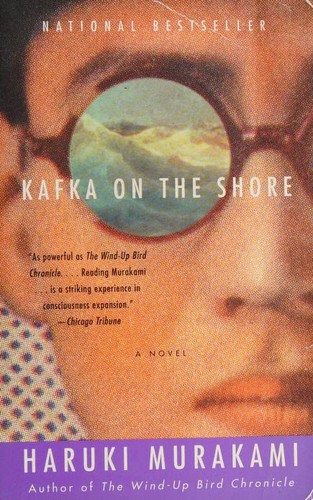
Kafka on the Shore by Haruki Murakami is a 2002 literary fiction book about fate and free will, memory and loss, oedipal myth. The novel's dream-logic is not a failure of plotting but a deliberate formal choice: some things cannot be explained because they are not the kind of thing that explains.
Summary
Kafka on the Shore runs two parallel narratives that eventually, obliquely, converge. Kafka Tamura is fifteen years old and has run away from his Tokyo home to escape a curse his father placed on him — that he will kill his father and sleep with his mother and sister. He ends up in a private library in Takamatsu, where he encounters a woman named Saeki who may or may not be his mother, and another named Oshima who becomes his guide. Meanwhile, Nakata is an elderly man in Tokyo who lost his memory and much of his mind in a mysterious wartime incident and can now talk to cats. He is being drawn, with no understanding of why, toward the same library and the same metaphysical event.
The novel operates in the space where the unconscious meets waking life — which is to say, where ordinary reality starts to come apart. Raining fish and raining leeches. Cats that converse about the weather. A spirit in a painting. A mysterious stone that can open an entrance between worlds. Murakami is drawing on Kafka (the Metamorphosis-era strangeness, the implacable dream-logic), on Greek tragedy, and on Japanese folk religion, mixing them with the usual signifiers of his particular world: jazz, whiskey, Raymond Carver, Johnnie Walker as a sinister figure.
The novel is long and deliberately refuses resolution. Some threads are abandoned. Some questions receive answers that only open further questions. This is a feature rather than a bug — Murakami believes the unconscious doesn't resolve, and the form enacts the content. For some readers this is the entire point: a novel that functions like a waking dream, evading interpretation precisely as dreams do. For others it is maddening.
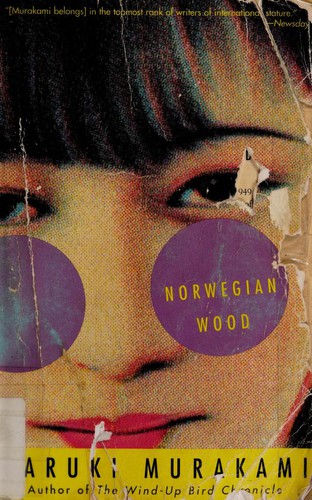
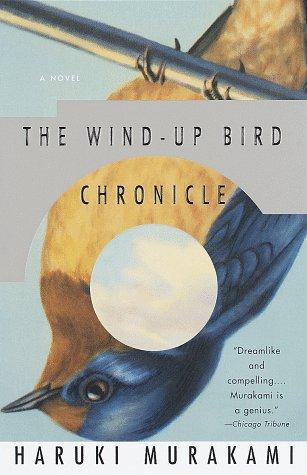
Kafka on the Shore requires more patience and tolerance for ambiguity than Norwegian Wood, and arguably more than The Wind-Up Bird Chronicle, which has at least the skeleton of a mystery. If you come in wanting to understand what happened, you will leave partly satisfied and partly not. If you come in willing to be moved and unsettled, this is one of Murakami's most powerful books.
Talk to Kafka on the Shore like its author wrote you back.
Get the ideas that fit your life — not generic summaries.
- Chat with the book
- Audiobook-style main ideas
- Adapts to your life and goals
- Helps you take action
Key takeaways
- 1.
The novel's dream-logic is not a failure of plotting but a deliberate formal choice: some things cannot be explained because they are not the kind of thing that explains.
- 2.
Kafka's flight from an Oedipal prophecy sets up the central irony — the harder he runs from fate, the more directly he moves toward it.
- 3.
Nakata functions as a kind of innocent through the novel's chaos: the man who lost his intellect but retained something else, a kind of rightness, that guides him where understanding cannot.
- 4.
Murakami saturates the novel with Western cultural references — jazz, classical music, American literature — as a way of rendering modern Japan's relationship to the culture it absorbed and transformed.
- 5.
The library as a sanctuary recurs in Murakami's work; here it is both a literal place of refuge and an entrance to something else entirely.
- 6.
Colonel Sanders appearing as a pimp-philosopher is one of the novel's most audacious moves — Murakami uses pop culture iconography as raw material for myth.
- 7.
The stone that can open gates between worlds is the novel's key plot object, but what it finally means is left genuinely open — Murakami is not explaining his metaphysics.
- 8.
By the end, Kafka has crossed some kind of threshold. Whether he returns to ordinary life changed or returns to life at all is the question the novel poses without fully answering.
Discussion questions
Use these on your own, with a book club, or as chat starters in Superbook. Book club version, ready to copy or print →
- 1.
Kafka is told he will kill his father and sleep with his mother and sister. Does he? The novel is deliberately ambiguous. What do you think happened, and does the ambiguity matter?
- 2.
Nakata can talk to cats but cannot read. What is Murakami saying about different kinds of knowledge and perception through that contrast?
- 3.
The novel is full of Western cultural references — Beethoven, Kafka, Carver. What does it mean that Murakami uses these as building blocks for a story that is distinctly Japanese?
- 4.
Oshima is a transgender man who acts as Kafka's guide. The novel treats his gender with relative matter-of-factness for 2002. Does that characterization feel complete to you, or does Oshima serve more as an archetype than a person?
- 5.
The narrative threads don't fully converge or resolve. Did that frustrate you, or did it feel right for the kind of story Murakami is telling?
- 6.
Colonel Sanders as a philosophical figure in a raincoat is one of the novel's stranger inventions. What does it add that a more conventional character couldn't?
- 7.
Saeki is a woman frozen in grief for a dead lover. How does her story mirror and comment on Kafka's? What are the two of them to each other?
- 8.
The wartime incident that damaged Nakata is described obliquely through a soldier's testimony and never fully explained. What is Murakami doing with that piece of history?
- 9.
Compare Kafka on the Shore to Norwegian Wood as Murakami novels. What happens when you take away the realism and replace it with dream-logic — what do you lose and what do you gain?
- 10.
The novel suggests that entering a certain deep place in yourself requires crossing into another world and that the crossing is dangerous. Does that feel like a meaningful metaphor or just a plot conceit?
- 11.
What does the title mean? Kafka is on the shore. But which shore, and looking at what?
- 12.
If you could ask Murakami one question about this novel, what would it be? And what answer do you think he'd give?
Themes
Frequently asked questions
-
Is Kafka on the Shore hard to understand?
Deliberately yes. The novel operates in dream-logic and does not resolve its central mysteries. If you go in expecting explanations, you will be frustrated. If you go in treating it as a waking dream rather than a puzzle, it works magnificently. Don't try to pin down what happened — try to feel what it means.
-
What is Kafka on the Shore about, without spoilers?
Two parallel stories: a teenage boy who has run away from home to escape a prophecy, and an elderly man with no memory who can talk to cats and is being pulled toward a mysterious destination. Their stories converge in a private library in Takamatsu, where something metaphysical is happening.
-
Should I read Norwegian Wood before Kafka on the Shore?
No. They are entirely separate novels with no shared characters or world. Norwegian Wood is realistic; Kafka on the Shore is surrealist. They showcase different sides of Murakami's range. Some readers find Norwegian Wood a gentler entry point; others prefer to start with the magical realism.
-
Who shouldn't read Kafka on the Shore?
Readers who need plot to resolve, who become angry when novels don't explain themselves, or who prefer realism. This is a long novel that deliberately refuses to tell you what happened or what it means. That is the experience Murakami is offering.
-
Is there a film adaptation of Kafka on the Shore?
A Japanese television miniseries was broadcast in 2022. It was received warmly in Japan, though the novel's surrealist elements are inherently difficult to adapt. No theatrical film adaptation has been made.