History · Book club
Killers of the Flower Moon book club questions
Here are 12 book club questions for Killers of the Flower Moon by David Grann, ordered to open easily and end somewhere worth arguing about. Copy them, print them, or bring them up one at a time.
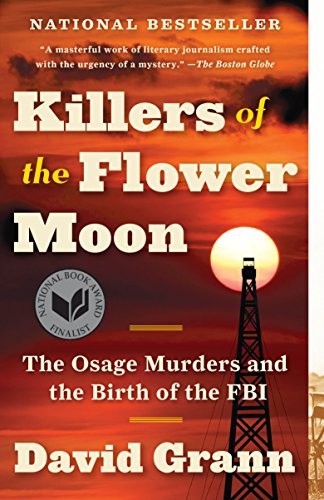
In the 1920s, members of the Osage Nation in northeastern Oklahoma were being murdered.
David Grann · 2017 · 6h 45m
Full summary and key takeaways →The 12 questions
- 1.
Grann argues that the murders were enabled by a whole structure of institutions and individuals, not just a few killers. At what point does diffuse complicity become collective responsibility?
- 2.
The guardian system was designed, at least on paper, to protect Osage interests. What does its actual function tell us about the relationship between paternalism and exploitation?
- 3.
William Hale cultivated genuine relationships with the Osage families he was targeting. How does that fact change how you think about trust and betrayal?
- 4.
The FBI used the Osage case to build its reputation. How much of the justice achieved was real, and how much was institutional self-promotion?
- 5.
Grann's final section reveals that the official narrative of the investigation was incomplete. Have you ever discovered that a story you accepted — historical or personal — was missing its most important part?
- 6.
The Osage were among the wealthiest people per capita in the world in the 1920s. Did that wealth protect them, expose them to more danger, or both?
- 7.
Several Osage survivors spent years trying to get investigators to take the deaths seriously. What does it take for an institution to finally pay attention to a community it has been ignoring?
- 8.
Grann describes killers who functioned normally in daily life — attending church, helping neighbors — while conducting murders. How do you make sense of that kind of compartmentalization?
- 9.
The book ends without full resolution. Is that honest, or does it leave too much unfinished? What would genuine resolution even look like for the Osage Nation?
- 10.
The local press in Oklahoma largely ignored or minimized the murders. What conditions make journalism complicit in covering up wrongdoing rather than exposing it?
- 11.
Grann is a white journalist writing about crimes committed against a Native community. Where do you think he handles that position well, and where does it show as a limitation?
- 12.
If the full scale of the murders had been prosecuted, do you think the outcome would have changed the trajectory of federal policy toward Native Americans? Why or why not?
How to run the discussion
- Pick six to eight, not all of them. An hour of real discussion covers fewer questions than anyone expects, and racing the list is what makes a book club feel like homework.
- Open with what people noticed, not what they concluded. Asking for a verdict first hardens opinions before anyone has heard each other.
- Let the disagreement run. The questions below that split a room are the ones worth the time; the ones everyone answers the same way can be skipped.
- Ask the quiet person a specific question. A direct, narrow question is far easier to answer than an open invitation to contribute.
Themes worth steering toward
If the conversation stalls, these are the threads that usually restart it.
Common questions
What are good book club questions for Killers of the Flower Moon?
Here are 12 book club questions for Killers of the Flower Moon by David Grann, ordered to open easily and end somewhere worth arguing about. The strongest openers ask what each reader noticed rather than what they concluded, and the discussion usually turns on systemic injustice, greed, native american history.
How long should a book club discussion of Killers of the Flower Moon last?
Most groups run 60 to 90 minutes of actual discussion. That is roughly six to eight questions, not all of them, so pick the ones that suit your group rather than working down the list in order.
What are the main themes in Killers of the Flower Moon?
Systemic injustice, Greed, Native American history, True crime, Institutional failure. Those are the threads most likely to divide a room, which makes them the useful places to steer a discussion that has gone quiet.
Picking the next one? See books like Killers of the Flower Moon or questions for other book club picks.
