Killers of the Flower Moon by David Grann is a 2017 history book about systemic injustice, greed, native american history. The Osage murders were not a crime wave but an organized campaign. William Hale and his associates targeted specific families to acquire headrights — the inherited rights to Osage oil income.
Summary
In the 1920s, members of the Osage Nation in northeastern Oklahoma were being murdered. The Osage had become fabulously wealthy after oil was discovered beneath their reservation, and that wealth made them targets. By conservative estimates, dozens of Osage were killed over roughly a decade. Families were poisoned, shot, and blown up. Lawyers and guardians appointed to manage Osage finances stole from them systematically. The deaths were barely investigated and rarely prosecuted. David Grann's book reconstructs this period from court records, family papers, and decades of archival research, asking not only who committed the crimes but how an entire community could be plundered in plain sight.
The investigation that finally brought some accountability became one of the first major cases for the Bureau of Investigation, the predecessor to the FBI. J. Edgar Hoover, newly placed in charge and desperate to prove the agency was more than a patronage operation, sent a young agent named Tom White to Oklahoma. White's approach was methodical and unglamorous: cultivating informants, earning the trust of Osage witnesses, slowly assembling a case that the local law had refused to build. Grann traces White's investigation with the pacing of a thriller, though the real story keeps complicating the clean narrative of a federal rescuer arriving to set things right.
The figure who anchors the book is William Hale, a rancher and self-styled "King of the Osage Hills" who spent years building a reputation as a friend to the Osage while orchestrating their murders for inheritance money. Hale's ability to present himself as a benefactor while running a murder conspiracy is the psychological center of the book. Grann is measured about what this reveals — not a single monster but a structure in which white settlers, local officials, and federal indifference all participated in or enabled what he frames as a systematic campaign of killing.
The final section changes register. Grann discovered, through his own reporting, that the FBI's successful prosecution of a handful of men barely scratched the surface. The death toll was likely far higher than official counts, and most killers were never charged. This pivot complicates the story Grann thought he was telling — and the story the FBI has told about itself — in ways the reader feels as a slow deflation. The book ends not with resolution but with a reckoning that the Osage themselves have had to carry largely alone.
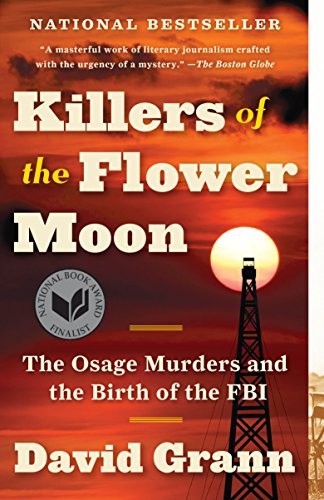
Talk to Killers of the Flower Moon like its author wrote you back.
Get the ideas that fit your life — not generic summaries.
- Chat with the book
- Audiobook-style main ideas
- Adapts to your life and goals
- Helps you take action
Key takeaways
- 1.
The Osage murders were not a crime wave but an organized campaign. William Hale and his associates targeted specific families to acquire headrights — the inherited rights to Osage oil income.
- 2.
The "Indian guardian" system, which required many Osage to have white-appointed financial overseers, was not incidental to the killings. It was part of the same structure of dispossession.
- 3.
The early Bureau of Investigation lacked both legitimacy and competence. The Osage case was in part an institutional audition for the agency that would become the FBI, with Hoover shaping the story to serve that purpose.
- 4.
Tom White's success depended on going against type: an undercover operation, patient witness cultivation, and a willingness to listen to the Osage rather than around them.
- 5.
Grann's own investigation found that the official body count was almost certainly too low. Many deaths ruled natural or accidental were likely murders that were never investigated.
- 6.
The perpetrators were integrated into Osage social life. Hale was a church deacon, a friend of the families he was killing, and a man who attended the funerals of his victims.
- 7.
The crimes were enabled at every level: local sheriffs, insurance companies, lawyers, and politicians all had reasons to look away or actively cooperate.
- 8.
Reckoning with this history requires confronting that most of it went unpunished, and that the partial justice achieved was used to close the case rather than deepen the investigation.
Discussion questions
Use these on your own, with a book club, or as chat starters in Superbook. Book club version, ready to copy or print →
- 1.
Grann argues that the murders were enabled by a whole structure of institutions and individuals, not just a few killers. At what point does diffuse complicity become collective responsibility?
- 2.
The guardian system was designed, at least on paper, to protect Osage interests. What does its actual function tell us about the relationship between paternalism and exploitation?
- 3.
William Hale cultivated genuine relationships with the Osage families he was targeting. How does that fact change how you think about trust and betrayal?
- 4.
The FBI used the Osage case to build its reputation. How much of the justice achieved was real, and how much was institutional self-promotion?
- 5.
Grann's final section reveals that the official narrative of the investigation was incomplete. Have you ever discovered that a story you accepted — historical or personal — was missing its most important part?
- 6.
The Osage were among the wealthiest people per capita in the world in the 1920s. Did that wealth protect them, expose them to more danger, or both?
- 7.
Several Osage survivors spent years trying to get investigators to take the deaths seriously. What does it take for an institution to finally pay attention to a community it has been ignoring?
- 8.
Grann describes killers who functioned normally in daily life — attending church, helping neighbors — while conducting murders. How do you make sense of that kind of compartmentalization?
- 9.
The book ends without full resolution. Is that honest, or does it leave too much unfinished? What would genuine resolution even look like for the Osage Nation?
- 10.
The local press in Oklahoma largely ignored or minimized the murders. What conditions make journalism complicit in covering up wrongdoing rather than exposing it?
- 11.
Grann is a white journalist writing about crimes committed against a Native community. Where do you think he handles that position well, and where does it show as a limitation?
- 12.
If the full scale of the murders had been prosecuted, do you think the outcome would have changed the trajectory of federal policy toward Native Americans? Why or why not?
Themes
Frequently asked questions
-
Is Killers of the Flower Moon worth reading?
Yes, particularly if you read narrative nonfiction for the quality of the research as much as the story. Grann's writing is controlled and the archival work is exceptional. The book's real strength is that it refuses to let the story end where the official record ends, which makes it more unsettling than most true crime.
-
How long does it take to read Killers of the Flower Moon?
Around six to seven hours for the roughly 400-page book. The pacing is close to a thriller in the middle section, which makes it easy to read in long sittings. The opening chapters require more patience as Grann establishes the historical context.
-
What is Killers of the Flower Moon about?
The systematic murder of members of the Osage Nation in 1920s Oklahoma, carried out to steal their oil wealth, and the early FBI investigation that prosecuted a handful of the killers. Grann's reporting shows the actual scope of the killing was far larger than the official case acknowledged.
-
Who should read this book?
Readers of narrative nonfiction and true crime, as well as anyone interested in American history, federal law enforcement history, or the treatment of Native Americans in the twentieth century. It also works as a case study in how institutions construct self-serving narratives around their own actions.
-
How does the book differ from the Scorsese film?
The film centers on Mollie Burkhart and Ernest Burkhart's marriage, giving it a personal emotional core. The book gives more space to Tom White's investigation and to Grann's own reporting in the final section, which revealed the murders were far more extensive than the prosecution captured.
Similar books
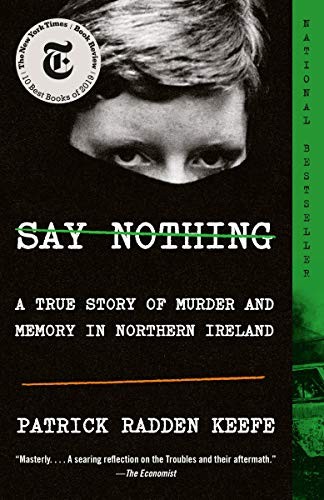
Say Nothing: A True Story of Murder and Memory in Northern Ireland
Patrick Radden Keefe
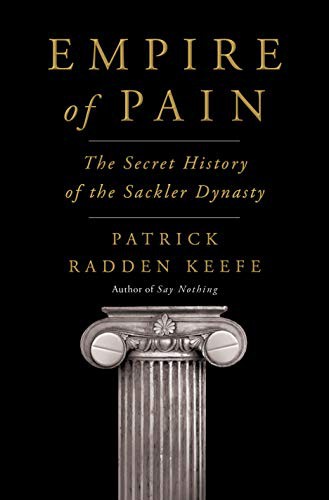
Empire of Pain: The Secret History of the Sackler Dynasty
Patrick Radden Keefe
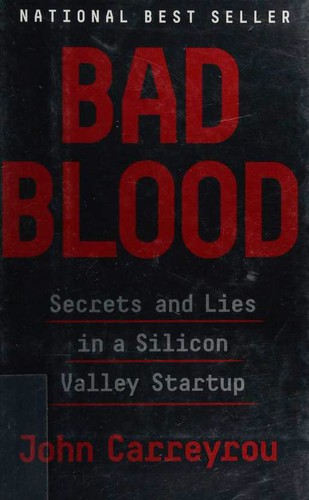
Bad Blood: Secrets and Lies in a Silicon Valley Startup
John Carreyrou
The Devil in the White City
Erik Larson
