Thriller · Book club
Killing Floor book club questions
Here are 12 book club questions for Killing Floor by Lee Child, ordered to open easily and end somewhere worth arguing about. Copy them, print them, or bring them up one at a time.
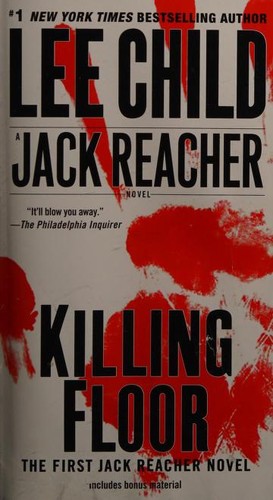
Jack Reacher has just left the Army after thirteen years as a military policeman.
Lee Child · 1997 · 8h 0m
Full summary and key takeaways →The 12 questions
- 1.
Reacher's response to his brother's death is violent and decisive. Does the novel frame that response as justice, revenge, or something it refuses to distinguish between?
- 2.
The town of Margrave is complicit in its own corruption — bought at every level. How does that collective guilt compare to a single villain's individual responsibility?
- 3.
Reacher is a fantasy figure in obvious ways. Does the fantasy feel troubling, cathartic, or both? Where does wish fulfillment end and something more interesting begin?
- 4.
Child describes physical confrontation with unusual precision and length. Does that specificity make the violence more or less disturbing than in novels that summarize it?
- 5.
Reacher has no home, no family, no address. Is that freedom or damage? Does the novel take a position?
- 6.
The counterfeiting operation corrupts civic institutions from the inside. How does that model of systemic crime compare to the random individual violence of other crime novels?
- 7.
Roscoe, the local detective who becomes Reacher's ally, is one of the more competent law enforcement figures in the series. How does her presence change the lone-wolf dynamics?
- 8.
Reacher is a former military policeman investigating a case involving military connections. Does his background feel like an asset to the story, or primarily a justification for his skill set?
- 9.
The novel's setup — wrongful arrest, murdered brother — is fairly conventional. What does Child do in the execution that makes it feel less conventional than its skeleton?
- 10.
If Reacher called the FBI immediately after his brother was identified, the case would presumably have proceeded differently. Does the novel acknowledge that, and does it matter?
- 11.
Killing Floor was Child's first novel. Compared to what you know about the later Reacher books — does this feel like a first attempt, or fully formed?
- 12.
The ending resolves everything with finality. Is that satisfying or does it feel too clean given the scale of what happened?
How to run the discussion
- Pick six to eight, not all of them. An hour of real discussion covers fewer questions than anyone expects, and racing the list is what makes a book club feel like homework.
- Open with what people noticed, not what they concluded. Asking for a verdict first hardens opinions before anyone has heard each other.
- Let the disagreement run. The questions below that split a room are the ones worth the time; the ones everyone answers the same way can be skipped.
- Ask the quiet person a specific question. A direct, narrow question is far easier to answer than an open invitation to contribute.
Themes worth steering toward
If the conversation stalls, these are the threads that usually restart it.
Common questions
What are good book club questions for Killing Floor?
Here are 12 book club questions for Killing Floor by Lee Child, ordered to open easily and end somewhere worth arguing about. The strongest openers ask what each reader noticed rather than what they concluded, and the discussion usually turns on justice outside institutions, american mythology and violence, brotherhood and loss.
How long should a book club discussion of Killing Floor last?
Most groups run 60 to 90 minutes of actual discussion. That is roughly six to eight questions, not all of them, so pick the ones that suit your group rather than working down the list in order.
What are the main themes in Killing Floor?
Justice outside institutions, American mythology and violence, Brotherhood and loss, Small-town corruption, Solitary versus community. Those are the threads most likely to divide a room, which makes them the useful places to steer a discussion that has gone quiet.
Picking the next one? See books like Killing Floor or questions for other book club picks.
