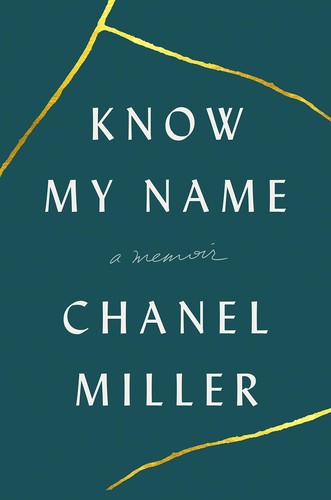
Know My Name: A Memoir by Chanel Miller is a 2019 memoir book about trauma, recovery, identity. Miller's decision to write under her own name was itself an act of reclamation: she had been defined by a crime committed against her for four years before the public knew who she was.
Summary
Know My Name is Chanel Miller's memoir of being sexually assaulted behind a dumpster at Stanford University in 2015, being identified publicly as only "Emily Doe" throughout the subsequent trial, and the experience of navigating a legal process while the perpetrator — Stanford swimmer Brock Turner — became the more visible subject of the story. When Turner's father wrote a letter to the judge describing the rape as "twenty minutes of action," Miller became the author of a victim impact statement that went viral worldwide after the sentencing.
The memoir reclaims Miller's identity and full story on her own terms. She was a twenty-two-year-old Chinese-American artist living with her parents and working a dead-end job when the assault happened. The book traces her life before — a childhood split between cultures, an early artistic sensibility, a family structure defined by warmth — and then the years after, when she existed in two simultaneous realities: the anonymous "Emily Doe" who appeared in news stories, and Chanel Miller, who went to work every day, went to therapy, and tried to stay whole while a trial consumed her.
Miller is a gifted prose writer, and Know My Name is not primarily an account of the assault or the trial. It's a book about the secondary injury of a legal process that treats the victim as a witness to someone else's story, the particular exhaustion of having to perform credibility for strangers, and the experience of rebuilding selfhood when the public narrative of your worst night travels further than you do. The sentences are precise and the anger is controlled, which makes the moments when it breaks through more affecting.
The book is difficult to read in places, but never exploitative. Miller writes about her parents, her sister Tiffany, and her boyfriend Lucas with deep affection and clarity about how their relationships were tested and survived. Know My Name is most importantly a book about who Chanel Miller is — the title is the point — not only what happened to her.
Talk to Know My Name: A Memoir like its author wrote you back.
Get the ideas that fit your life — not generic summaries.
- Chat with the book
- Audiobook-style main ideas
- Adapts to your life and goals
- Helps you take action
Key takeaways
- 1.
Miller's decision to write under her own name was itself an act of reclamation: she had been defined by a crime committed against her for four years before the public knew who she was.
- 2.
The victim impact statement she read at Turner's sentencing became one of the most widely circulated documents about sexual assault in modern memory, read by millions in a single day.
- 3.
The legal process, even when it produces a conviction, can feel like a second violation — requiring victims to prove credibility, to submit to cross-examination about their histories, and to become a supporting character in someone else's story.
- 4.
Secondary trauma — the exposure of family members, partners, and friends to the fallout from assault — runs through the book as a largely underdiscussed dimension of what rape actually costs.
- 5.
Miller's artistic identity — she is a visual artist — is central to how she survived and processed the experience; creativity is presented not as therapy but as a way of staying fully herself.
- 6.
The disparity in media coverage between Turner's sympathetic portraits and Miller's invisibility as 'Emily Doe' illustrates how easily narrative power aligns with institutional power.
- 7.
The Brock Turner case generated policy change in California: the state eliminated the lenient sentencing guidelines the judge used, and voters later recalled the judge.
- 8.
Healing is not linear and does not look like resolution. Miller documents setbacks, regressions, and the way trauma resurfaces without warning alongside genuine recovery.
Discussion questions
Use these on your own, with a book club, or as chat starters in Superbook. Book club version, ready to copy or print →
- 1.
Miller's memoir is fundamentally about being unnamed in your own story. Have you ever been in a situation where the narrative about you was controlled by someone else? How did you respond?
- 2.
The victim impact statement Miller wrote went viral without her choosing that. What is the difference between a story being shared as advocacy versus being shared as spectacle?
- 3.
Miller describes maintaining two simultaneous identities — Emily Doe in public and Chanel Miller in private — for years. What does that kind of sustained doubling cost?
- 4.
The book is explicit about the failures of the legal process even when it results in conviction. What does Miller's experience suggest needs to change in how the justice system handles sexual assault cases?
- 5.
Miller describes the specific pain of needing to prove her credibility to strangers. Why does the legal system place this burden on victims, and what would need to change to shift it?
- 6.
How does Miller's Chinese-American identity and family structure shape her experience both before the assault and in how she processes the aftermath?
- 7.
Miller writes that her artistic practice kept her from losing herself completely. What does that suggest about the role of creative work in surviving serious trauma?
- 8.
The book documents how Turner's father's letter, describing the assault as 'twenty minutes of action,' became a turning point in public response. What did that letter reveal about how sexual violence is minimized?
- 9.
Miller describes the support of her family and her partner Lucas as imperfect but crucial. What does genuine support look like in that kind of sustained crisis, based on what she describes?
- 10.
The judge who sentenced Turner was later recalled by California voters. Does that outcome feel like justice, partial justice, or something else entirely?
- 11.
Miller ends the book having published her memoir and gone public with her name. How does claiming authorship of your own story function differently from just having your side reported?
- 12.
Reading a memoir like this as a group: what responsibility do readers have to treat a survivor's written account differently from how they'd treat a news story about the same events?
Themes
Frequently asked questions
-
What is Know My Name about?
It's Chanel Miller's memoir of being sexually assaulted at Stanford in 2015, being known publicly only as 'Emily Doe' throughout the Brock Turner trial and sentencing, and then reclaiming her full identity and story on her own terms. It's as much about survival and selfhood as about the assault itself.
-
Is Know My Name a difficult read?
Yes, in places. Miller writes about trauma, legal proceedings, and prolonged psychological distress with precision and no softening. The prose is excellent but the subject matter is genuinely hard. Readers who have experienced sexual assault may want to approach it with care.
-
Who should read Know My Name?
Anyone interested in how the legal system treats sexual assault survivors, how public narrative and private identity diverge, or simply in exceptional memoir writing. It's taught widely in university courses on social justice, law, and literature.
-
What happened to Brock Turner after the trial?
Turner served three months of his six-month county jail sentence and was released in September 2016. He was required to register as a sex offender. The judge who sentenced him, Aaron Persky, was recalled by California voters in 2018 — the first recall of a California judge in eighty-six years.
-
Is Know My Name also about the family and relationships around Miller?
Substantially yes. Miller writes with care and depth about her parents, her sister Tiffany, and her boyfriend Lucas, and about how the prolonged trauma of the trial tested and changed those relationships. The book is explicitly not just about what happened to her but about who she is in full.