Business · Book club
Leadership and Self-Deception book club questions
Here are 11 book club questions for Leadership and Self-Deception by The Arbinger Institute, ordered to open easily and end somewhere worth arguing about. Copy them, print them, or bring them up one at a time.
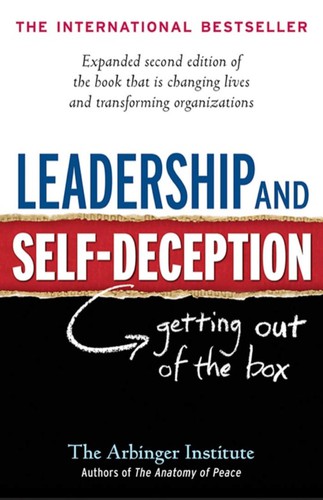
Leadership and Self-Deception is The Arbinger Institute's business fable about a leadership problem that most leaders don't recognize in themselves: the tendency to see other people as objects rather than as people.
The Arbinger Institute · 2000 · 4h 0m
Full summary and key takeaways →The 11 questions
- 1.
Think of someone at work you currently find difficult or frustrating. Apply the box concept: have you at any point failed to respond to that person as a person? How might that have started the dynamic?
- 2.
The book says you get in the box by betraying what you know you should do and then justifying it. Can you trace a specific example of this in your own experience?
- 3.
When you're in the box, your virtues inflate and the other person's flaws become vivid. Where in a current work relationship might this distortion be operating?
- 4.
The book argues that you can't get someone else out of the box — only yourself. How does this change how you think about conflicts you're currently in?
- 5.
The narrative format is unusual for a business book. Did it help or hinder your engagement with the ideas? What does the choice of format signal about how the authors think the ideas need to be absorbed?
- 6.
Where in your organization is there a persistent conflict or dysfunction that multiple attempts to fix haven't solved? Could a 'box' analysis explain why the interventions haven't worked?
- 7.
Getting out of the box requires seeing another person as having legitimate needs and perspectives. Is there a person in your professional life whose perspective you've genuinely tried to take recently? What did you learn?
- 8.
The book is primarily about work relationships, but the dynamic it describes applies in personal life too. Do you find the concepts easier or harder to apply at home than at work?
- 9.
Leadership and Self-Deception says the prerequisite for effective leadership is being out of the box. If that's true, what does it imply about leadership development programs that focus on skills rather than self-awareness?
- 10.
How do you know when you're in the box? What does it feel like from the inside, compared to what the book says it should feel like?
- 11.
If your whole team could read this book together and apply it honestly, what would change about how you work?
How to run the discussion
- Pick six to eight, not all of them. An hour of real discussion covers fewer questions than anyone expects, and racing the list is what makes a book club feel like homework.
- Open with what people noticed, not what they concluded. Asking for a verdict first hardens opinions before anyone has heard each other.
- Let the disagreement run. The questions below that split a room are the ones worth the time; the ones everyone answers the same way can be skipped.
- Ask the quiet person a specific question. A direct, narrow question is far easier to answer than an open invitation to contribute.
Themes worth steering toward
If the conversation stalls, these are the threads that usually restart it.
Common questions
What are good book club questions for Leadership and Self-Deception?
Here are 11 book club questions for Leadership and Self-Deception by The Arbinger Institute, ordered to open easily and end somewhere worth arguing about. The strongest openers ask what each reader noticed rather than what they concluded, and the discussion usually turns on self-awareness, leadership, organizational culture.
How long should a book club discussion of Leadership and Self-Deception last?
Most groups run 60 to 90 minutes of actual discussion. That is roughly six to eight questions, not all of them, so pick the ones that suit your group rather than working down the list in order.
What are the main themes in Leadership and Self-Deception?
Self-awareness, Leadership, Organizational culture, Conflict, Relationships. Those are the threads most likely to divide a room, which makes them the useful places to steer a discussion that has gone quiet.
Picking the next one? See books like Leadership and Self-Deception or questions for other book club picks.
