Business · Book club
Leading book club questions
Here are 12 book club questions for Leading by Alex Ferguson & Michael Moritz, ordered to open easily and end somewhere worth arguing about. Copy them, print them, or bring them up one at a time.
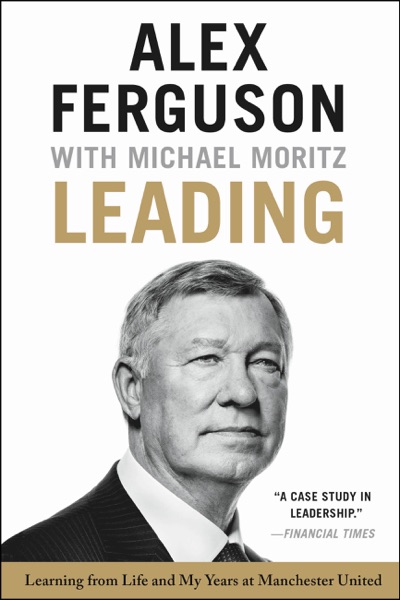
Leading is Sir Alex Ferguson's account of what he learned managing Manchester United for twenty-seven years, written with Silicon Valley investor Michael Moritz.
Alex Ferguson & Michael Moritz · 2015 · 6h 0m
Full summary and key takeaways →The 12 questions
- 1.
Ferguson argues that the desire to win matters more than technical skill in the very long run. Do you agree, and does that claim apply outside football?
- 2.
He rebuilt Manchester United's squad repeatedly rather than allowing aging teams to decline naturally. What prevented other clubs from making the same moves? What made it possible for him to do it?
- 3.
Ferguson's treatment of Roy Keane — eventually releasing a captain who was no longer serving the team's culture — is a central case study in the book. What is the equivalent decision in your context, and how do you make it?
- 4.
He is frank about not being a natural people manager early in his career and learning the skill over time. What specific management capability have you consciously developed, and how did you develop it?
- 5.
The consistency of standards is a recurring theme. Where in your experience does consistency of expectation drive performance, and where does it become rigidity?
- 6.
Ferguson describes the pressure that comes with sustained success — expectations that make sustained improvement harder. How do you maintain the motivation to keep improving when good is already good enough?
- 7.
Moritz structured this book to draw lessons applicable beyond football. Do you think sports leadership translates usefully to business leadership, or are the contexts too different?
- 8.
He talks about the importance of reading a room — knowing when players need encouragement and when they need challenge. How do you develop that contextual sensitivity?
- 9.
Ferguson managed players across five decades whose personalities, motivations, and media environments were very different. Which change in the external environment do you think created the most significant shift in what the job required?
- 10.
The book was co-written with an investor from a completely different context. Does that collaboration strengthen or weaken the argument? What do you gain and lose when experience is filtered through a second author?
- 11.
Ferguson explicitly says he never let friendship override performance standards. Do you think that is achievable or desirable in the leadership contexts you work in?
- 12.
What is one principle from Leading that you think would change something specific in how you currently manage or lead?
How to run the discussion
- Pick six to eight, not all of them. An hour of real discussion covers fewer questions than anyone expects, and racing the list is what makes a book club feel like homework.
- Open with what people noticed, not what they concluded. Asking for a verdict first hardens opinions before anyone has heard each other.
- Let the disagreement run. The questions below that split a room are the ones worth the time; the ones everyone answers the same way can be skipped.
- Ask the quiet person a specific question. A direct, narrow question is far easier to answer than an open invitation to contribute.
Themes worth steering toward
If the conversation stalls, these are the threads that usually restart it.
Common questions
What are good book club questions for Leading?
Here are 12 book club questions for Leading by Alex Ferguson & Michael Moritz, ordered to open easily and end somewhere worth arguing about. The strongest openers ask what each reader noticed rather than what they concluded, and the discussion usually turns on leadership, team building, management.
How long should a book club discussion of Leading last?
Most groups run 60 to 90 minutes of actual discussion. That is roughly six to eight questions, not all of them, so pick the ones that suit your group rather than working down the list in order.
What are the main themes in Leading?
Leadership, Team building, Management, Performance culture, Decision-making. Those are the threads most likely to divide a room, which makes them the useful places to steer a discussion that has gone quiet.
Picking the next one? See books like Leading or questions for other book club picks.
