Classics · Book club
Les Misérables book club questions
Here are 12 book club questions for Les Misérables by Victor Hugo, ordered to open easily and end somewhere worth arguing about. Copy them, print them, or bring them up one at a time.
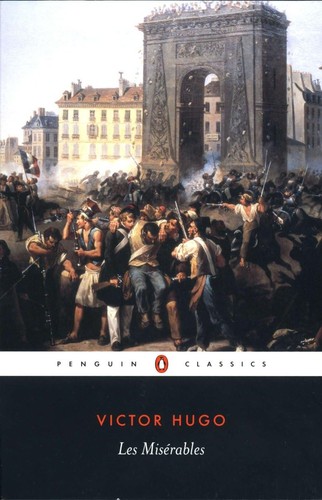
Jean Valjean is paroled after nineteen years in prison — five for stealing bread, fourteen more for escape attempts — and finds that the law, in the person of the relentless Inspector Javert, will never truly release him.
Victor Hugo · 1862 · 35h 15m
Full summary and key takeaways →The 12 questions
- 1.
Hugo presents Valjean's transformation as sudden and total after one act of grace. Is that psychologically plausible, or does the novel require you to accept it on faith for the rest to work?
- 2.
Javert cannot survive the discovery that mercy exists. Is he a tragic figure, a cautionary tale about legalism, or something else?
- 3.
The 1832 uprising fails entirely. How does Hugo want us to feel about Enjolras and the students on the barricade — as heroes, fools, or both?
- 4.
Fantine's story is the most brutal in the novel. Does it feel like honest social documentation to you, or like melodrama in service of a political argument?
- 5.
Hugo is explicit that poverty is a structural problem, not a moral one. Does the novel enact that belief consistently, or does it sometimes slip into blaming individuals?
- 6.
Cosette is often criticized as the least interesting major character in the novel. Is that a failure of Hugo's imagination, or is her ordinariness thematically necessary as a counterweight to the extraordinary figures around her?
- 7.
How did you handle the digressions — the Waterloo section, the sewer essay, the convent chapters? Read carefully, skimmed, skipped? What did you lose or gain?
- 8.
Thénardier is the novel's pure villain, yet Hugo complicates him slightly at the end by having him become a slave trader in America. What does that final image accomplish?
- 9.
The musical Les Misérables is probably more familiar to most readers than the novel. If you know both, where does the musical most distort Hugo's argument?
- 10.
Is the novel ultimately optimistic about social progress, or does the death on the barricades and the survival of the Thénardiers qualify any hope it offers?
- 11.
Hugo spent seventeen years writing this book. Does it feel like a single sustained vision or a collection of ideas that don't fully cohere?
- 12.
Valjean's final years — giving everything up to let Marius and Cosette live their lives — are described almost as self-annihilation. Is that the novel's ideal of love, or a kind of pathology?
How to run the discussion
- Pick six to eight, not all of them. An hour of real discussion covers fewer questions than anyone expects, and racing the list is what makes a book club feel like homework.
- Open with what people noticed, not what they concluded. Asking for a verdict first hardens opinions before anyone has heard each other.
- Let the disagreement run. The questions below that split a room are the ones worth the time; the ones everyone answers the same way can be skipped.
- Ask the quiet person a specific question. A direct, narrow question is far easier to answer than an open invitation to contribute.
Themes worth steering toward
If the conversation stalls, these are the threads that usually restart it.
Common questions
What are good book club questions for Les Misérables?
Here are 12 book club questions for Les Misérables by Victor Hugo, ordered to open easily and end somewhere worth arguing about. The strongest openers ask what each reader noticed rather than what they concluded, and the discussion usually turns on justice and mercy, poverty and social inequality, redemption.
How long should a book club discussion of Les Misérables last?
Most groups run 60 to 90 minutes of actual discussion. That is roughly six to eight questions, not all of them, so pick the ones that suit your group rather than working down the list in order.
What are the main themes in Les Misérables?
Justice and mercy, Poverty and social inequality, Redemption, Revolution and idealism, The law's cruelty. Those are the threads most likely to divide a room, which makes them the useful places to steer a discussion that has gone quiet.
Picking the next one? See books like Les Misérables or questions for other book club picks.
