Contemporary fiction · Book club
Lessons in Chemistry book club questions
Here are 11 book club questions for Lessons in Chemistry by Bonnie Garmus, ordered to open easily and end somewhere worth arguing about. Copy them, print them, or bring them up one at a time.
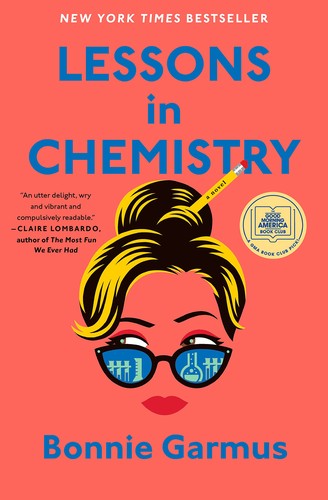
Elizabeth Zott is a chemist in early 1960s California who is exactly as capable as she knows herself to be and is surrounded by institutions that refuse to acknowledge it.
Bonnie Garmus · 2022 · 7h 20m
Full summary and key takeaways →The 11 questions
- 1.
Elizabeth refuses to perform the softness and self-deprecation that would make her more tolerable to the institutions around her. Is that presented as a strength, a flaw, or both?
- 2.
The cooking show allows Elizabeth to reach an audience the scientific establishment never would. Is that framed as victory, compromise, or simply coincidence?
- 3.
Harriet recognizes something real in Elizabeth's show that the producers don't see. What exactly is she recognizing, and what does the novel say about who is capable of that recognition?
- 4.
Calvin Evans is almost too supportive to be plausible as a 1960s male colleague. Is his function in the novel a realistic portrait or a deliberate fantasy of what recognition looks like?
- 5.
The novel is satirical in a way that requires the sexism it depicts to be somewhat cartoonish to work. Does that cartoonishness cost anything in emotional truth?
- 6.
Six-Thirty is written with genuine interiority and comic timing. Does the dog's perspective add something to the novel, or is it a gimmick?
- 7.
Elizabeth's daughter, Madeline, is in some ways the novel's most interesting character — a child raised by a scientist in a world designed to make children incurious. How does the novel handle her development?
- 8.
The church subplot involves a minister who begins teaching his congregation to question rather than accept. It's the most optimistic subplot in the novel. Did it feel earned to you, or too convenient?
- 9.
Garmus was reportedly rejected by dozens of publishers before selling this book. Does knowing that context change how you read a novel about institutional exclusion of women with ability?
- 10.
The novel ends with discovery and reconnection. Is that ending satisfying given the material that precedes it, or does it feel like the book choosing comfort over honesty?
- 11.
Lessons in Chemistry is very funny. Does the comedy make the anger underneath it more accessible or does it let readers off the hook?
How to run the discussion
- Pick six to eight, not all of them. An hour of real discussion covers fewer questions than anyone expects, and racing the list is what makes a book club feel like homework.
- Open with what people noticed, not what they concluded. Asking for a verdict first hardens opinions before anyone has heard each other.
- Let the disagreement run. The questions below that split a room are the ones worth the time; the ones everyone answers the same way can be skipped.
- Ask the quiet person a specific question. A direct, narrow question is far easier to answer than an open invitation to contribute.
Themes worth steering toward
If the conversation stalls, these are the threads that usually restart it.
Common questions
What are good book club questions for Lessons in Chemistry?
Here are 11 book club questions for Lessons in Chemistry by Bonnie Garmus, ordered to open easily and end somewhere worth arguing about. The strongest openers ask what each reader noticed rather than what they concluded, and the discussion usually turns on gender and ambition, grief and resilience, science and rationalism.
How long should a book club discussion of Lessons in Chemistry last?
Most groups run 60 to 90 minutes of actual discussion. That is roughly six to eight questions, not all of them, so pick the ones that suit your group rather than working down the list in order.
What are the main themes in Lessons in Chemistry?
Gender and ambition, Grief and resilience, Science and rationalism, Motherhood and identity, Institutional sexism. Those are the threads most likely to divide a room, which makes them the useful places to steer a discussion that has gone quiet.
Picking the next one? See books like Lessons in Chemistry or questions for other book club picks.
