Science · Similar reads
Books like Life 3.0: Being Human in the Age of Artificial Intelligence
The best books like Life 3.0: Being Human in the Age of Artificial Intelligence are Superintelligence: Paths, Dangers, Strategies, Human Compatible: Artificial Intelligence and the Problem of Control, and The Emperor's New Mind. Life 3.0: Being Human in the Age of Artificial Intelligence by Max Tegmark is about artificial intelligence, existential risk, ai safety. If that's what drew you in, here are 12 books that share its DNA — each summarized on Superbook, and ready to chat with in the app.
- Superintelligence: Paths, Dangers, Strategies
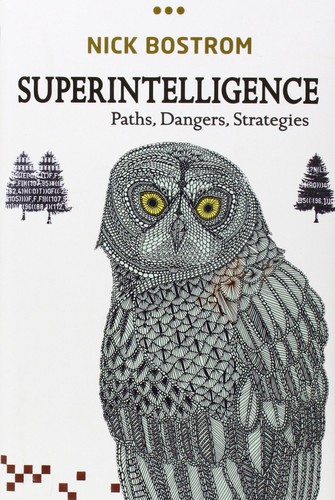
01
Superintelligence: Paths, Dangers, Strategies
Nick Bostrom · Science
Superintelligence is Oxford philosopher Nick Bostrom's systematic analysis of what might happen if artificial intelligence systems become more capable than humans — and why that transition might represent one of the most significant risks in human history.
Shares artificial intelligence and existential risk with Life 3.0: Being Human in the Age of Artificial Intelligence.
Read the summary → - Human Compatible: Artificial Intelligence and the Problem of Control
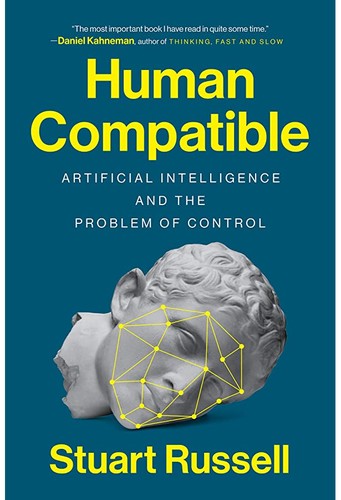
02
Human Compatible: Artificial Intelligence and the Problem of Control
Stuart Russell · Science
Human Compatible is Stuart Russell's argument, from inside mainstream AI research, that the standard model of AI — build a system that optimizes for a fixed objective — is the wrong approach, and that the transition to much more capable AI systems requires a fundamental change in how AI is designed.
Shares artificial intelligence and ai safety with Life 3.0: Being Human in the Age of Artificial Intelligence.
Read the summary → - The Emperor's New Mind
03
Roger Penrose · Science
The Emperor's New Mind is Roger Penrose's argument that human consciousness cannot be reproduced by any computational device — that the mind is not, in the relevant sense, a computer — and that understanding consciousness will require fundamental advances in physics, particularly in reconciling quantum mechanics with general relativity.
Shares artificial intelligence and consciousness with Life 3.0: Being Human in the Age of Artificial Intelligence.
Read the summary →
- Our Mathematical Universe
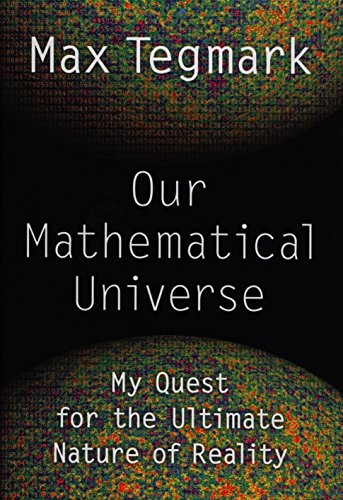
04
Max Tegmark · Science
Our Mathematical Universe is Max Tegmark's argument for what he calls the Mathematical Universe Hypothesis: the bold claim that the universe is not merely described by mathematics but is a mathematical structure.
A kindred science read.
Read the summary → - The Singularity Is Near
05
Ray Kurzweil · Science
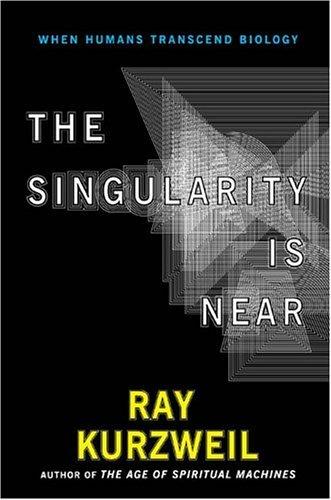
The Singularity Is Near is Ray Kurzweil's forecast that the exponential growth of information technology — computing power, storage, bandwidth, and the reverse-engineering of the human brain — will produce a technological singularity around 2045: a point at which artificial intelligence surpasses human intelligence in all relevant domains, beyond which we cannot reliably predict what happens.
Shares artificial intelligence and future with Life 3.0: Being Human in the Age of Artificial Intelligence.
Read the summary → - Gödel, Escher, Bach
06
Douglas Hofstadter · Science
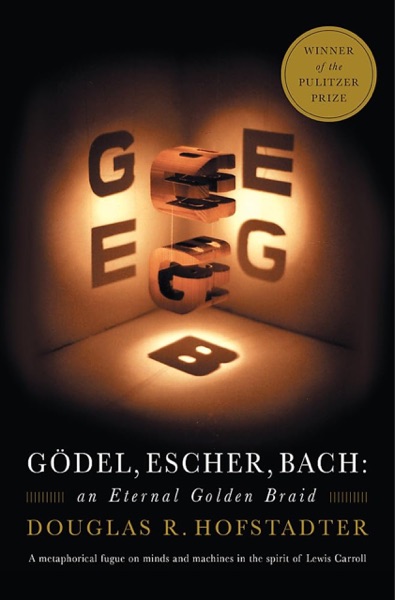
Douglas Hofstadter's Pulitzer Prize-winning debut, published in 1979, asks how meaning can arise from formal rules — how a biological machine can think, feel, and experience self-awareness.
Shares artificial intelligence and consciousness with Life 3.0: Being Human in the Age of Artificial Intelligence.
Read the summary → - How to Create a Mind
07
Ray Kurzweil · Science
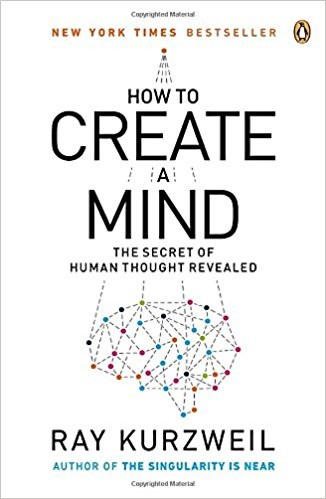
Ray Kurzweil's central claim in How to Create a Mind is that the neocortex — the part of the brain responsible for higher thought — operates on a single repeating algorithm called the pattern recognition theory of mind.
Shares artificial intelligence and consciousness with Life 3.0: Being Human in the Age of Artificial Intelligence.
Read the summary → - The Alignment Problem
08
Brian Christian · Science
Brian Christian's The Alignment Problem examines a fundamental challenge in machine learning: how do you ensure that an artificial system actually pursues the goals you intend, rather than a close but dangerous approximation?
Shares artificial intelligence and ai safety with Life 3.0: Being Human in the Age of Artificial Intelligence.
Read the summary → - The Mind's I
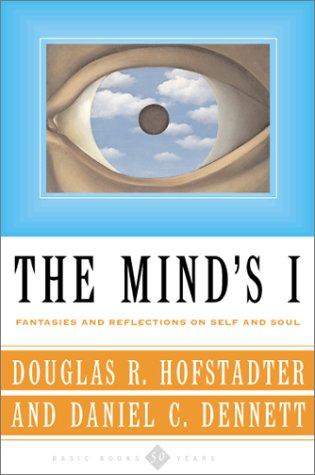
09
Douglas Hofstadter & Daniel Dennett · Philosophy
The Mind's I is a collaborative anthology edited by Douglas Hofstadter and Daniel Dennett, two of the most influential thinkers on consciousness and mind of the late twentieth century.
Shares artificial intelligence and consciousness with Life 3.0: Being Human in the Age of Artificial Intelligence.
Read the summary → - Atlas of AI
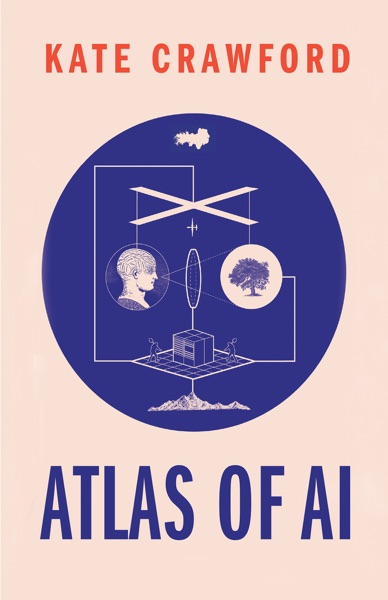
10
Kate Crawford · Science
Atlas of AI is Kate Crawford's account of what artificial intelligence actually is — not a disembodied intelligence but a physical system built from extracted minerals, underpaid labor, vast energy consumption, and accumulated data taken largely without meaningful consent.
Both dig into artificial intelligence.
Read the summary → - Deep Learning
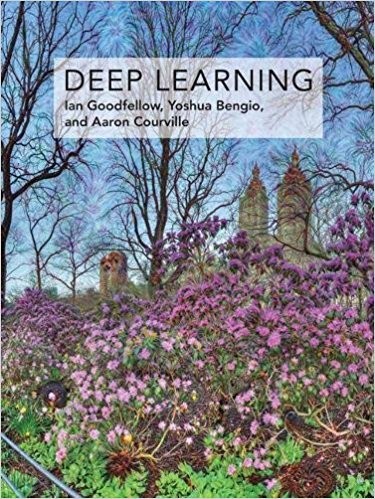
11
Ian Goodfellow, Yoshua Bengio, and Aaron Courville · Science
Deep Learning by Ian Goodfellow, Yoshua Bengio, and Aaron Courville is the standard graduate-level textbook on the mathematical and computational foundations of deep neural networks.
Both dig into artificial intelligence.
Read the summary → - Entangled Life: How Fungi Make Our Worlds, Change Our Minds and Shape Our Futures
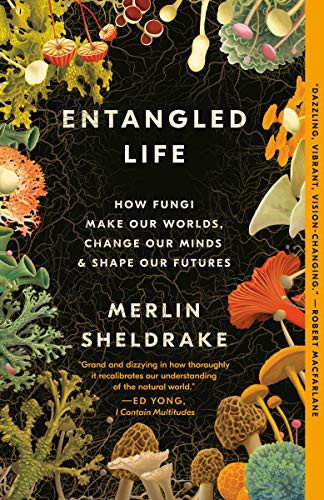
12
Entangled Life: How Fungi Make Our Worlds, Change Our Minds and Shape Our Futures
Merlin Sheldrake · Science
Merlin Sheldrake is a biologist who has spent his career studying fungi, and Entangled Life is his account of what fungi are, what they do, and why most people who think they know something about the natural world understand almost nothing about this kingdom of life.
Both dig into consciousness.
Read the summary →
Books like Life 3.0: Being Human in the Age of Artificial Intelligence: quick answers
What are the best books like Life 3.0: Being Human in the Age of Artificial Intelligence?
The best books like Life 3.0: Being Human in the Age of Artificial Intelligence by Max Tegmark are Superintelligence: Paths, Dangers, Strategies by Nick Bostrom, Human Compatible: Artificial Intelligence and the Problem of Control by Stuart Russell, The Emperor's New Mind by Roger Penrose, Our Mathematical Universe by Max Tegmark, The Singularity Is Near by Ray Kurzweil, plus 7 more below. Each was chosen for themes it shares with Life 3.0: Being Human in the Age of Artificial Intelligence, such as artificial intelligence, existential risk, ai safety.
What should I read after Life 3.0: Being Human in the Age of Artificial Intelligence?
A natural next read after Life 3.0: Being Human in the Age of Artificial Intelligence is Superintelligence: Paths, Dangers, Strategies by Nick Bostrom. Shares artificial intelligence and existential risk with Life 3.0: Being Human in the Age of Artificial Intelligence. Other strong choices are Human Compatible: Artificial Intelligence and the Problem of Control by Stuart Russell, The Emperor's New Mind by Roger Penrose, Our Mathematical Universe by Max Tegmark.
What books are similar to Life 3.0: Being Human in the Age of Artificial Intelligence by Max Tegmark?
Life 3.0: Being Human in the Age of Artificial Intelligence centers on artificial intelligence, existential risk, ai safety. Books with a similar feel include Superintelligence: Paths, Dangers, Strategies by Nick Bostrom, Human Compatible: Artificial Intelligence and the Problem of Control by Stuart Russell, The Emperor's New Mind by Roger Penrose, Our Mathematical Universe by Max Tegmark, The Singularity Is Near by Ray Kurzweil, Gödel, Escher, Bach by Douglas Hofstadter — all free to read and chat with on Superbook.
