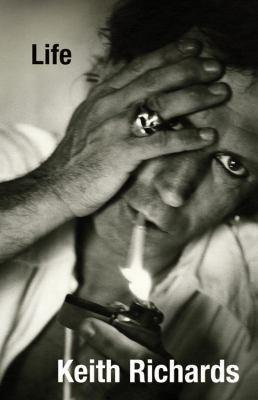
Life by Keith Richards is a 2010 memoir book about music, addiction, creativity. The specific tuning Richards developed for open-G five-string guitar — removing the bass string and tuning to G-D-G-B-D — enabled the chord shapes behind the Stones' most recognizable riffs, including 'Honky Tonk Women' and 'Brown Sugar.'
Summary
Keith Richards's Life was written with journalist James Fox and published when Richards was 66, after more than fifty years with the Rolling Stones. It is one of the better rock memoirs on the grounds that Richards is genuinely interested in music — in the mechanics of guitar playing, the theory behind the riffs, the specific ways American blues found its way to a generation of working-class British teenagers in the early 1960s — and not merely in his own legendary status. The book is also unusually candid about both the pleasures and the genuine costs of his years as a heroin addict, without performing either glamour or regret.
The early chapters are the most historically interesting. Richards grew up in Dartford, Kent, in postwar working-class austerity; his grandmother was a musician and an early formative influence; he discovered American blues through mail-order records and obsessive radio listening in a way that still sounds like revelation. He reconnected with Mick Jagger on a train platform in 1961, both of them carrying blues and R&B records, and the story of how two art-school kids translated American music into something that eventually eclipsed its sources is one of the more compelling origin stories in popular culture.
The Stones years are covered decade by decade, and Richards is fair-minded about the conflicts that defined them: the long creative partnership and mutual dependency with Jagger, the tensions over the band's direction in the 1980s when Jagger attempted a solo career, the chaotic management and financial exploitation of their early years by Allen Klein, and the peculiar internal democracy that kept a band of five difficult people working together for half a century. His account of writing "Satisfaction," "Jumping Jack Flash," and "Gimme Shelter" — the technical and circumstantial details behind songs that millions of people know — is the kind of insider material that a memoir should provide and often doesn't.
The drug sections are not minimized. Richards spent years as a functioning heroin addict, was arrested multiple times in multiple countries, and came close to permanent imprisonment in Canada in 1977 after a heroin bust that ultimately resulted in a suspended sentence. His account of why he used, how he managed it, and how he eventually stopped is matter-of-fact rather than confessional — he describes drug addiction with the same analytical intelligence he applies to guitar tuning. The book's tone throughout is that of a man who has survived things that would have killed most people and is mildly interested in understanding why.
Talk to Life like its author wrote you back.
Get the ideas that fit your life — not generic summaries.
- Chat with the book
- Audiobook-style main ideas
- Adapts to your life and goals
- Helps you take action
Key takeaways
- 1.
The specific tuning Richards developed for open-G five-string guitar — removing the bass string and tuning to G-D-G-B-D — enabled the chord shapes behind the Stones' most recognizable riffs, including 'Honky Tonk Women' and 'Brown Sugar.'
- 2.
The Stones' longevity came partly from treating the band as a democratic institution with clear roles, even when relationships were strained. Richards describes the band as a structure that outlasted any individual's mood or ambition.
- 3.
American blues musicians — Robert Johnson, Muddy Waters, Chuck Berry — were the primary source. Richards and Jagger were essentially trying to preserve and transmit music they thought would otherwise be lost.
- 4.
Being arrested and charged with serious drug offenses in multiple countries forced Richards to understand that the institution of the Rolling Stones was important enough to contain its members' behavior, at some cost to personal freedom.
- 5.
The Jagger-Richards songwriting partnership was genuinely collaborative in the early years and became increasingly strained as both became famous independently. Richards argues the best Stones songs came from the period before Jagger started managing his image.
- 6.
Exile on Main St., recorded in a rented villa in southern France in 1971, was productive specifically because the chaos and communal living stripped away studio professionalism and produced something more direct.
- 7.
Long-term heroin dependency, in Richards's account, was compatible with professional function at a high level for years, which contradicts the standard narrative while also demonstrating the cost — in relationships, legal jeopardy, and eventual health consequences.
- 8.
The music business in the 1960s routinely robbed artists through contract terms that seemed standard at the time. The Stones lost control of their own catalog for decades as a result of deals signed when they had no leverage.
Discussion questions
Use these on your own, with a book club, or as chat starters in Superbook. Book club version, ready to copy or print →
- 1.
Richards describes the period when he and Jagger were writing in a room together in the early 1960s as the most creatively alive of his career. What conditions made that possible, and can you find analogues in your own experience of creative collaboration?
- 2.
The book is unapologetic about heroin use in a way that stops short of endorsement. Does that balance work, or does the framing end up glamorizing addiction regardless of Richards's stated intentions?
- 3.
Richards argues that the Stones succeeded where other bands of their generation failed in part because they took the business side seriously despite the chaos. Is that analysis convincing given how thoroughly they were exploited early on?
- 4.
What does the book suggest about the relationship between creative partnership and personal relationship? The Jagger-Richards dynamic seems to require both proximity and distance.
- 5.
Richards has strong opinions about what made rock and roll great and where it went wrong. Do those opinions feel like wisdom from experience or nostalgia for a specific cultural moment?
- 6.
He describes giving his son Marlon heroin when Marlon was very young, framed as practical harm reduction. What is the honest reaction to that passage?
- 7.
The Canadian drug bust of 1977 could have ended the Stones. Richards suggests that the judge's leniency reflected a recognition of the band's cultural significance. Should cultural significance change criminal outcomes?
- 8.
Life is nearly 600 pages. What is lost and what is gained by a memoir this comprehensive versus a more compressed version?
- 9.
Richards is dismissive of much of what happened in rock music after the late 1970s. How much of that is credible music criticism and how much is generational bias?
- 10.
The book was written with a co-writer. Does that collaborative production — knowing someone else helped shape the sentences — change how you trust the voice?
- 11.
What does the Stones' continued existence as a touring band into the 2020s suggest about the relationship between music, identity, and aging?
- 12.
If you could have one candid conversation with Richards based on what you've read, what would you ask him that he hasn't answered in the book?
Themes
Frequently asked questions
-
Is Life by Keith Richards worth reading?
Yes, especially if you're interested in how the Rolling Stones actually worked as a creative and commercial institution. It's one of the better rock memoirs because Richards is analytically interested in music and honest about addiction without performing either glamour or recovery.
-
How long does it take to read Life?
The book runs nearly 600 pages and takes roughly 12 to 15 hours at average reading pace. It's consistently entertaining; Richards's voice is wry and direct and the book rarely drags despite its length.
-
How is Life different from other rock memoirs?
Most rock memoirs focus on the experience of fame. Richards is more interested in the music itself — the tunings, the influences, the specific dynamics of collaboration — and in the business realities that shaped the band. It reads less like a celebrity account and more like a craftsman's record.
-
Does Keith Richards address his drug use in Life?
Extensively and without either apology or melodrama. He describes heroin addiction across about fifteen years, multiple arrests, the 1977 Canadian trial, and his eventual decision to stop. The account is candid and specific in a way unusual for rock memoir.
-
Who should read Life?
Fans of the Rolling Stones, readers interested in the British music scene of the 1960s and 1970s, and anyone curious about how a creative partnership sustains itself across fifty years of changing circumstances. Some tolerance for rock mythology is required.