Literary fiction · Book club
Life of Pi book club questions
Here are 12 book club questions for Life of Pi by Yann Martel, ordered to open easily and end somewhere worth arguing about. Copy them, print them, or bring them up one at a time.
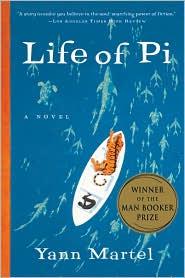
Life of Pi opens in Pondicherry, India, where Pi Patel grows up as the son of a zookeeper, accumulating an unorthodox religious education — he practices Hinduism, Christianity, and Islam simultaneously, to the bafflement of the adults around him.
Yann Martel · 2001 · 6h 20m
Full summary and key takeaways →The 12 questions
- 1.
Pi practices three religions at once, and the adults find this absurd. Do you think the novel presents his multi-faith as childish, wise, or something more ambiguous?
- 2.
Richard Parker never becomes friendly. The novel insists on his lethality throughout. How does that affect your reading of their relationship?
- 3.
The novel offers two versions of Pi's survival story. Which one did you believe, and did that change after you finished the book?
- 4.
Pi's father is a committed rationalist who thinks the zoo teaches children the truth about animals. His mother is more open to belief. Whose worldview does the novel ultimately favor — or does it refuse to choose?
- 5.
Martel's framing device — the author who finds in Pi's story 'proof of God's existence' — is either a deeply sincere religious claim or a provocation. Which did you read it as?
- 6.
The ocean sections are long, detailed, and sometimes tedious. Is that a structural flaw, or is the tedium part of what the novel is doing?
- 7.
How does Pi's zoo upbringing shape how he handles the lifeboat? Would someone without that education have survived in the same situation?
- 8.
Pi says a story with God is the better story. But is 'better' a reason to believe something? What is he actually claiming?
- 9.
The Japanese investigators reject Pi's animal story but can't disprove it. What does the novel say about the relationship between plausibility and truth?
- 10.
Compared to The Alchemist, which also wraps philosophical ideas about meaning into a quest narrative, where does Life of Pi land differently — and which do you find more honest?
- 11.
The Bengal tiger is named Richard Parker due to a clerical mix-up. Does the human name affect how you read the animal?
- 12.
By the end, Pi is a university student in Canada with a wife and children. How does knowing the ending from the framing device change how you read the survival sections?
How to run the discussion
- Pick six to eight, not all of them. An hour of real discussion covers fewer questions than anyone expects, and racing the list is what makes a book club feel like homework.
- Open with what people noticed, not what they concluded. Asking for a verdict first hardens opinions before anyone has heard each other.
- Let the disagreement run. The questions below that split a room are the ones worth the time; the ones everyone answers the same way can be skipped.
- Ask the quiet person a specific question. A direct, narrow question is far easier to answer than an open invitation to contribute.
Themes worth steering toward
If the conversation stalls, these are the threads that usually restart it.
Common questions
What are good book club questions for Life of Pi?
Here are 12 book club questions for Life of Pi by Yann Martel, ordered to open easily and end somewhere worth arguing about. The strongest openers ask what each reader noticed rather than what they concluded, and the discussion usually turns on faith and doubt, survival, storytelling.
How long should a book club discussion of Life of Pi last?
Most groups run 60 to 90 minutes of actual discussion. That is roughly six to eight questions, not all of them, so pick the ones that suit your group rather than working down the list in order.
What are the main themes in Life of Pi?
Faith and doubt, Survival, Storytelling, Identity, Human and animal nature. Those are the threads most likely to divide a room, which makes them the useful places to steer a discussion that has gone quiet.
Picking the next one? See books like Life of Pi or questions for other book club picks.
