Science · Book club
Lifespan: Why We Age—and Why We Don't Have To book club questions
Here are 12 book club questions for Lifespan: Why We Age—and Why We Don't Have To by David A. Sinclair, ordered to open easily and end somewhere worth arguing about. Copy them, print them, or bring them up one at a time.
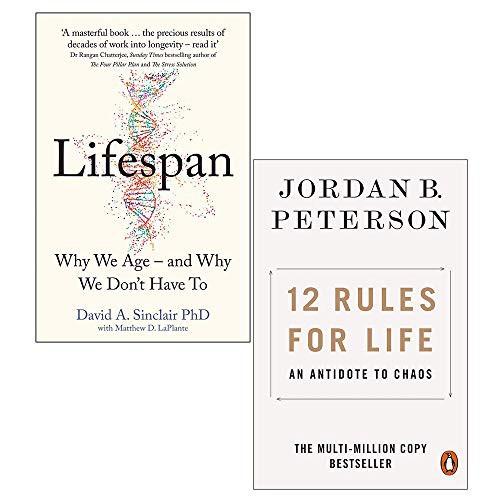
Lifespan opens with a bold claim: aging is not an inevitable feature of biology but a disease — one that can be treated, slowed, and possibly reversed.
David A. Sinclair · 2019 · 6h 0m
Full summary and key takeaways →The 12 questions
- 1.
Sinclair argues that calling aging a disease is strategic, not just philosophical. Does that framing change how you think about your own health choices and healthcare spending?
- 2.
The book makes a distinction between lifespan and healthspan. Which matters more to you personally, and how does that affect which interventions you'd actually pursue?
- 3.
Sinclair takes NMN, resveratrol, metformin, and other compounds himself despite incomplete human evidence. Is that kind of personal experimentation admirable, reckless, or something more complicated?
- 4.
Much of the evidence Sinclair cites comes from yeast, worms, mice, and small human studies. How much uncertainty is acceptable when evaluating claims about longevity interventions?
- 5.
The idea that aging is an information problem — not a damage problem — is counterintuitive. Does that reframing change anything about how you think about diet, sleep, or stress?
- 6.
Sinclair envisions a world where people routinely live past 100 in good health. What social, economic, and ethical problems does that world create that he doesn't fully address in the book?
- 7.
The book is partly a scientific argument and partly an advocacy document. Where did you notice the two modes switching, and did it affect your trust in the scientific claims?
- 8.
Caloric restriction and fasting show strong results in animal models but are notoriously hard for humans to sustain. What's the gap between knowing an intervention works and actually doing it?
- 9.
Sinclair argues that compression of morbidity — dying quickly at the end of a long healthy life — is a more humane outcome than the drawn-out decline most people experience today. Do you agree, and what would need to change to make that the norm?
- 10.
Many of the most promising longevity interventions (gene therapy, epigenetic reprogramming, precision diagnostics) will be expensive when they first arrive. How do you think about the equity implications of extending healthy life for some people before others?
- 11.
The book predicts that the first person to live to 150 may already be alive. Does that claim feel like a reasonable scientific inference or motivated speculation? What's your evidence either way?
- 12.
Sinclair's own father started taking the interventions described in the book and reportedly saw improvements in markers of aging. How much weight should anecdotal evidence from an author's family carry?
How to run the discussion
- Pick six to eight, not all of them. An hour of real discussion covers fewer questions than anyone expects, and racing the list is what makes a book club feel like homework.
- Open with what people noticed, not what they concluded. Asking for a verdict first hardens opinions before anyone has heard each other.
- Let the disagreement run. The questions below that split a room are the ones worth the time; the ones everyone answers the same way can be skipped.
- Ask the quiet person a specific question. A direct, narrow question is far easier to answer than an open invitation to contribute.
Themes worth steering toward
If the conversation stalls, these are the threads that usually restart it.
Common questions
What are good book club questions for Lifespan: Why We Age—and Why We Don't Have To?
Here are 12 book club questions for Lifespan: Why We Age—and Why We Don't Have To by David A. Sinclair, ordered to open easily and end somewhere worth arguing about. The strongest openers ask what each reader noticed rather than what they concluded, and the discussion usually turns on aging, longevity, epigenetics.
How long should a book club discussion of Lifespan: Why We Age—and Why We Don't Have To last?
Most groups run 60 to 90 minutes of actual discussion. That is roughly six to eight questions, not all of them, so pick the ones that suit your group rather than working down the list in order.
What are the main themes in Lifespan: Why We Age—and Why We Don't Have To?
Aging, Longevity, Epigenetics, Health, Biotechnology. Those are the threads most likely to divide a room, which makes them the useful places to steer a discussion that has gone quiet.
Picking the next one? See books like Lifespan: Why We Age—and Why We Don't Have To or questions for other book club picks.
