Lifespan: Why We Age—and Why We Don't Have To by David A. Sinclair is a 2019 science book about aging, longevity, epigenetics. Aging is not biologically inevitable. Sinclair frames it as a disease caused primarily by the loss of epigenetic information — the cell's ability to read its own DNA correctly — rather than by mutations accumulating in the genome itself.
Summary
Lifespan opens with a bold claim: aging is not an inevitable feature of biology but a disease — one that can be treated, slowed, and possibly reversed. David Sinclair, a Harvard geneticist who has spent three decades studying why organisms age, builds his argument around what he calls the Information Theory of Aging. Cells contain two kinds of information: digital (the DNA sequence, which stays largely stable across a lifetime) and analog (the epigenome, the chemical layer that tells genes when and where to switch on). Sinclair argues that aging is primarily a loss of epigenetic information — a degradation in the cell's ability to read its own instructions correctly — rather than the accumulation of genetic mutations most people assume it to be.
The book's scientific core traces a set of proteins called sirtuins, which Sinclair helped discover in yeast in the 1990s. Sirtuins act as a kind of cellular maintenance crew, repairing DNA damage and resetting epigenetic marks. Their activity depends heavily on NAD+, a molecule that declines with age. From here, Sinclair walks through the interventions that appear to activate these pathways: caloric restriction and intermittent fasting (both trigger a cellular stress response that ramps up sirtuin activity), exercise, cold exposure, and compounds like resveratrol, metformin, and NMN — molecules Sinclair takes himself and discusses with notable candor. He is careful to distinguish between what the animal data supports and what is proven in humans, though critics argue he sometimes blurs that line.
The second half of the book shifts from biology to argument. Sinclair makes a case that reframing aging as a disease — with an ICD code, clinical trials, and insurance coverage — is not merely semantic but strategic. The pharmaceutical industry invests in diseases, not in the normal process of getting old. If aging were classified as a medical condition, the funding, regulatory pathways, and medical focus would follow. He extends this into a vision of a world where people remain healthy into their nineties and beyond: longer careers, compressed morbidity, and the social and economic implications of that shift. Some of this reads as advocacy; Sinclair makes no pretense of neutrality.
The book is most convincing when Sinclair stays close to the experimental record — the chapters on sirtuins, epigenetic reprogramming, and the cellular hallmarks of aging are genuinely illuminating and accessible without being simplified beyond recognition. It gets shakier when he moves to specific supplement recommendations and timeline predictions for when aging will be solved. Those sections read more like a pitch than a scientific argument, and some of the claims about NMN and resveratrol have not held up cleanly in subsequent human trials. Readers who want the biology will find it here. Readers who want a more measured assessment of what is proven versus what is hoped for should read this alongside the skeptical literature.
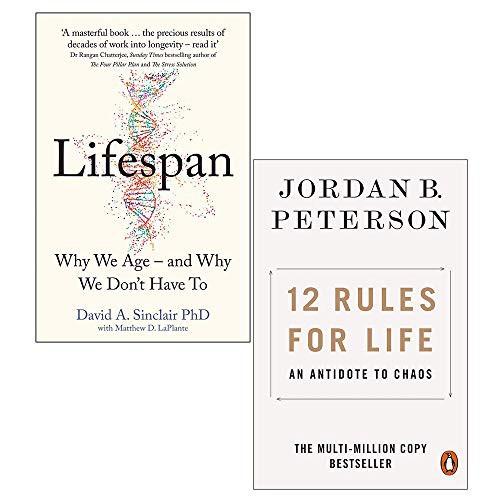
Talk to Lifespan: Why We Age—and Why We Don't Have To like its author wrote you back.
Get the ideas that fit your life — not generic summaries.
- Chat with the book
- Audiobook-style main ideas
- Adapts to your life and goals
- Helps you take action
Key takeaways
- 1.
Aging is not biologically inevitable. Sinclair frames it as a disease caused primarily by the loss of epigenetic information — the cell's ability to read its own DNA correctly — rather than by mutations accumulating in the genome itself.
- 2.
Sirtuins are a family of proteins that act as cellular stress responders and epigenetic regulators. Their activity declines with age but can be boosted by the same signals that activate survival circuits: fasting, exercise, and cold.
- 3.
NAD+ is a molecule that sirtuins require to function. Levels fall roughly 50% by middle age. Precursors like NMN and NR can raise NAD+ in animal models; human data is promising but still limited.
- 4.
The Information Theory of Aging holds that the epigenome is like a scratched CD: the underlying data (DNA) is intact, but the reader can no longer access it accurately. Partial reprogramming experiments in mice have 'cleaned' the scratch and restored youthful gene expression.
- 5.
Caloric restriction and intermittent fasting extend lifespan in nearly every organism tested. The mechanism appears to involve turning on survival pathways — sirtuins, AMPK, mTOR inhibition — that are otherwise switched off in times of plenty.
- 6.
Sinclair argues that aging should be classified as a disease. The regulatory and funding consequences of that reclassification would be significant: clinical trials, insurance coverage, and pharmaceutical investment currently blocked by the assumption that aging is normal.
- 7.
Metformin, a cheap diabetes drug, consistently shows lifespan extension in animal models and correlates with lower cancer and cardiovascular disease rates in diabetic patients. A large human trial (TAME) is underway to test it specifically as an anti-aging intervention.
- 8.
Epigenetic reprogramming — resetting cells to a younger epigenetic state using Yamanaka factors — has restored vision in old mice and reversed age-related decline in multiple tissues. This is Sinclair's candidate for the most transformative near-future intervention.
Discussion questions
Use these on your own, with a book club, or as chat starters in Superbook. Book club version, ready to copy or print →
- 1.
Sinclair argues that calling aging a disease is strategic, not just philosophical. Does that framing change how you think about your own health choices and healthcare spending?
- 2.
The book makes a distinction between lifespan and healthspan. Which matters more to you personally, and how does that affect which interventions you'd actually pursue?
- 3.
Sinclair takes NMN, resveratrol, metformin, and other compounds himself despite incomplete human evidence. Is that kind of personal experimentation admirable, reckless, or something more complicated?
- 4.
Much of the evidence Sinclair cites comes from yeast, worms, mice, and small human studies. How much uncertainty is acceptable when evaluating claims about longevity interventions?
- 5.
The idea that aging is an information problem — not a damage problem — is counterintuitive. Does that reframing change anything about how you think about diet, sleep, or stress?
- 6.
Sinclair envisions a world where people routinely live past 100 in good health. What social, economic, and ethical problems does that world create that he doesn't fully address in the book?
- 7.
The book is partly a scientific argument and partly an advocacy document. Where did you notice the two modes switching, and did it affect your trust in the scientific claims?
- 8.
Caloric restriction and fasting show strong results in animal models but are notoriously hard for humans to sustain. What's the gap between knowing an intervention works and actually doing it?
- 9.
Sinclair argues that compression of morbidity — dying quickly at the end of a long healthy life — is a more humane outcome than the drawn-out decline most people experience today. Do you agree, and what would need to change to make that the norm?
- 10.
Many of the most promising longevity interventions (gene therapy, epigenetic reprogramming, precision diagnostics) will be expensive when they first arrive. How do you think about the equity implications of extending healthy life for some people before others?
- 11.
The book predicts that the first person to live to 150 may already be alive. Does that claim feel like a reasonable scientific inference or motivated speculation? What's your evidence either way?
- 12.
Sinclair's own father started taking the interventions described in the book and reportedly saw improvements in markers of aging. How much weight should anecdotal evidence from an author's family carry?
Themes
Frequently asked questions
-
Is Lifespan worth reading for a non-scientist?
Yes, provided you go in knowing that some of the more specific supplement claims and timeline predictions are contested. The core biology — sirtuins, epigenetics, the Information Theory of Aging — is explained clearly and the science is genuinely interesting. The book works best as an introduction to the field rather than a practical health guide.
-
How long does it take to read Lifespan?
Around six hours at average reading pace. The first half is denser with biology and rewards slower reading; the second half, which covers the social and policy arguments, moves faster. Short chapters make it easy to read in sessions without losing the thread.
-
What is Sinclair's main argument in Lifespan?
That aging is a disease caused by the progressive loss of epigenetic information, and that interventions targeting the pathways that maintain that information — sirtuins, NAD+, epigenetic reprogramming — can slow or reverse aging. He also argues that reclassifying aging as a disease would unlock the research and regulatory infrastructure needed to treat it seriously.
-
Who should not read Lifespan?
Readers looking for a cautious, consensus-driven summary of what longevity science has proven in humans will find the book frustrating. Sinclair advocates for interventions that have strong animal data but limited or contested human evidence, and he does so with a confidence the data doesn't always warrant.
-
What is the most actionable idea in Lifespan?
The case for intermittent fasting and regular vigorous exercise as the two interventions with the strongest cross-species evidence for longevity benefits. Both activate the same survival pathways (sirtuins, AMPK) that Sinclair's lab studies, and both are available to most people without a prescription or a clinical trial.
Similar books
Outlive: The Science and Art of Longevity
Peter Attia
Why We Sleep
Matthew Walker
The Gene: An Intimate History
Siddhartha Mukherjee
Homo Deus: A Brief History of Tomorrow
Yuval Noah Harari
