Business · Book club
Lights Out book club questions
Here are 12 book club questions for Lights Out by Thomas Gryta, ordered to open easily and end somewhere worth arguing about. Copy them, print them, or bring them up one at a time.
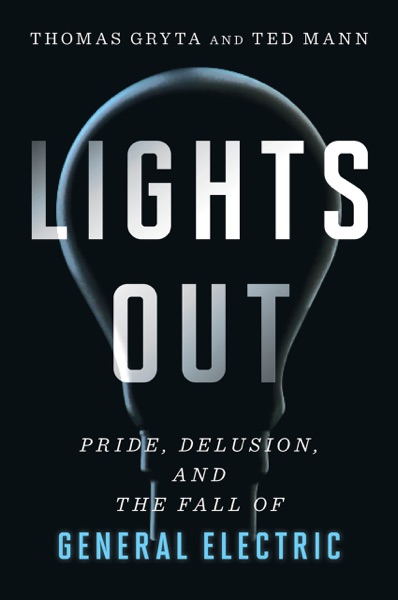
Lights Out chronicles the destruction of General Electric under Jeff Immelt, who took over from Jack Welch in September 2001 and left in 2017 having overseen one of the largest collapses of corporate value in American history.
Thomas Gryta · 2020 · 6h 0m
Full summary and key takeaways →The 12 questions
- 1.
The book argues that many of GE's problems were incubated under Jack Welch. How much responsibility does a CEO bear for problems that surface after they leave?
- 2.
Immelt received enormous positive press coverage for years while the company deteriorated. What does that say about financial journalism and the ability to assess large, complex institutions?
- 3.
The board was described as too deferential. What governance structures or board behaviors would have changed the outcome, and are they realistic?
- 4.
GE's culture of performance pressure made it dangerous to deliver bad news upward. Do you see that pattern in organizations you've worked in, and what sustains it?
- 5.
Gryta and Mann argue that Immelt genuinely believed the narratives he told investors. Does that make the failures better or worse from an ethical standpoint?
- 6.
GE Capital generated half the company's earnings in the Welch years. Was that level of dependence on a financial unit a structural mistake, or was it rational given the conditions of the time?
- 7.
The GE Digital initiative consumed billions and did not produce the expected transformation. What is the anatomy of a large transformational bet gone wrong?
- 8.
The insurance liabilities were buried for years in a way that required many people's cooperation or willful ignorance. How do institutional secrets of that scale persist?
- 9.
The company survived but was fundamentally restructured, shedding most of its businesses. Is breaking up a conglomerate this large ever the right answer before a crisis forces it?
- 10.
The Welch era was widely studied and admired; Immelt's era is widely studied as a cautionary tale. Is the difference mainly results, or is there a genuine difference in how they managed?
- 11.
Lights Out is a journalist's reconstruction from interviews and documents. What can this kind of narrative history tell you that financial analysis can't, and vice versa?
- 12.
If you were advising the GE board in 2012 — halfway through the deterioration — what would you have needed to see to understand how serious the situation was?
How to run the discussion
- Pick six to eight, not all of them. An hour of real discussion covers fewer questions than anyone expects, and racing the list is what makes a book club feel like homework.
- Open with what people noticed, not what they concluded. Asking for a verdict first hardens opinions before anyone has heard each other.
- Let the disagreement run. The questions below that split a room are the ones worth the time; the ones everyone answers the same way can be skipped.
- Ask the quiet person a specific question. A direct, narrow question is far easier to answer than an open invitation to contribute.
Themes worth steering toward
If the conversation stalls, these are the threads that usually restart it.
Common questions
What are good book club questions for Lights Out?
Here are 12 book club questions for Lights Out by Thomas Gryta, ordered to open easily and end somewhere worth arguing about. The strongest openers ask what each reader noticed rather than what they concluded, and the discussion usually turns on corporate decline, leadership failure, accountability.
How long should a book club discussion of Lights Out last?
Most groups run 60 to 90 minutes of actual discussion. That is roughly six to eight questions, not all of them, so pick the ones that suit your group rather than working down the list in order.
What are the main themes in Lights Out?
Corporate decline, Leadership failure, Accountability, Finance, Management. Those are the threads most likely to divide a room, which makes them the useful places to steer a discussion that has gone quiet.
Picking the next one? See books like Lights Out or questions for other book club picks.
