Literary fiction · Book club
Lincoln in the Bardo book club questions
Here are 12 book club questions for Lincoln in the Bardo by George Saunders, ordered to open easily and end somewhere worth arguing about. Copy them, print them, or bring them up one at a time.
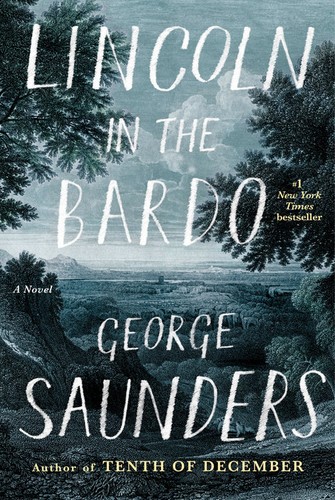
Lincoln in the Bardo takes place over a single night in February 1862, when President Abraham Lincoln visits the crypt where his eleven-year-old son Willie has just been buried.
George Saunders · 2017 · 4h 45m
Full summary and key takeaways →The 12 questions
- 1.
The novel's form — hundreds of short sections, competing historical accounts, ghost narrators who are unreliable — is unlike most fiction. Did the structure serve the emotional content for you, or did it get in the way?
- 2.
The ghosts in the bardo believe they are not dead and develop elaborate explanations for their situation. What does Saunders seem to be saying about how people deal with unwanted truths in general?
- 3.
Lincoln is portrayed both through the ghosts' direct experience of him and through a collage of real and invented historical quotations that often contradict each other. What picture of Lincoln emerges? Is it sympathetic?
- 4.
The Civil War is a constant presence — the casualty lists, the wounded at field hospitals, the weight of the nation's dead. How does Saunders balance Lincoln's private grief with this larger grief?
- 5.
Hans Vollman and Roger Bevins III are the novel's most developed ghost narrators. What do they want from their lingering in the bardo, and what prevents them from leaving?
- 6.
The Reverend Everly Thomas suspects, unlike the others, that the bardo may not be a temporary stop. What does this knowledge do to him, and what does the novel do with his doubt?
- 7.
Saunders inserts real historical quotations alongside invented ones, often without signaling which is which. Does this seem like a responsible thing to do with Lincoln's historical legacy, or does it unsettle you?
- 8.
The novel has a strong claim that grief should not be privatized — that Lincoln's grief for Willie and his grief for the war's dead are the same grief. Do you buy that argument?
- 9.
The ending involves Willie making a choice. Was that choice earned by the novel, or did it feel like a sentimental resolution to a formally difficult book?
- 10.
Several critics found the novel's ending conventionally emotional after its formally experimental beginning. Do you think the ending is a betrayal of the novel's ambitions or a fulfillment of them?
- 11.
The ghosts in the bardo are sorted by their particular attachments — to sex, to status, to unfinished business. Which ghost's attachment seemed most comprehensible to you, and why?
- 12.
Saunders has written mostly short stories before this novel. Where do you feel the short-story instinct most clearly — and does it help or hurt the novel's cumulative effect?
How to run the discussion
- Pick six to eight, not all of them. An hour of real discussion covers fewer questions than anyone expects, and racing the list is what makes a book club feel like homework.
- Open with what people noticed, not what they concluded. Asking for a verdict first hardens opinions before anyone has heard each other.
- Let the disagreement run. The questions below that split a room are the ones worth the time; the ones everyone answers the same way can be skipped.
- Ask the quiet person a specific question. A direct, narrow question is far easier to answer than an open invitation to contribute.
Themes worth steering toward
If the conversation stalls, these are the threads that usually restart it.
Common questions
What are good book club questions for Lincoln in the Bardo?
Here are 12 book club questions for Lincoln in the Bardo by George Saunders, ordered to open easily and end somewhere worth arguing about. The strongest openers ask what each reader noticed rather than what they concluded, and the discussion usually turns on grief and loss, acceptance of death, history and myth.
How long should a book club discussion of Lincoln in the Bardo last?
Most groups run 60 to 90 minutes of actual discussion. That is roughly six to eight questions, not all of them, so pick the ones that suit your group rather than working down the list in order.
What are the main themes in Lincoln in the Bardo?
Grief and loss, Acceptance of death, History and myth, Attachment and letting go, Collective suffering. Those are the threads most likely to divide a room, which makes them the useful places to steer a discussion that has gone quiet.
Picking the next one? See books like Lincoln in the Bardo or questions for other book club picks.
