Memoir · Book club
Long Walk to Freedom book club questions
Here are 12 book club questions for Long Walk to Freedom by Nelson Mandela, ordered to open easily and end somewhere worth arguing about. Copy them, print them, or bring them up one at a time.
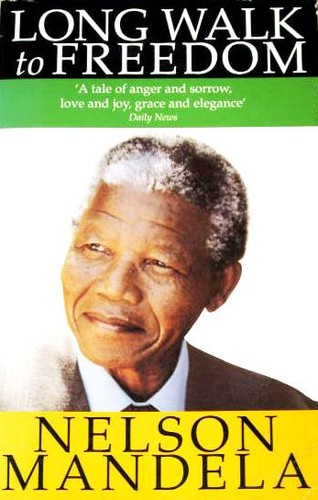
Nelson Mandela's autobiography traces his life from a rural Xhosa childhood in the Transkei to his release from prison in 1990 after twenty-seven years of incarceration, and ends with his election as South Africa's first democratically chosen president in 1994.
Nelson Mandela · 1994 · 13h 20m
Full summary and key takeaways →The 12 questions
- 1.
Mandela describes the decision to take up armed resistance as agonizing. What conditions do you think justify crossing from nonviolent to violent political action?
- 2.
He argues that apartheid degraded its enforcers. Is there evidence in the book that this was true in practice, and does it change how you think about systemic oppression?
- 3.
How did the prison years change Mandela? What did he gain from confinement that he might not have gained otherwise?
- 4.
Mandela's public image is often simplified into sainthood. What in the autobiography complicates or challenges that image?
- 5.
He is strikingly candid about the failure of his marriage to Winnie. How does that section change the texture of the narrative around it?
- 6.
The negotiations that ended apartheid involved compromises that some ANC members considered betrayals. How does Mandela justify those compromises, and do you find the justification convincing?
- 7.
What does Mandela's formation — the Xhosa chieftain tradition, the mission school, the legal training — tell you about the kind of leader he became?
- 8.
Mandela spent twenty-seven years in prison and emerged without apparent bitterness. Is that psychologically plausible, and what does the book suggest made it possible?
- 9.
How does the autobiography handle the subject of violence? Does Mandela seem comfortable with the chapters on Umkhonto we Sizwe, or does his discomfort show through?
- 10.
The book ends with the 1994 election. What do you know about what happened afterward, and does that knowledge change how you read the final pages?
- 11.
Which relationship in the book — with Walter Sisulu, Oliver Tambo, or others — seems most formative to Mandela's political development?
- 12.
Mandela says he is not a saint unless a saint is a sinner who keeps trying. What do you make of that self-description?
How to run the discussion
- Pick six to eight, not all of them. An hour of real discussion covers fewer questions than anyone expects, and racing the list is what makes a book club feel like homework.
- Open with what people noticed, not what they concluded. Asking for a verdict first hardens opinions before anyone has heard each other.
- Let the disagreement run. The questions below that split a room are the ones worth the time; the ones everyone answers the same way can be skipped.
- Ask the quiet person a specific question. A direct, narrow question is far easier to answer than an open invitation to contribute.
Themes worth steering toward
If the conversation stalls, these are the threads that usually restart it.
Common questions
What are good book club questions for Long Walk to Freedom?
Here are 12 book club questions for Long Walk to Freedom by Nelson Mandela, ordered to open easily and end somewhere worth arguing about. The strongest openers ask what each reader noticed rather than what they concluded, and the discussion usually turns on leadership, resistance, identity.
How long should a book club discussion of Long Walk to Freedom last?
Most groups run 60 to 90 minutes of actual discussion. That is roughly six to eight questions, not all of them, so pick the ones that suit your group rather than working down the list in order.
What are the main themes in Long Walk to Freedom?
Leadership, Resistance, Identity, Sacrifice, Reconciliation. Those are the threads most likely to divide a room, which makes them the useful places to steer a discussion that has gone quiet.
Picking the next one? See books like Long Walk to Freedom or questions for other book club picks.
