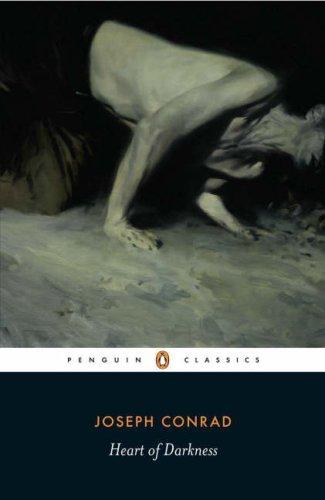
Lord Jim by Joseph Conrad is a 1900 literary fiction book about honor and shame, romanticism and self-deception, redemption and its limits. Jim cannot explain his jump, and neither can Marlow — Conrad's point is that moral failure often doesn't have a clean causal story.
Summary
Jim is a young British officer on a decrepit steamship carrying hundreds of Muslim pilgrims when, in a moment of crisis he cannot fully explain even to himself, he jumps overboard and abandons them. The ship does not sink. Everyone survives. But Jim has to live with what he did for the rest of his life — not primarily because of external punishment, but because of his own consuming sense that the act revealed something true about him that he can never unsee.
Conrad tells the story through Marlow, the same narrator from Heart of Darkness, but here Marlow has a more complex relationship with Jim. He is sympathetic, drawn to him, perhaps self-identifying in ways he doesn't fully acknowledge. The novel's famous structural complexity — shifting timelines, multiple narrators, stories within stories — is not a modernist experiment for its own sake. It enacts the difficulty of understanding another person, of knowing why they did what they did, of deciding what it means.
The second half of the novel takes Jim to Patusan, an isolated inland settlement in Southeast Asia where he builds a new identity from scratch, earning the honorific "Lord Jim" through courage and leadership. Conrad is not offering this as simple redemption. The very qualities that make Jim effective in Patusan — his romanticism, his absolute commitment to a heroic self-image — are the same qualities that produced his original failure. And then there is the final act, in which Jim faces another choice, and what he does is both entirely characteristic and entirely devastating.
Lord Jim is one of the more demanding novels in the English canon. Marlow is a circuitous narrator; the first half especially requires patience. But what Conrad is building — a portrait of a man whose identity depends entirely on an impossible ideal he has set for himself — is genuinely complex and becomes more disturbing the longer you sit with it. If Heart of Darkness is the more famous work, Lord Jim is the more psychologically complete one.
Talk to Lord Jim like its author wrote you back.
Get the ideas that fit your life — not generic summaries.
- Chat with the book
- Audiobook-style main ideas
- Adapts to your life and goals
- Helps you take action
Key takeaways
- 1.
Jim cannot explain his jump, and neither can Marlow — Conrad's point is that moral failure often doesn't have a clean causal story.
- 2.
The structural complexity is thematic: Conrad makes the reader do the interpretive work Jim refuses to do, forcing us to ask whether he is a coward, a romantic, or something more complicated.
- 3.
Stein's diagnosis — Jim is a romantic, and there is no cure for it — is the closest the novel comes to a verdict, and it is both sympathetic and damning.
- 4.
Patusan is not a clean redemption arc. Jim is effective there partly because his romantic self-image is less tested by reality.
- 5.
Marlow's sustained interest in Jim raises the question of what he sees in him — whether Jim's struggle is universal or a specifically masculine form of self-deception.
- 6.
The ending enacts exactly what Conrad has been building: Jim makes the choice that preserves his idea of himself over everything else.
- 7.
Jim is a product of British imperial ideology — trained to believe in the hero's role — and his failure is in part the failure of that ideology to survive contact with reality.
- 8.
Conrad refuses to settle whether Jim's final act is honorable self-sacrifice or the ultimate evasion of responsibility.
Discussion questions
Use these on your own, with a book club, or as chat starters in Superbook. Book club version, ready to copy or print →
- 1.
Why does Jim jump? He cannot fully explain it, and Conrad refuses to explain it for him. What is your best account of the psychology of that moment?
- 2.
Marlow spends enormous effort trying to understand Jim. What does he find in him that keeps him so invested?
- 3.
Stein says Jim is 'romantic' and that a man must immerse himself in the destructive element. What does he mean, and does the novel affirm or complicate that view?
- 4.
The first half of the novel (the Patna incident and its aftermath) and the second half (Patusan) feel almost like different books. How do they connect thematically?
- 5.
Jim's redemption in Patusan is real in some sense — he genuinely helps people, genuinely earns their trust. Does that count as redemption for what he did on the Patna?
- 6.
Compared to Heart of Darkness, which also uses Marlow as narrator, is Marlow more or less reliable here? What are the limits of his perspective?
- 7.
Jim's final act is presented as honorable by Marlow and as catastrophically irresponsible by other characters. Which reading does Conrad seem to endorse?
- 8.
The pilgrims on the Patna are given almost no interiority — they are a crowd. Does that absence undercut the novel's moral seriousness?
- 9.
What does 'honor' mean in Lord Jim? Is it the same thing to Jim, to Marlow, to Brown, to Doramin?
- 10.
The novel was published in 1900, at the height of British imperial confidence. Is it a critique of imperialism, a product of it, or both simultaneously?
- 11.
Does Jim ever actually change, or does he simply find a setting where his unchanging nature produces better outcomes temporarily?
- 12.
Conrad was himself a Pole who became a British mariner and writer — an outsider who built his identity through a kind of performance. Does that biography illuminate Jim's story?
Themes
Frequently asked questions
-
Is Lord Jim worth reading?
Yes, if you have patience for a circuitous narrator and a deliberately fragmented structure. It is one of the most complete treatments in any novel of how a person builds identity around an impossible ideal — and what happens when reality challenges it.
-
Is Lord Jim hard to read?
The first half is the most demanding. Marlow narrates at length, circles back, introduces multiple secondary perspectives, and the timeline shifts repeatedly. The second half, set in Patusan, is more straightforward. Overall it requires active reading, not passive absorption.
-
What is the novel about without spoilers?
A young British officer makes a catastrophic moral choice in a moment of crisis and spends the rest of his life trying to understand it and, possibly, to make it right. The novel follows him across years and continents.
-
Why is Lord Jim less famous than Heart of Darkness?
Heart of Darkness is shorter, its themes more immediately political, and its famous final image more quotable. Lord Jim's greatness is harder to excerpt and requires more investment to appreciate. It is frequently considered Conrad's superior work by readers who have engaged with both.
-
Who shouldn't read this book?
Readers who want narrative efficiency or a clear moral verdict at the end. Conrad offers neither. The point is that the question of what Jim is — coward or romantic or both — remains genuinely open.