Philosophy · Book club
Lying book club questions
Here are 11 book club questions for Lying by Sam Harris, ordered to open easily and end somewhere worth arguing about. Copy them, print them, or bring them up one at a time.
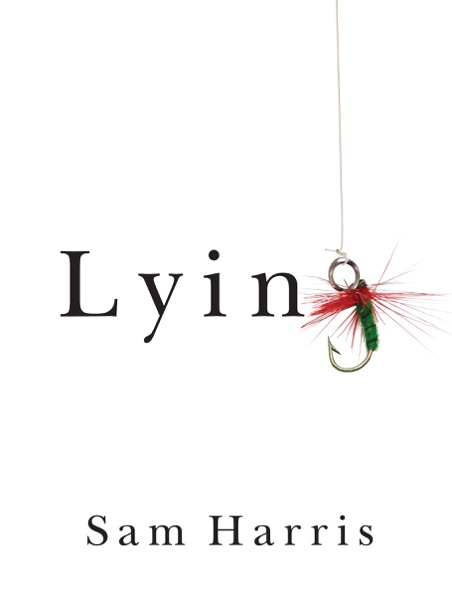
Lying is a short philosophical essay — barely 80 pages — in which Sam Harris argues that lying is almost never justified and that most people dramatically underestimate its costs.
Sam Harris · 2011 · 1h 0m
Full summary and key takeaways →The 11 questions
- 1.
Think of a recent white lie you told. What was the actual cost of telling the truth, and how do you weigh that against the cost of the lie?
- 2.
Harris argues that white lies deprive people of accurate feedback. Can you think of a case where feedback you received — even when unwelcome — genuinely helped you?
- 3.
Does the distinction between sincere and performative assertion hold up in cases like social pleasantries? When someone asks 'how are you?' and you say 'fine,' is that a lie?
- 4.
Harris dispatches the murderer-at-the-door case quickly. Do you find his response convincing, or does it leave a real gap in the argument?
- 5.
Where in your own life are you most prone to deception — with family, colleagues, or yourself? What makes those situations feel like they require it?
- 6.
Harris treats lying as almost categorically impermissible. Is there a version of this argument that makes more room for context without collapsing into 'lying is fine when it feels right'?
- 7.
What would your relationships look like if everyone followed Harris's prescription? What would you have to give up, and what would you gain?
- 8.
The book is partly about the courage honesty requires. When did you last avoid telling someone something true because it felt too risky or uncomfortable?
- 9.
Harris argues that people can handle truth better than we assume. Is that empirically true, or is it an optimistic claim that doesn't survive real cases?
- 10.
Does the essay treat cultural variation in honesty norms seriously enough? Are there contexts where his Western, individualist framing doesn't apply well?
- 11.
Harris says complete honesty requires that you not act in ways you'd need to conceal. What habits or choices would you have to change to live by that standard?
How to run the discussion
- Pick six to eight, not all of them. An hour of real discussion covers fewer questions than anyone expects, and racing the list is what makes a book club feel like homework.
- Open with what people noticed, not what they concluded. Asking for a verdict first hardens opinions before anyone has heard each other.
- Let the disagreement run. The questions below that split a room are the ones worth the time; the ones everyone answers the same way can be skipped.
- Ask the quiet person a specific question. A direct, narrow question is far easier to answer than an open invitation to contribute.
Themes worth steering toward
If the conversation stalls, these are the threads that usually restart it.
Common questions
What are good book club questions for Lying?
Here are 11 book club questions for Lying by Sam Harris, ordered to open easily and end somewhere worth arguing about. The strongest openers ask what each reader noticed rather than what they concluded, and the discussion usually turns on honesty, ethics, trust.
How long should a book club discussion of Lying last?
Most groups run 60 to 90 minutes of actual discussion. That is roughly six to eight questions, not all of them, so pick the ones that suit your group rather than working down the list in order.
What are the main themes in Lying?
Honesty, Ethics, Trust, Communication. Those are the threads most likely to divide a room, which makes them the useful places to steer a discussion that has gone quiet.
Picking the next one? See books like Lying or questions for other book club picks.
