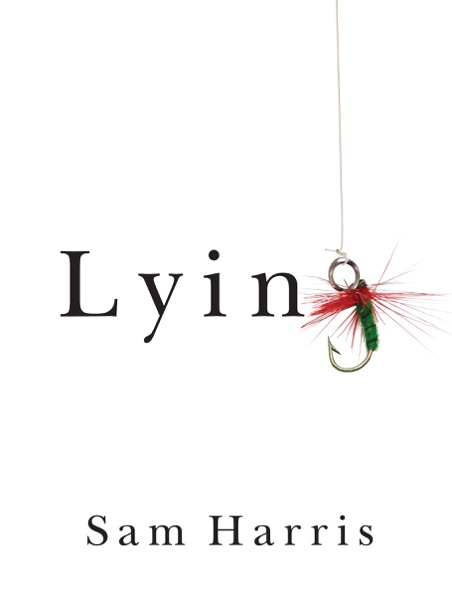
Lying by Sam Harris is a 2011 philosophy book about honesty, ethics, trust. Most lies, including white lies, substitute your judgment for another person's about what they can handle. That is a form of disrespect.
Summary
Lying is a short philosophical essay — barely 80 pages — in which Sam Harris argues that lying is almost never justified and that most people dramatically underestimate its costs. The book emerged from a course Harris took at Stanford with philosopher Ronald Howard, whose unflinching rejection of deception influenced Harris's thinking for decades. The central thesis is stark: if you care about honesty as a value, you must be willing to follow it into uncomfortable territory, including conversations where a "white lie" seems kind or harmless.
Harris distinguishes between sincere assertions — genuine first-person claims about what you believe — and performative assertions, where both parties understand no literal claim is being made. Social pleasantries, fiction, roleplay, and acting do not violate the norm against lying because both parties have the same understanding. What does violate it is any attempt to create a false belief in someone's mind without their consent. By this standard, white lies are still lies: they substitute your judgment about what someone can handle for their own capacity to hear the truth.
The core argument against lying is not merely deontological. Harris makes a consequentialist case as well. Lies erode trust when they are discovered. They require further lies to maintain. They deprive the person you are lying to of accurate information they could use to improve their situation. A friend who lies to spare your feelings about your mediocre business plan is not being kind — she is denying you feedback that could save you years of effort. The doctor who lies to a patient to avoid distress is treating the patient as incapable of handling their own life.
The book is brief enough to read in an afternoon. Its weakness is that it does not engage seriously with the hardest cases — the murderer at the door, lying to protect someone from persecution — and Harris dispatches these scenarios quickly rather than sitting with them. What it does well is reframe everyday social dishonesty as a habit with real costs, and make the case that most people are lying more than they need to and that stopping is harder than it sounds.
Talk to Lying like its author wrote you back.
Get the ideas that fit your life — not generic summaries.
- Chat with the book
- Audiobook-style main ideas
- Adapts to your life and goals
- Helps you take action
Key takeaways
- 1.
Most lies, including white lies, substitute your judgment for another person's about what they can handle. That is a form of disrespect.
- 2.
Lying requires cognitive overhead: you must track the false belief you have created and prevent it from being exposed. Honesty is simpler.
- 3.
The consequentialist case against lying: when lies are discovered, they destroy trust. The relationship cost typically exceeds whatever the lie was protecting.
- 4.
Harris distinguishes sincere assertions from performative ones. Telling a story or playing a character is not lying because no one is deceived about the nature of the act.
- 5.
A white lie about a friend's business or creative work deprives them of information they could have used. 'Kind' dishonesty has real costs paid by the person being deceived.
- 6.
People can almost always handle the truth better than you assume. The instinct to protect others from reality often says more about your discomfort than theirs.
- 7.
Complete honesty requires courage. Most lying is a way of avoiding difficult conversations, not protecting other people.
Discussion questions
Use these on your own, with a book club, or as chat starters in Superbook. Book club version, ready to copy or print →
- 1.
Think of a recent white lie you told. What was the actual cost of telling the truth, and how do you weigh that against the cost of the lie?
- 2.
Harris argues that white lies deprive people of accurate feedback. Can you think of a case where feedback you received — even when unwelcome — genuinely helped you?
- 3.
Does the distinction between sincere and performative assertion hold up in cases like social pleasantries? When someone asks 'how are you?' and you say 'fine,' is that a lie?
- 4.
Harris dispatches the murderer-at-the-door case quickly. Do you find his response convincing, or does it leave a real gap in the argument?
- 5.
Where in your own life are you most prone to deception — with family, colleagues, or yourself? What makes those situations feel like they require it?
- 6.
Harris treats lying as almost categorically impermissible. Is there a version of this argument that makes more room for context without collapsing into 'lying is fine when it feels right'?
- 7.
What would your relationships look like if everyone followed Harris's prescription? What would you have to give up, and what would you gain?
- 8.
The book is partly about the courage honesty requires. When did you last avoid telling someone something true because it felt too risky or uncomfortable?
- 9.
Harris argues that people can handle truth better than we assume. Is that empirically true, or is it an optimistic claim that doesn't survive real cases?
- 10.
Does the essay treat cultural variation in honesty norms seriously enough? Are there contexts where his Western, individualist framing doesn't apply well?
- 11.
Harris says complete honesty requires that you not act in ways you'd need to conceal. What habits or choices would you have to change to live by that standard?
Themes
Frequently asked questions
-
Is Lying worth reading?
Yes, especially if you think of yourself as honest. The book is short enough to finish in an afternoon and the argument is sharp. It will almost certainly identify a category of lying you did not previously count as lying.
-
How long is Lying by Sam Harris?
About 80 pages — roughly one hour to read. It is among Harris's shortest works, more essay than book. The brevity is appropriate: the argument does not require more space than it takes.
-
What is Lying's main argument?
That lying is almost never justified, that most people lie far more than they realize, and that the costs of dishonesty — to trust, to the deceived person's access to accurate information, to your own integrity — consistently outweigh the short-term discomfort of telling the truth.
-
Does Harris allow for any exceptions to honesty?
He makes room for performative assertions (fiction, roleplay, social formulas) but is very strict about sincere first-person claims. He addresses the murderer-at-the-door case briefly and argues that even extreme cases rarely justify lying because alternatives are almost always available.
-
Who should read Lying?
People interested in applied ethics, anyone who has felt uneasy about white lies but not known why, and those who want to examine what their actual honesty habits are. It works well as a conversation-starter for groups or couples.
-
Is this different from Harris's other books?
Yes. It is shorter, more focused, and more practical than The Moral Landscape or Waking Up. It is less concerned with grand claims about ethics and more concerned with how you behave in everyday relationships.