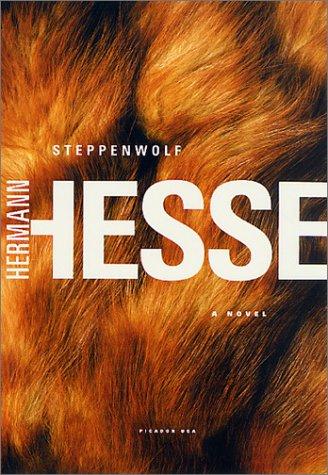
Steppenwolf by Hermann Hesse is a 1927 philosophy book about alienation, duality, self. The self is not dual but multiple: the wolf/bourgeois opposition is itself a simplification, and genuine self-knowledge requires acknowledging the full multitude.
Summary
Steppenwolf is Hermann Hesse's most psychologically intense and formally inventive novel, published in 1927 at a time of personal crisis. The protagonist, Harry Haller, is a middle-aged intellectual who sees himself as divided between a respectable bourgeois self and a wild, solitary wolf — the Steppenwolf of the title. He is contemptuous of middle-class culture, incapable of sustained human connection, and oscillating between the impulse toward transcendence and a recurring desire for self-destruction.
The novel's structure mirrors its themes. It begins as a realistic third-person account of a lodger, shifts to Haller's own journals, and eventually dissolves into the surrealist dreamscape of the Magic Theatre — "for madmen only, price of admission your mind." The Magic Theatre is a series of rooms in which Haller's psychological multiplicities are dramatized: his idealizations, his repressions, his capacities for both violence and transcendence. It is one of the more original formal experiments in 20th-century literature.
The philosophical burden of the novel concerns the "Treatise on the Steppenwolf" — an anonymous pamphlet that Haller receives and that recasts his self-understanding. The Treatise argues that the opposition between the bourgeois and the wolf is itself a simplification; Haller is not dual but multiple, and the path to liberation lies not in resolving the opposition but in recognizing that the self is a multitude. The Immortals — Mozart and Goethe, who appear in hallucinatory passages — represent the possibility of a consciousness large enough to hold multiplicity with laughter rather than despair.
Steppenwolf has been read as a diagnosis of intellectual alienation, as an autobiography of spiritual crisis, as a prefiguration of psychedelic experience, and as a manual for how to live with contradictions too large to resolve. Hesse himself was concerned that readers took it as a celebration of Harry's alienation rather than a critique of it. The Immortals laugh. That is the resolution, such as it is.
Talk to Steppenwolf like its author wrote you back.
Get the ideas that fit your life — not generic summaries.
- Chat with the book
- Audiobook-style main ideas
- Adapts to your life and goals
- Helps you take action
Key takeaways
- 1.
The self is not dual but multiple: the wolf/bourgeois opposition is itself a simplification, and genuine self-knowledge requires acknowledging the full multitude.
- 2.
Bourgeois comfort and intellectual contempt for it are mirror images: each defines itself against the other, and neither constitutes genuine liberation.
- 3.
Humor — the laughter of the Immortals, the cosmic perspective from which all human suffering looks bearable — is the highest human capacity in the novel.
- 4.
The Magic Theatre is the interior world made visible: confronting the full range of one's psychological multiplicity is both terrifying and necessary.
- 5.
Alienation is self-perpetuating: the person who holds themselves apart from ordinary human life, taking refuge in contempt, generates more isolation rather than less.
- 6.
Mozart's laughter at Harry's despair is not dismissal but an invitation to a larger perspective — one that holds suffering within a wider embrace.
- 7.
The path through the contradictions is not resolution but a change in relationship: holding multiplicity with lightness rather than trying to suppress or choose.
- 8.
Cultural decadence — the cheap pleasures that Harry despises in bourgeois life — is also seductive, and the intellectual who refuses it is often simply displacing the same craving.
Discussion questions
Use these on your own, with a book club, or as chat starters in Superbook. Book club version, ready to copy or print →
- 1.
Harry Haller sees himself as divided between a bourgeois self and a wild wolf. The Treatise says this is still a simplification. Can you identify more than two competing selves in your own psychology?
- 2.
The Immortals — Mozart, Goethe — respond to Harry's suffering with laughter. Is that response compassionate or dismissive? What would it mean to cultivate that capacity yourself?
- 3.
Harry's contempt for bourgeois culture is presented as self-defeating — it is itself a form of the attachment he claims to transcend. Do you see that pattern in yourself or anyone you know?
- 4.
The novel argues that liberation lies not in choosing between the wolf and the bourgeois but in recognizing the full multiplicity of the self. Is that psychologically satisfying, or does it feel like a refusal to commit?
- 5.
Steppenwolf was embraced by the counterculture of the 1960s as a celebration of rebellion against conformity. Hesse felt this was a misreading. What is being misread?
- 6.
The Magic Theatre sequence is deliberately dreamlike and surreal. What does that formal choice allow Hesse to show that realistic narrative wouldn't?
- 7.
Harry's connection to Hermine and Maria is a form of education in ordinary human pleasure that he has denied himself. What does he learn from it, and why does he destroy it?
- 8.
The novel implies that the isolation of the intellectual is a chosen pose as much as a genuine condition. Is that fair?
- 9.
How does the Steppenwolf's self-description compare to Kierkegaard's sick soul — someone for whom awareness of the darkness of existence is constitutive?
- 10.
What is the difference between the despair Harry experiences and the kind of unhappiness that is a signal something needs to change?
- 11.
Hesse wrote this during a personal crisis in his late forties. Does knowing the autobiographical context change how you read it?
Themes
Frequently asked questions
-
What is Steppenwolf about?
A middle-aged German intellectual, Harry Haller, who experiences himself as divided between a respectable bourgeois identity and a wild, solitary wolf, and who moves through jazz clubs, sexual encounters, and surrealist visions toward a confrontation with the full multiplicity of his own psyche.
-
Is Steppenwolf a celebration of alienation?
Hesse insisted it was not. He felt misread by the counterculture readers who embraced it as validation of rebellion. The novel is a critique of Harry's alienation as much as a portrayal of it — the Immortals' laughter is the corrective the novel offers.
-
What is the Magic Theatre?
A surrealist dreamscape Harry enters in the novel's final section, in which the various compartments of his psychology are enacted as separate rooms — fantasies, repressions, desires, capacities. It is the interior world made visible and navigable.
-
How does Steppenwolf compare to Siddhartha?
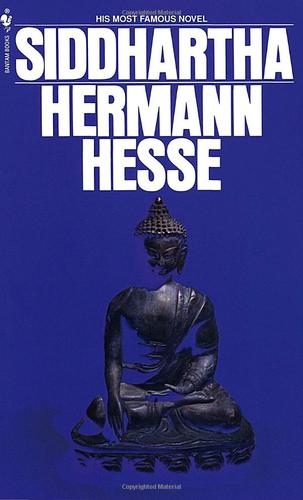
Siddhartha is serene, parable-like, and resolved. Steppenwolf is neurotic, formally fragmented, and deliberately unresolved. Both are about the path to a wider self, but they describe very different stages and psychological conditions.
-
Is Steppenwolf difficult to read?
The realistic sections are accessible. The Magic Theatre section is deliberately hallucinatory and may require patience. The overall reading experience is demanding but rewarding. Most editions are under 250 pages.