Business · Book club
Market Wizards book club questions
Here are 11 book club questions for Market Wizards by Jack D. Schwager, ordered to open easily and end somewhere worth arguing about. Copy them, print them, or bring them up one at a time.
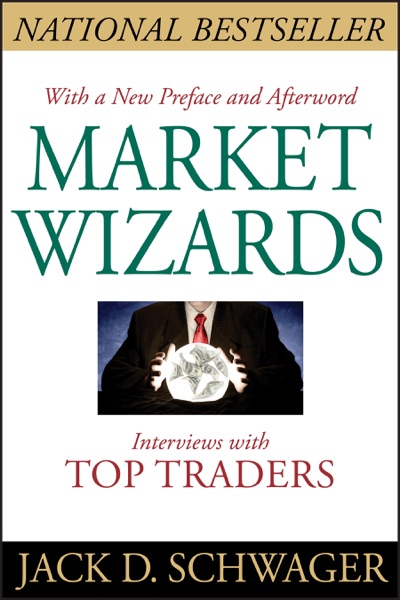
Market Wizards is Jack Schwager's collection of interviews with some of the most successful traders of the 1970s and 1980s — Michael Marcus, Bruce Kovner, Richard Dennis, Paul Tudor Jones, and others who generated extraordinary returns over extended periods in futures, currencies, and equities.
Jack D. Schwager · 1989 · 6h 15m
Full summary and key takeaways →The 11 questions
- 1.
The traders in this book use very different methods but share nearly identical risk management principles. What does that convergence tell you about where the real edge in trading comes from?
- 2.
Paul Tudor Jones describes rituals and physical cues that maintain his mental state during trading. Do you use similar techniques in your own high-stakes decision-making?
- 3.
Richard Dennis believed trading could be taught to ordinary people through rules. Do you think discipline and rule-following can substitute for natural talent in performance domains?
- 4.
The principle of cutting losses and letting winners run is easy to state and hard to follow. What psychological forces make it so difficult to execute in practice?
- 5.
Most of the traders describe learning through catastrophic early losses. Is there a lesson here about the role of painful experience in developing genuine expertise?
- 6.
These traders made their fortunes in the 1970s and 1980s. How much of their edge was specific to that era's markets, and how much transferred to later decades?
- 7.
The book's traders are almost all men operating in an era before algorithmic trading dominated. How do you think the insights generalize to today's markets and to women in finance?
- 8.
Capital preservation as the primary objective sounds conservative for people generating extraordinary returns. How does conservatism about downside coexist with the aggression required for large gains?
- 9.
Several traders describe their thinking as probabilistic rather than predictive — they don't try to be right, they try to have a positive expected value. How do you apply probabilistic thinking in your own work?
- 10.
Schwager's follow-up interviews over decades showed that some of these traders' methods stopped working as markets changed. What does that suggest about the durability of any particular trading edge?
- 11.
The emotional discipline described in these interviews — taking losses without self-recrimination, holding gains without premature exits — is difficult by design. What makes it so, and what practices seem to help?
How to run the discussion
- Pick six to eight, not all of them. An hour of real discussion covers fewer questions than anyone expects, and racing the list is what makes a book club feel like homework.
- Open with what people noticed, not what they concluded. Asking for a verdict first hardens opinions before anyone has heard each other.
- Let the disagreement run. The questions below that split a room are the ones worth the time; the ones everyone answers the same way can be skipped.
- Ask the quiet person a specific question. A direct, narrow question is far easier to answer than an open invitation to contribute.
Themes worth steering toward
If the conversation stalls, these are the threads that usually restart it.
Common questions
What are good book club questions for Market Wizards?
Here are 11 book club questions for Market Wizards by Jack D. Schwager, ordered to open easily and end somewhere worth arguing about. The strongest openers ask what each reader noticed rather than what they concluded, and the discussion usually turns on trading, risk management, psychology of investing.
How long should a book club discussion of Market Wizards last?
Most groups run 60 to 90 minutes of actual discussion. That is roughly six to eight questions, not all of them, so pick the ones that suit your group rather than working down the list in order.
What are the main themes in Market Wizards?
Trading, Risk management, Psychology of investing, Discipline, Financial markets. Those are the threads most likely to divide a room, which makes them the useful places to steer a discussion that has gone quiet.
Picking the next one? See books like Market Wizards or questions for other book club picks.
