Economics · Book club
Mastering the Market Cycle book club questions
Here are 12 book club questions for Mastering the Market Cycle by Howard Marks, ordered to open easily and end somewhere worth arguing about. Copy them, print them, or bring them up one at a time.
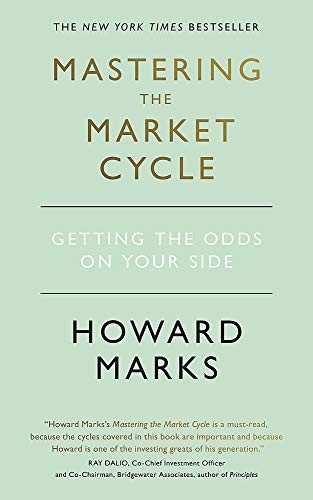
Mastering the Market Cycle is Howard Marks's systematic argument that investment returns depend less on predicting the future than on understanding where you currently stand in the various cycles that govern markets.
Howard Marks · 2018 · 4h 45m
Full summary and key takeaways →The 12 questions
- 1.
Marks says cycles can be recognized at extremes even if their timing can't be predicted. Do you think that distinction is meaningful in practice, or does it still require actionable calls?
- 2.
The credit cycle is described as one of the most dangerous. What were the signs of a credit extreme in the period leading up to 2008, and what would those same signs look like today?
- 3.
Marks argues that risk rises when investor sentiment is most optimistic. How do you reconcile that with the common experience of watching prices rise further after everyone you know is already excited?
- 4.
The psychological cycle moves from denial to panic. Have you ever personally experienced one of these emotional phases with a specific investment or asset class? What did you do?
- 5.
Moving the dial is about adjusting portfolio aggressiveness without claiming to predict exact tops and bottoms. What personal biases might make that discipline hard to actually execute?
- 6.
Marks is a credit-focused investor at Oaktree. How does his cycle framework apply differently to equity investors versus credit investors?
- 7.
Contrarianism requires being early or patient, often for years, before being right. What psychological and professional costs does that impose on investors, and how do you manage them?
- 8.
The book argues that most investors add risk at peaks and reduce it at troughs — precisely the opposite of what's optimal. What market structures or incentives produce this behavior?
- 9.
Marks references the cycle in real estate several times. How does the real estate market's relative illiquidity make it more or less susceptible to extreme cycle behavior than public equities?
- 10.
How does an individual investor, without Marks's decades of data and institutional context, apply cycle awareness in practice rather than as an intellectual exercise?
- 11.
The book is somewhat repetitive by design. Do you find that kind of reinforcement useful for counterintuitive ideas, or does it feel like padding?
- 12.
Marks emphasizes knowing where you are rather than predicting where you're going. What sources of evidence do you actually have access to that help calibrate current cycle position?
How to run the discussion
- Pick six to eight, not all of them. An hour of real discussion covers fewer questions than anyone expects, and racing the list is what makes a book club feel like homework.
- Open with what people noticed, not what they concluded. Asking for a verdict first hardens opinions before anyone has heard each other.
- Let the disagreement run. The questions below that split a room are the ones worth the time; the ones everyone answers the same way can be skipped.
- Ask the quiet person a specific question. A direct, narrow question is far easier to answer than an open invitation to contribute.
Themes worth steering toward
If the conversation stalls, these are the threads that usually restart it.
Common questions
What are good book club questions for Mastering the Market Cycle?
Here are 12 book club questions for Mastering the Market Cycle by Howard Marks, ordered to open easily and end somewhere worth arguing about. The strongest openers ask what each reader noticed rather than what they concluded, and the discussion usually turns on market cycles, risk management, investor psychology.
How long should a book club discussion of Mastering the Market Cycle last?
Most groups run 60 to 90 minutes of actual discussion. That is roughly six to eight questions, not all of them, so pick the ones that suit your group rather than working down the list in order.
What are the main themes in Mastering the Market Cycle?
Market cycles, Risk management, Investor psychology, Contrarian investing, Uncertainty. Those are the threads most likely to divide a room, which makes them the useful places to steer a discussion that has gone quiet.
Picking the next one? See books like Mastering the Market Cycle or questions for other book club picks.
