Horror · Book club
Mexican Gothic book club questions
Here are 12 book club questions for Mexican Gothic by Silvia Moreno-Garcia, ordered to open easily and end somewhere worth arguing about. Copy them, print them, or bring them up one at a time.
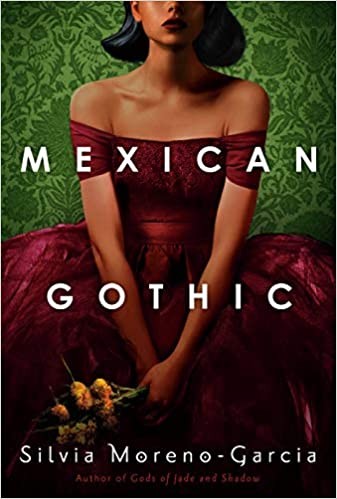
Mexican Gothic is set in 1950s Mexico, where Noemí Taboada — fashionable, sharp, and underestimated — travels to a remote manor in the Mexican countryside after receiving a disturbing letter from her newly-married cousin Catalina.
Silvia Moreno-Garcia · 2020 · 6h 15m
Full summary and key takeaways →The 12 questions
- 1.
The Doyle family represents a specific historical type — the European colonizer who believes in racial hierarchy and uses indigenous people as experimental subjects. Does making them the literal villains of a horror novel feel like the right formal choice?
- 2.
Noemí is fashionable, social, and initially dismissed by her family as not serious. How does the novel use that underestimation as a structural asset?
- 3.
High Place feeds on women specifically. Is the novel making a claim about what patriarchy does, or is that reading too on-the-nose?
- 4.
The house's biology — the mold, the mushrooms, the network — is the book's most distinctive invention. How did that biological horror land for you versus more traditional supernatural scares?
- 5.
Dreams function as both horror and as a form of solidarity across time. What do you make of the novel's treatment of intergenerational female connection?
- 6.
The book is set in 1950s Mexico rather than Victorian England or contemporary America. What does that specific time and place give Moreno-Garcia that other settings wouldn't?
- 7.
How does Mexican Gothic compare to other horror novels you've read in its treatment of the 'threatening house' — Rebecca, The Haunting of Hill House, We Have Always Lived in the Castle?
- 8.
Virgil Doyle is the most overtly menacing male character. How does the novel position Florence and the other women in the house — as victims, as collaborators, as both?
- 9.
The eugenics subplot is explicit and central. Does making historical scientific racism the basis of the horror make the novel more or less scary to you?
- 10.
Catalina is the person Noemí comes to rescue. How does her trajectory — what happens to her and what she chooses — affect the novel's claims about female agency?
- 11.
The ending involves a significant act of destruction. Was that the right ending for this story?
- 12.
Moreno-Garcia has said she wanted to write a Mexican Gothic, not just transpose European Gothic to Mexico. Where do you most clearly see that distinction working?
How to run the discussion
- Pick six to eight, not all of them. An hour of real discussion covers fewer questions than anyone expects, and racing the list is what makes a book club feel like homework.
- Open with what people noticed, not what they concluded. Asking for a verdict first hardens opinions before anyone has heard each other.
- Let the disagreement run. The questions below that split a room are the ones worth the time; the ones everyone answers the same way can be skipped.
- Ask the quiet person a specific question. A direct, narrow question is far easier to answer than an open invitation to contribute.
Themes worth steering toward
If the conversation stalls, these are the threads that usually restart it.
Common questions
What are good book club questions for Mexican Gothic?
Here are 12 book club questions for Mexican Gothic by Silvia Moreno-Garcia, ordered to open easily and end somewhere worth arguing about. The strongest openers ask what each reader noticed rather than what they concluded, and the discussion usually turns on colonialism and extraction, gender and control, eugenics and racial purity.
How long should a book club discussion of Mexican Gothic last?
Most groups run 60 to 90 minutes of actual discussion. That is roughly six to eight questions, not all of them, so pick the ones that suit your group rather than working down the list in order.
What are the main themes in Mexican Gothic?
Colonialism and extraction, Gender and control, Eugenics and racial purity, The body as site of horror, Class and inheritance. Those are the threads most likely to divide a room, which makes them the useful places to steer a discussion that has gone quiet.
Picking the next one? See books like Mexican Gothic or questions for other book club picks.
