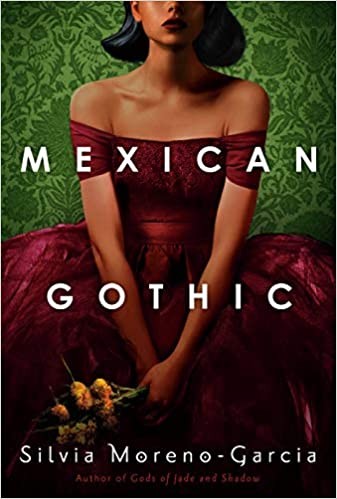
Mexican Gothic by Silvia Moreno-Garcia is a 2020 horror book about colonialism and extraction, gender and control, eugenics and racial purity. The novel's horror is rooted in colonialism and eugenics rather than random supernatural menace — the Doyle family's evil is the evil of extraction and racial domination made literal.
Summary
Mexican Gothic is set in 1950s Mexico, where Noemí Taboada — fashionable, sharp, and underestimated — travels to a remote manor in the Mexican countryside after receiving a disturbing letter from her newly-married cousin Catalina. The letter describes visions, threats, and a creeping dread. What Noemí finds at High Place is the Doyle family: English mining colonizers who have settled in Hidalgo, grown wealthy on silver extraction, and built themselves a rotting mansion full of secrets. Something in the house — something biological and ancient — is feeding on the women inside it.
Moreno-Garcia is interested in what gothic horror looks like when you filter it through Mexican history and the indigenous-colonialist relationship. The Doyles aren't just creepy aristocrats; they're eugenicists who have been conducting experiments in racial "improvement" using the indigenous population as raw material. The horror of the house is not supernatural in an arbitrary sense — it grows directly from the colonial project. The rot and the mold and the violence are what extraction and domination produce. This is what makes the book more than a competent haunted-house novel.
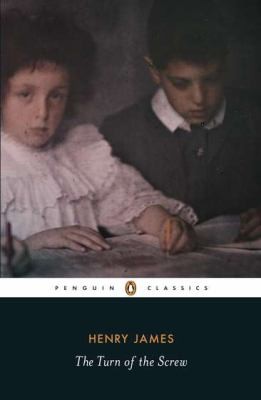
Stylistically, Moreno-Garcia draws on the classic Gothic tradition — Rebecca, The Turn of the Screw, the whole canon of threatening houses and menaced women — but Noemí is not passive. She investigates, argues, refuses, and fights back in ways that feel like a deliberate revision of the genre's usual treatment of its heroines. The prose is precise and controlled, and the house's biology — I'll say no more without spoilers — is genuinely original.
Horror readers and fans of gothic fiction will find this satisfying. Readers who want a fast thriller may feel the first half is slow. Those looking for something that is purely escapist should know that the book's colonial politics are inseparable from its horror logic — this is not a story about random evil, but about a specific, historically grounded one.
Talk to Mexican Gothic like its author wrote you back.
Get the ideas that fit your life — not generic summaries.
- Chat with the book
- Audiobook-style main ideas
- Adapts to your life and goals
- Helps you take action
Key takeaways
- 1.
The novel's horror is rooted in colonialism and eugenics rather than random supernatural menace — the Doyle family's evil is the evil of extraction and racial domination made literal.
- 2.
Noemí Taboada is a deliberate rewrite of the passive Gothic heroine. Her refusal to be diminished is a structural choice, not just a character trait.
- 3.
The house itself is the novel's most original creation — its biology and the way it connects the people inside it is genuinely unsettling and not easy to shake.
- 4.
Moreno-Garcia uses 1950s Mexico to explore the long shadow of Spanish colonialism and British mining investment, both of which shaped Hidalgo's actual history.
- 5.
The book argues that the Gothic tradition, with its threatening houses and endangered women, maps directly onto colonialist power structures — and takes that argument seriously.
- 6.
The Doyle family's obsession with racial purity is not a background detail but the engine of the horror. The eugenics are the evil.
- 7.
Dreams are used throughout as both a horror device and a mode of intergenerational communication — the women in the house across time are in conversation with each other.
- 8.
The ending is satisfying in a way that many horror novels fumble: the resolution of the supernatural plot is also the resolution of the political one.
Discussion questions
Use these on your own, with a book club, or as chat starters in Superbook. Book club version, ready to copy or print →
- 1.
The Doyle family represents a specific historical type — the European colonizer who believes in racial hierarchy and uses indigenous people as experimental subjects. Does making them the literal villains of a horror novel feel like the right formal choice?
- 2.
Noemí is fashionable, social, and initially dismissed by her family as not serious. How does the novel use that underestimation as a structural asset?
- 3.
High Place feeds on women specifically. Is the novel making a claim about what patriarchy does, or is that reading too on-the-nose?
- 4.
The house's biology — the mold, the mushrooms, the network — is the book's most distinctive invention. How did that biological horror land for you versus more traditional supernatural scares?
- 5.
Dreams function as both horror and as a form of solidarity across time. What do you make of the novel's treatment of intergenerational female connection?
- 6.
The book is set in 1950s Mexico rather than Victorian England or contemporary America. What does that specific time and place give Moreno-Garcia that other settings wouldn't?
- 7.
How does Mexican Gothic compare to other horror novels you've read in its treatment of the 'threatening house' — Rebecca, The Haunting of Hill House, We Have Always Lived in the Castle?
- 8.
Virgil Doyle is the most overtly menacing male character. How does the novel position Florence and the other women in the house — as victims, as collaborators, as both?
- 9.
The eugenics subplot is explicit and central. Does making historical scientific racism the basis of the horror make the novel more or less scary to you?
- 10.
Catalina is the person Noemí comes to rescue. How does her trajectory — what happens to her and what she chooses — affect the novel's claims about female agency?
- 11.
The ending involves a significant act of destruction. Was that the right ending for this story?
- 12.
Moreno-Garcia has said she wanted to write a Mexican Gothic, not just transpose European Gothic to Mexico. Where do you most clearly see that distinction working?
Themes
Frequently asked questions
-
Is Mexican Gothic actually scary?
Yes, particularly in the second half. The horror builds slowly and is body-based rather than jump-scare based — closer to Shirley Jackson than Stephen King. Readers who find biological horror or psychological dread more unsettling than monsters will find this effective.
-
Do I need to know Mexican history to enjoy it?
No, but knowing that British mining companies did in fact operate in Hidalgo in the early 20th century adds a layer. The novel provides enough context to follow the colonial politics, but readers with background in the period will catch additional resonances.
-
What is Mexican Gothic about, briefly?
A young Mexican socialite in the 1950s travels to a remote manor to check on her cousin, and finds a family of British colonizers, a house with a terrible secret, and a horror rooted in eugenics and colonial extraction.
-
Who shouldn't read Mexican Gothic?
Those who want fast horror or a straightforward thriller. The first half is atmospheric and slow-building. Also, readers who find body horror — specifically the biological kind — deeply upsetting should know that it intensifies significantly.
-
Is there a TV adaptation?
As of 2025 a television series adaptation was in development, but no completed series had aired. Check current listings for updates.