Self-help · Book club
Mini Habits book club questions
Here are 11 book club questions for Mini Habits by Stephen Guise, ordered to open easily and end somewhere worth arguing about. Copy them, print them, or bring them up one at a time.
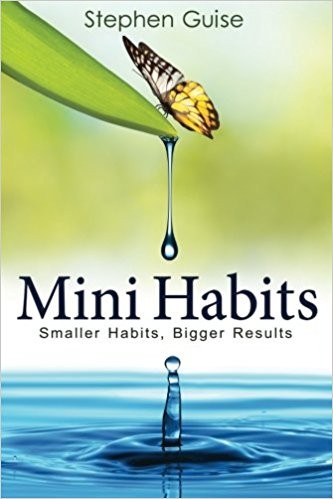
Mini Habits is Stephen Guise's case for starting habits so small they are almost impossible to fail.
Stephen Guise · 2013 · 2h 20m
Full summary and key takeaways →The 11 questions
- 1.
Guise's one-push-up story is the founding anecdote. Have you ever accidentally discovered that starting absurdly small worked better than starting with the 'right' amount of effort?
- 2.
He argues that motivation is an unreliable engine for habit formation. Think of a habit you've tried to build using motivation spikes — what happened when the spike passed?
- 3.
Mini habits work partly because they make streaks easy to maintain. How important is the unbroken-streak feeling to you personally, and does it help or create its own pressure?
- 4.
He distinguishes between 'motivation-based' and 'willpower-based' habit strategies. Which one have you historically relied on, and how has that worked?
- 5.
What's the smallest version of a habit you actually want to build? Could you honestly commit to doing only that minimum every day, even on your hardest days?
- 6.
The book argues consistency matters more than intensity. Where in your life might this principle apply outside of formal habits — relationships, creative work, exercise?
- 7.
Guise says most people set habits at a level that requires high-motivation days to sustain. What assumptions about effort and difficulty drove your last failed habit attempt?
- 8.
Mini habits are designed to build automatic behavior over time. Once a mini habit became automatic for you, did you raise the goal or was the automaticity itself the reward?
- 9.
The method has limits for skill-building where breadth requires volume. Where do you think mini habits are the right tool, and where might a different approach be more appropriate?
- 10.
He uses neuroscience to support the method. How much does the scientific framing change how you think about the advice compared to if it were presented as pure anecdote?
- 11.
If you designed a mini habit for the area of life you most want to improve right now, what would it be, and what would 'completion' look like on your worst day?
How to run the discussion
- Pick six to eight, not all of them. An hour of real discussion covers fewer questions than anyone expects, and racing the list is what makes a book club feel like homework.
- Open with what people noticed, not what they concluded. Asking for a verdict first hardens opinions before anyone has heard each other.
- Let the disagreement run. The questions below that split a room are the ones worth the time; the ones everyone answers the same way can be skipped.
- Ask the quiet person a specific question. A direct, narrow question is far easier to answer than an open invitation to contribute.
Themes worth steering toward
If the conversation stalls, these are the threads that usually restart it.
Common questions
What are good book club questions for Mini Habits?
Here are 11 book club questions for Mini Habits by Stephen Guise, ordered to open easily and end somewhere worth arguing about. The strongest openers ask what each reader noticed rather than what they concluded, and the discussion usually turns on habits, behavior change, motivation.
How long should a book club discussion of Mini Habits last?
Most groups run 60 to 90 minutes of actual discussion. That is roughly six to eight questions, not all of them, so pick the ones that suit your group rather than working down the list in order.
What are the main themes in Mini Habits?
Habits, Behavior change, Motivation, Self-improvement, Willpower. Those are the threads most likely to divide a room, which makes them the useful places to steer a discussion that has gone quiet.
Picking the next one? See books like Mini Habits or questions for other book club picks.
