Literary fiction · Book club
Moby-Dick book club questions
Here are 13 book club questions for Moby-Dick by Herman Melville, ordered to open easily and end somewhere worth arguing about. Copy them, print them, or bring them up one at a time.
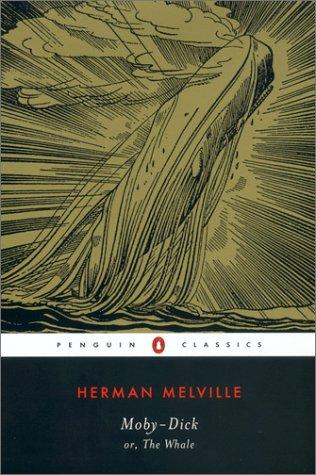
Moby-Dick opens with one of the most famous sentences in American literature — "Call me Ishmael" — and immediately establishes a voice that is learned, digressive, sardonic, and strange.
Herman Melville · 1851 · 14h 0m
Full summary and key takeaways →The 13 questions
- 1.
Ahab tells the crew the voyage is about profit, then reveals it's about revenge. How does the crew respond, and what does their response tell you about how people respond to charismatic authority?
- 2.
The cetology chapters (on the biology and classification of whales) frustrate many readers. Did you find them tedious, or do you think they're doing something essential? What?
- 3.
Ahab's famous speech to the whale — 'To the last I grapple with thee' — is one of the great expressions of defiant individualism in American literature. Is it heroic, tragic, or deluded?
- 4.
Starbuck opposes the voyage on rational and commercial grounds and repeatedly fails to act on that opposition. Is he a coward, or is his position more complicated?
- 5.
Ishmael is both narrator and participant, but he often fades from the story. Why do you think Melville constructed the narration this way?
- 6.
The whale never seems to be pursuing the Pequod — it responds to attacks but doesn't initiate them. What does it mean for Ahab to have organized his entire life around an enemy that doesn't know he exists?
- 7.
Queequeg is the first character Ishmael describes at length, and he is drawn with more dignity and fullness than almost any white character in the novel. What is Melville arguing?
- 8.
The chapter on the whiteness of the whale argues that whiteness signifies not purity but blankness — the terror of a universe with no meaning. Does that reading feel true to you?
- 9.
Melville's contemporary readers didn't know what to make of this book. It sold poorly and was largely forgotten for seventy years. Why do you think it took so long to be recognized?
- 10.
The Pequod's crew is drawn from a dozen nations and backgrounds. What does their diversity mean in the context of a voyage led by one man's obsession?
- 11.
The novel is often described as a critique of American exceptionalism — the idea that individual will can conquer nature, fate, and God. Is that reading too neat?
- 12.
If you stopped reading partway through, where did you stop and why? If you kept going, what made you?
- 13.
Ishmael survives. Does the novel offer any explanation for why him? Does it need to?
How to run the discussion
- Pick six to eight, not all of them. An hour of real discussion covers fewer questions than anyone expects, and racing the list is what makes a book club feel like homework.
- Open with what people noticed, not what they concluded. Asking for a verdict first hardens opinions before anyone has heard each other.
- Let the disagreement run. The questions below that split a room are the ones worth the time; the ones everyone answers the same way can be skipped.
- Ask the quiet person a specific question. A direct, narrow question is far easier to answer than an open invitation to contribute.
Themes worth steering toward
If the conversation stalls, these are the threads that usually restart it.
Common questions
What are good book club questions for Moby-Dick?
Here are 13 book club questions for Moby-Dick by Herman Melville, ordered to open easily and end somewhere worth arguing about. The strongest openers ask what each reader noticed rather than what they concluded, and the discussion usually turns on obsession, fate and free will, nature and the sublime.
How long should a book club discussion of Moby-Dick last?
Most groups run 60 to 90 minutes of actual discussion. That is roughly six to eight questions, not all of them, so pick the ones that suit your group rather than working down the list in order.
What are the main themes in Moby-Dick?
Obsession, Fate and free will, Nature and the sublime, Knowledge and its limits, Labor and capitalism. Those are the threads most likely to divide a room, which makes them the useful places to steer a discussion that has gone quiet.
Picking the next one? See books like Moby-Dick or questions for other book club picks.
