Mystery · Book club
Murder on the Orient Express book club questions
Here are 12 book club questions for Murder on the Orient Express by Agatha Christie, ordered to open easily and end somewhere worth arguing about. Copy them, print them, or bring them up one at a time.
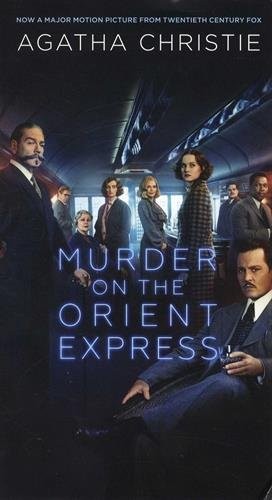
A man is found stabbed in his sleeping compartment on the snowbound Orient Express somewhere in Yugoslavia.
Agatha Christie · 1934 · 4h 20m
Full summary and key takeaways →The 12 questions
- 1.
Poirot presents two explanations and chooses one to report. Is his choice the right one? Would you have made the same decision?
- 2.
The original crime that connects all the passengers is a specific kind of injustice — the guilty party escaped through wealth and influence. Does that context change the moral calculus of the murder?
- 3.
Christie uses the passengers' class and national performances as misdirection. Does the novel do anything interesting with those national stereotypes beyond deploying them as puzzle pieces?
- 4.
Poirot's method throughout is psychological: understand who a person is, and their actions become predictable. Is that actually how detection works, or is it a fantasy of rational order?
- 5.
The snowstorm trap is the same structural device as the island in And Then There Were None. What does Christie gain by using a moving luxury train instead of a remote island?
- 6.
Each passenger has a slightly different relationship to the crime that connects them. Which of those relationships did you find most morally complex?
- 7.
The solution requires that twelve people maintain a perfect conspiracy across dozens of interviews with a world-famous detective. Does that strain credibility, or does the novel earn it?
- 8.
Christie published this in 1934, six years after her own mysterious eleven-day disappearance during her first marriage. Whether or not that's relevant, it's hard not to read themes of hidden selves and constructed identities in that context.
- 9.
How does your feeling about the ending change depending on whether you believe the law and justice are the same thing?
- 10.
Poirot is often described as a comic figure — his vanity, his complaints about discomfort, his obsession with the 'little grey cells.' Does that characterization make him more or less credible as an analyst?
- 11.
Compared to And Then There Were None, which Christie novel do you think is the more formally accomplished? Which one is more emotionally satisfying?
- 12.
The book has been adapted multiple times (film, television, stage). Does knowing the solution in advance change whether a new adaptation can work?
How to run the discussion
- Pick six to eight, not all of them. An hour of real discussion covers fewer questions than anyone expects, and racing the list is what makes a book club feel like homework.
- Open with what people noticed, not what they concluded. Asking for a verdict first hardens opinions before anyone has heard each other.
- Let the disagreement run. The questions below that split a room are the ones worth the time; the ones everyone answers the same way can be skipped.
- Ask the quiet person a specific question. A direct, narrow question is far easier to answer than an open invitation to contribute.
Themes worth steering toward
If the conversation stalls, these are the threads that usually restart it.
Common questions
What are good book club questions for Murder on the Orient Express?
Here are 12 book club questions for Murder on the Orient Express by Agatha Christie, ordered to open easily and end somewhere worth arguing about. The strongest openers ask what each reader noticed rather than what they concluded, and the discussion usually turns on justice and the law, collective guilt, identity and performance.
How long should a book club discussion of Murder on the Orient Express last?
Most groups run 60 to 90 minutes of actual discussion. That is roughly six to eight questions, not all of them, so pick the ones that suit your group rather than working down the list in order.
What are the main themes in Murder on the Orient Express?
Justice and the law, Collective guilt, Identity and performance, Memory and grief, Moral ambiguity. Those are the threads most likely to divide a room, which makes them the useful places to steer a discussion that has gone quiet.
Picking the next one? See books like Murder on the Orient Express or questions for other book club picks.
