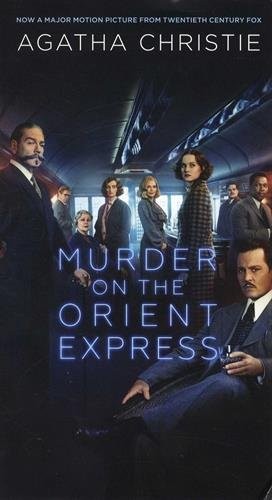
Murder on the Orient Express by Agatha Christie is a 1934 mystery book about justice and the law, collective guilt, identity and performance. The solution is not just a clever puzzle answer — it is a moral position about collective responsibility that Christie endorses carefully and without sentimentality.
Summary
A man is found stabbed in his sleeping compartment on the snowbound Orient Express somewhere in Yugoslavia. Hercule Poirot, the famous Belgian detective, happens to be aboard. All twelve other passengers are suspects; none appears to have a motive; each has an alibi. Murder on the Orient Express is Christie's most celebrated novel, and its solution — one of the most famous in crime fiction — reframes everything that came before it in a single revelation.
The book is primarily a puzzle, and a very good one. Christie is working here in the classical fair-play tradition: every clue is present, every suspect is given appropriate screen time, and the solution requires only careful attention to what Poirot observes. The locked-space logic — a train stuck in snow, passengers who cannot leave — creates the same contained paranoia she would use even more efficiently in And Then There Were None five years later. The pleasure is less psychological than mechanical: watching an expert systematically dismantle false appearances and build a complete picture from fragments.
But there is something underneath the puzzle. The victim is, in a specific way that cannot be stated without spoiling the solution, connected to a historical crime. The passengers are connected to that crime. And Poirot's final decision — presented with two possible explanations, one conventional and one not — is a moment where Christie asks the reader what justice actually requires. This is not a cynical novel or a nihilistic one, but it is a novel that believes the law and justice are not always the same thing, and that an honest person might have to choose between them.
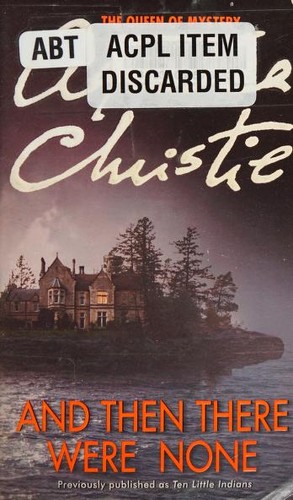
Christie's Poirot novels are uneven; this is one of the handful where everything works together. The setting is economical and evocative, the cast is large enough to sustain the puzzle but small enough to keep track of, and the central gimmick is so cleanly executed that even readers who have been told the solution often miss how it was done on first reading. For mystery newcomers, this and And Then There Were None are the obvious entries.
Talk to Murder on the Orient Express like its author wrote you back.
Get the ideas that fit your life — not generic summaries.
- Chat with the book
- Audiobook-style main ideas
- Adapts to your life and goals
- Helps you take action
Key takeaways
- 1.
The solution is not just a clever puzzle answer — it is a moral position about collective responsibility that Christie endorses carefully and without sentimentality.
- 2.
Poirot's two-solution presentation at the end is a structural choice that places the moral question squarely on the reader: which explanation do you prefer, and why?
- 3.
The Orient Express is not a glamorous backdrop — it is a closed space that Christie uses as efficiently as the island in And Then There Were None. Containment is her method.
- 4.
Every passenger is performing an identity: class, nationality, profession, emotional state. The puzzle requires seeing through the performance to the connection underneath.
- 5.
Christie's fair-play commitment is on full display. The solution is derivable from available evidence; nothing essential is withheld. The clues are visible before the answer is given.
- 6.
Grief is the engine of the plot, not greed or ambition. That's unusual for golden age detective fiction, and it changes the emotional register of the ending.
- 7.
Poirot as a character operates by trusting human psychology over physical evidence. His method is essentially: understand who people are, and what they would have done becomes clear.
- 8.
The ending's moral ambiguity was controversial in 1934 and remains so. Christie is asking the reader whether justice requires procedure or outcome — and the novel doesn't force an answer.
Discussion questions
Use these on your own, with a book club, or as chat starters in Superbook. Book club version, ready to copy or print →
- 1.
Poirot presents two explanations and chooses one to report. Is his choice the right one? Would you have made the same decision?
- 2.
The original crime that connects all the passengers is a specific kind of injustice — the guilty party escaped through wealth and influence. Does that context change the moral calculus of the murder?
- 3.
Christie uses the passengers' class and national performances as misdirection. Does the novel do anything interesting with those national stereotypes beyond deploying them as puzzle pieces?
- 4.
Poirot's method throughout is psychological: understand who a person is, and their actions become predictable. Is that actually how detection works, or is it a fantasy of rational order?
- 5.
The snowstorm trap is the same structural device as the island in And Then There Were None. What does Christie gain by using a moving luxury train instead of a remote island?
- 6.
Each passenger has a slightly different relationship to the crime that connects them. Which of those relationships did you find most morally complex?
- 7.
The solution requires that twelve people maintain a perfect conspiracy across dozens of interviews with a world-famous detective. Does that strain credibility, or does the novel earn it?
- 8.
Christie published this in 1934, six years after her own mysterious eleven-day disappearance during her first marriage. Whether or not that's relevant, it's hard not to read themes of hidden selves and constructed identities in that context.
- 9.
How does your feeling about the ending change depending on whether you believe the law and justice are the same thing?
- 10.
Poirot is often described as a comic figure — his vanity, his complaints about discomfort, his obsession with the 'little grey cells.' Does that characterization make him more or less credible as an analyst?
- 11.
Compared to And Then There Were None, which Christie novel do you think is the more formally accomplished? Which one is more emotionally satisfying?
- 12.
The book has been adapted multiple times (film, television, stage). Does knowing the solution in advance change whether a new adaptation can work?
Themes
Frequently asked questions
-
Is Murder on the Orient Express worth reading if I know the solution?
Yes — and probably more so. Knowing the solution reveals how carefully Christie laid in the clues and how precisely each passenger's testimony is constructed. Many readers find the second read more impressive than the first.
-
Which is better — Orient Express or And Then There Were None?
Different pleasures. Orient Express is warmer, character-richer, and has a more morally interesting ending. And Then There Were None is bleaker, faster, and more purely terrifying as a suspense mechanism. Both are Christie at her best.
-
Which film adaptation is the best?
The 1974 Albert Finney version is the classic — a starry ensemble, lush production, and a faithful adaptation. Kenneth Branagh's 2017 version is visually spectacular but makes character choices some readers find odd. The 1974 version is the better film.
-
Do I need to have read other Poirot novels first?
No. Christie provides enough context for Poirot's background and method within the novel. It is a common entry point for readers new to Poirot, alongside The Murder of Roger Ackroyd.
-
Who shouldn't read this?
Readers who need character depth over puzzle elegance. The passengers in Orient Express are vivid types rather than fully developed people. Christie's interest is in their function in the mechanism. If that's frustrating rather than pleasurable, And Then There Were None gives you slightly more.