Literary fiction · Book club
My Brilliant Friend book club questions
Here are 12 book club questions for My Brilliant Friend by Elena Ferrante, ordered to open easily and end somewhere worth arguing about. Copy them, print them, or bring them up one at a time.
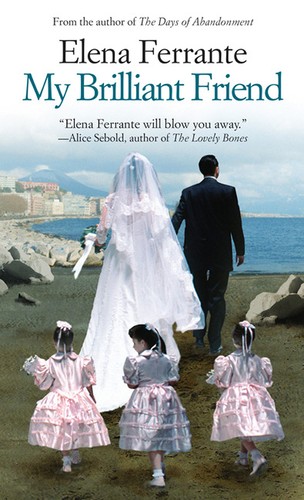
My Brilliant Friend is the first volume of Elena Ferrante's Neapolitan Novels, following Elena Greco and Lila Cerullo from their childhood in a poor Naples neighborhood in the 1950s into early adolescence.
Elena Ferrante · 2011 · 7h 45m
Full summary and key takeaways →The 12 questions
- 1.
Elena describes Lila as brilliant throughout, but we mostly see Lila's brilliance through Elena's perception. Is Lila actually more exceptional than Elena, or is Elena's story about Lila a way of explaining her own choices?
- 2.
The neighborhood is depicted as brutal but also as a community with real bonds and pleasures. Does Ferrante romanticize it, or is she being honest about what leaving actually costs?
- 3.
Education is the escape valve for the girls, but the novel shows it closing for Lila while opening for Elena. Is Lila's marriage a choice or a surrender? Does the novel answer this?
- 4.
How does violence function in the neighborhood's social order? Is it primarily about economics, gender, or something else?
- 5.
Elena's narration is retrospective — she knows how things turn out, including that Lila will eventually vanish. Does knowing this change how you read the friendship in this first volume?
- 6.
Ferrante never writes about Lila from the inside. Is this a technical limitation or a deliberate statement about the limits of Elena's knowledge of her friend?
- 7.
The Solara brothers represent a specific kind of threatening masculinity in the novel. How do they function differently from the older generation's violence?
- 8.
My Brilliant Friend is sometimes described as a novel about Naples as much as about its characters. Did you feel the city as a presence? How much does place determine destiny in this world?
- 9.
Elena and Lila's mothers are almost entirely unsympathetic figures. Is this a flaw in the novel, or does Ferrante have something specific to say about what poverty and confinement do to women over time?
- 10.
The novel ends inconclusively. Did that frustrate you or make you want to read on? Is that a fair way to end a first volume?
- 11.
If you had to characterize the friendship at the end of this volume — is it primarily love, rivalry, or something else? What's the right word for it?
- 12.
Ferrante's identity is famously unknown. Does not knowing who wrote the novel change how you read it? Does the author's anonymity feel like a gimmick or something more interesting?
How to run the discussion
- Pick six to eight, not all of them. An hour of real discussion covers fewer questions than anyone expects, and racing the list is what makes a book club feel like homework.
- Open with what people noticed, not what they concluded. Asking for a verdict first hardens opinions before anyone has heard each other.
- Let the disagreement run. The questions below that split a room are the ones worth the time; the ones everyone answers the same way can be skipped.
- Ask the quiet person a specific question. A direct, narrow question is far easier to answer than an open invitation to contribute.
Themes worth steering toward
If the conversation stalls, these are the threads that usually restart it.
Common questions
What are good book club questions for My Brilliant Friend?
Here are 12 book club questions for My Brilliant Friend by Elena Ferrante, ordered to open easily and end somewhere worth arguing about. The strongest openers ask what each reader noticed rather than what they concluded, and the discussion usually turns on female friendship and rivalry, class and education as escape, violence and patriarchy.
How long should a book club discussion of My Brilliant Friend last?
Most groups run 60 to 90 minutes of actual discussion. That is roughly six to eight questions, not all of them, so pick the ones that suit your group rather than working down the list in order.
What are the main themes in My Brilliant Friend?
Female friendship and rivalry, Class and education as escape, Violence and patriarchy, Identity and self-invention, Naples and place as destiny. Those are the threads most likely to divide a room, which makes them the useful places to steer a discussion that has gone quiet.
Picking the next one? See books like My Brilliant Friend or questions for other book club picks.
