Religion & Spirituality · Book club
New Seeds of Contemplation book club questions
Here are 12 book club questions for New Seeds of Contemplation by Thomas Merton, ordered to open easily and end somewhere worth arguing about. Copy them, print them, or bring them up one at a time.
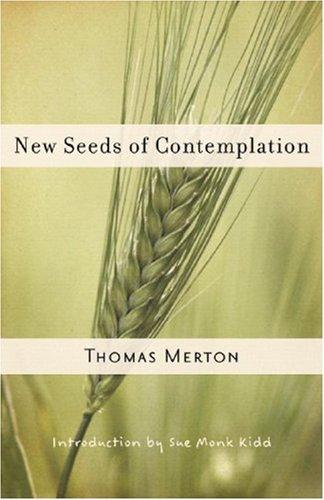
New Seeds of Contemplation is Thomas Merton's revised and expanded version of Seeds of Contemplation, which he published in 1949 when he was still new to monastic life.
Thomas Merton · 1961 · 4h 15m
Full summary and key takeaways →The 12 questions
- 1.
Merton describes the false self as the identity we construct to be accepted, admired, or safe. Where in your life do you recognize that construction most clearly?
- 2.
He argues that solitude is the precondition for genuine love, not its opposite. Does that claim match your experience, or does it feel like a rationalization for withdrawal?
- 3.
What is the difference between contemplation as Merton describes it and mindfulness practice as it is commonly taught today?
- 4.
Merton is critical of religious performance — the habit of going through spiritual motions while remaining inwardly unchanged. How would you know the difference in yourself?
- 5.
The book was written in a monastery, by a monk, for largely religious readers. Which of its ideas, if any, do you think apply outside that context?
- 6.
Merton draws parallels between Christian contemplation and Zen. Does that move feel like genuine insight or like a Western intellectual flattening of distinct traditions?
- 7.
He writes that the true self is not an achievement but a discovery — something you uncover by removing what is not you. What would it mean to approach your identity that way?
- 8.
Merton insists that contemplation cannot be produced by technique. Does that make the book useful, or does it make the whole project inaccessible?
- 9.
The chapter on spiritual greed describes people who pursue spiritual experience as another form of acquisition. Have you recognized that pattern in yourself or others?
- 10.
Merton was a public intellectual as well as a monk. How do you reconcile his argument for silence and withdrawal with his prolific writing and public engagement?
- 11.
What does it mean to say that a book about contemplation can only ever be seeds — that the reader must grow whatever it contains?
- 12.
If you were to practice one thing from this book for a month, what would it be?
How to run the discussion
- Pick six to eight, not all of them. An hour of real discussion covers fewer questions than anyone expects, and racing the list is what makes a book club feel like homework.
- Open with what people noticed, not what they concluded. Asking for a verdict first hardens opinions before anyone has heard each other.
- Let the disagreement run. The questions below that split a room are the ones worth the time; the ones everyone answers the same way can be skipped.
- Ask the quiet person a specific question. A direct, narrow question is far easier to answer than an open invitation to contribute.
Themes worth steering toward
If the conversation stalls, these are the threads that usually restart it.
Common questions
What are good book club questions for New Seeds of Contemplation?
Here are 12 book club questions for New Seeds of Contemplation by Thomas Merton, ordered to open easily and end somewhere worth arguing about. The strongest openers ask what each reader noticed rather than what they concluded, and the discussion usually turns on contemplation, silence, true self.
How long should a book club discussion of New Seeds of Contemplation last?
Most groups run 60 to 90 minutes of actual discussion. That is roughly six to eight questions, not all of them, so pick the ones that suit your group rather than working down the list in order.
What are the main themes in New Seeds of Contemplation?
Contemplation, Silence, True self, Mysticism, Solitude. Those are the threads most likely to divide a room, which makes them the useful places to steer a discussion that has gone quiet.
Picking the next one? See books like New Seeds of Contemplation or questions for other book club picks.
