Literary fiction · Book club
No Country for Old Men book club questions
Here are 12 book club questions for No Country for Old Men by Cormac McCarthy, ordered to open easily and end somewhere worth arguing about. Copy them, print them, or bring them up one at a time.
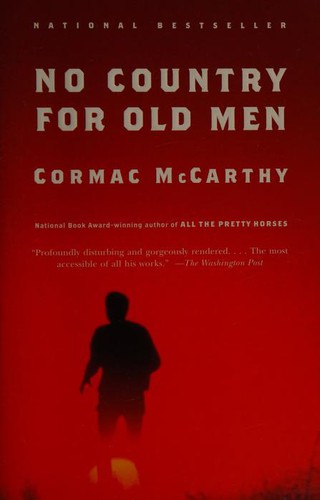
No Country for Old Men begins in the Texas desert in 1980 where a Vietnam veteran named Llewelyn Moss stumbles on the aftermath of a drug deal gone wrong: a ring of dead men, trucks, a cache of heroin, and two million dollars in a case.
Cormac McCarthy · 2005 · 5h 45m
Full summary and key takeaways →The 12 questions
- 1.
Chigurh tells Carla Jean the coin decides. She tells him he makes his own choices. Who does the novel think is right?
- 2.
Bell retires rather than continuing to fight. Is that a failure or an honest acknowledgment of limits? Does the novel judge him for it?
- 3.
Moss makes a fatal error when he goes back to help a dying man in the desert. Is that an act of humanity or hubris? How does the novel frame it?
- 4.
The novel's climax — Moss's death — happens off-page. Why? What does McCarthy gain or lose by that choice?
- 5.
Bell's monologues interrupt the action-thriller plot. How do they change the reading experience? What would the book be without them?
- 6.
Chigurh survives a car accident and walks away. Is that a supernatural suggestion, or is McCarthy doing something else?
- 7.
The title comes from Yeats — 'That is no country for old men.' How does the poem's context (a man looking at youth, sailing toward Byzantium) deepen or complicate the novel?
- 8.
McCarthy wrote this as a screenplay first. Where do you feel the screenplay origins most — in the scene structure, the dialogue, elsewhere?
- 9.
The film is considered one of the best adaptations ever made. Having read the novel, what do you think the film captures and what does it lose?
- 10.
Bell keeps invoking his father and grandfather — men who served and were, he implies, better suited to their time. Is the novel nostalgic for something, or is it interrogating nostalgia?
- 11.
Carla Jean is one of the novel's most clear-eyed characters. What is McCarthy doing with her in the final confrontation with Chigurh?
- 12.
No Country is sometimes read alongside Blood Meridian as companion texts on American violence. Are they making the same argument?
How to run the discussion
- Pick six to eight, not all of them. An hour of real discussion covers fewer questions than anyone expects, and racing the list is what makes a book club feel like homework.
- Open with what people noticed, not what they concluded. Asking for a verdict first hardens opinions before anyone has heard each other.
- Let the disagreement run. The questions below that split a room are the ones worth the time; the ones everyone answers the same way can be skipped.
- Ask the quiet person a specific question. A direct, narrow question is far easier to answer than an open invitation to contribute.
Themes worth steering toward
If the conversation stalls, these are the threads that usually restart it.
Common questions
What are good book club questions for No Country for Old Men?
Here are 12 book club questions for No Country for Old Men by Cormac McCarthy, ordered to open easily and end somewhere worth arguing about. The strongest openers ask what each reader noticed rather than what they concluded, and the discussion usually turns on violence and modernity, fate and chance, moral decline.
How long should a book club discussion of No Country for Old Men last?
Most groups run 60 to 90 minutes of actual discussion. That is roughly six to eight questions, not all of them, so pick the ones that suit your group rather than working down the list in order.
What are the main themes in No Country for Old Men?
Violence and modernity, Fate and chance, Moral decline, Duty and futility, Evil as force. Those are the threads most likely to divide a room, which makes them the useful places to steer a discussion that has gone quiet.
Picking the next one? See books like No Country for Old Men or questions for other book club picks.
