Literary fiction · Book club
Normal People book club questions
Here are 12 book club questions for Normal People by Sally Rooney, ordered to open easily and end somewhere worth arguing about. Copy them, print them, or bring them up one at a time.
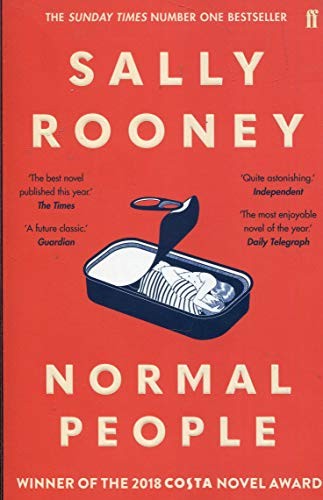
Normal People follows Connell and Marianne from their small-town Irish secondary school through their years at Trinity College Dublin.
Sally Rooney · 2018 · 5h 0m
Full summary and key takeaways →The 12 questions
- 1.
At the novel's pivotal crisis — Connell not inviting Marianne to the debs — he tells himself he was protecting her. Do you believe that? Does the novel?
- 2.
Marianne's family home is a site of real violence, but the novel is restrained about it. How much does her home life explain her relationship to being hurt, and how much does that explanation risk becoming an excuse?
- 3.
Connell's class anxiety is a through-line: he feels fraudulent at Trinity, edits himself at parties. Is this depicted as something he needs to overcome, or does the novel suggest it's a reasonable response to his actual situation?
- 4.
The power in the relationship shifts repeatedly — at school Connell has it, at Trinity Marianne does. Does the novel suggest power in a relationship is inherently zero-sum, or is there a version where neither person holds it over the other?
- 5.
Rooney is often criticized for romanticizing unhealthy relationship patterns. Is that a fair reading, or does the novel actually critique what it depicts?
- 6.
By the end, Connell is going to New York and Marianne is staying. Is this a hopeful ending, a tragic one, or something harder to categorize? What does the novel seem to think?
- 7.
Both Connell and Marianne are extremely smart people who consistently fail to communicate the most important things. Is their silence a character flaw, a product of their circumstances, or something the novel treats as universal?
- 8.
The novel is often described as a love story, but it might more accurately be described as a novel about self-formation. Which reading feels more accurate to you?
- 9.
Compared to Normal People, how does the relationship dynamic in Conversations with Friends (if you've read it) differ? Does Rooney's interest in the same territory feel repetitive or deepened?
- 10.
Helen, Connell's university girlfriend, is a minor character but an important one. What work does she do in the novel, and is she treated fairly by the narrative?
- 11.
Marianne's sadomasochistic relationships at university are introduced and then dropped. What do you think Rooney was trying to do with them, and did it work?
- 12.
The novel generated enormous cultural conversation about whether Marianne and Connell are sympathetic or infuriating. Which camp are you in, and why?
How to run the discussion
- Pick six to eight, not all of them. An hour of real discussion covers fewer questions than anyone expects, and racing the list is what makes a book club feel like homework.
- Open with what people noticed, not what they concluded. Asking for a verdict first hardens opinions before anyone has heard each other.
- Let the disagreement run. The questions below that split a room are the ones worth the time; the ones everyone answers the same way can be skipped.
- Ask the quiet person a specific question. A direct, narrow question is far easier to answer than an open invitation to contribute.
Themes worth steering toward
If the conversation stalls, these are the threads that usually restart it.
Common questions
What are good book club questions for Normal People?
Here are 12 book club questions for Normal People by Sally Rooney, ordered to open easily and end somewhere worth arguing about. The strongest openers ask what each reader noticed rather than what they concluded, and the discussion usually turns on class and social mobility, intimacy and vulnerability, power dynamics in relationships.
How long should a book club discussion of Normal People last?
Most groups run 60 to 90 minutes of actual discussion. That is roughly six to eight questions, not all of them, so pick the ones that suit your group rather than working down the list in order.
What are the main themes in Normal People?
Class and social mobility, Intimacy and vulnerability, Power dynamics in relationships, Identity formation, Communication and silence. Those are the threads most likely to divide a room, which makes them the useful places to steer a discussion that has gone quiet.
Picking the next one? See books like Normal People or questions for other book club picks.
