Literary fiction · Book club
Norwegian Wood book club questions
Here are 12 book club questions for Norwegian Wood by Haruki Murakami, ordered to open easily and end somewhere worth arguing about. Copy them, print them, or bring them up one at a time.
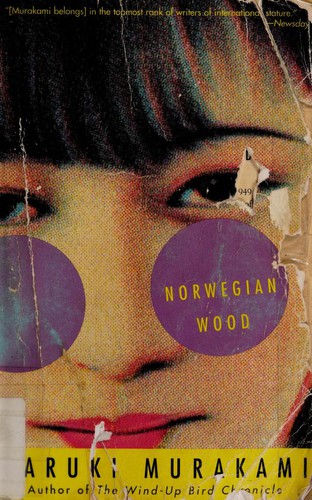
Norwegian Wood is Murakami's most straightforwardly realist novel and his most personal — a coming-of-age story set in late 1960s Tokyo, narrated by Toru Watanabe, who is recalling the year he was nineteen and the two women who shaped him.
Haruki Murakami · 1987 · 7h 45m
Full summary and key takeaways →The 12 questions
- 1.
Toru is drawn to Naoko partly because they share the same grief and partly because her damage feels like depth. Is that self-deception on his part, and does the novel judge him for it?
- 2.
Midori is often read as the novel's argument against grief — the embodiment of life continuing. Does that reading reduce her, or is it what the novel actually intends?
- 3.
The sanatorium is physically beautiful and spiritually terminal. What is Murakami saying by making Naoko's world so aesthetically appealing?
- 4.
Reiko is a fascinating side character — a musician with her own complicated history. What function does she serve in the novel that Naoko or Midori cannot?
- 5.
Norwegian Wood is deliberately not a magical realist novel. What does Murakami gain by working in straight realism here, and what does he give up?
- 6.
The student protest movement happens in the background while Toru remains detached. Is that detachment a character flaw, a historical comment, or both?
- 7.
How does the novel treat suicide? Does it romanticize it, resist it, or genuinely reckon with it as a phenomenon that spreads through social proximity?
- 8.
Toru is not a fully realized character in the way Naoko or Midori are — he's more of a consciousness through which we experience the other two. Is that a structural choice that works?
- 9.
Compare this novel to The Catcher in the Rye as a coming-of-age story about grief and social alienation. What does Murakami's version do differently?
- 10.
The novel was written in the late 1980s and set in the late 1960s. How does that retrospective distance shape the emotional texture of the narration?
- 11.
The last line puts Toru in a nowhere-place calling Midori's name. What does that image finally mean?
- 12.
Norwegian Wood was Murakami's first major bestseller. What do you think it gave Japanese readers in 1987 that they hadn't seen before?
How to run the discussion
- Pick six to eight, not all of them. An hour of real discussion covers fewer questions than anyone expects, and racing the list is what makes a book club feel like homework.
- Open with what people noticed, not what they concluded. Asking for a verdict first hardens opinions before anyone has heard each other.
- Let the disagreement run. The questions below that split a room are the ones worth the time; the ones everyone answers the same way can be skipped.
- Ask the quiet person a specific question. A direct, narrow question is far easier to answer than an open invitation to contribute.
Themes worth steering toward
If the conversation stalls, these are the threads that usually restart it.
Common questions
What are good book club questions for Norwegian Wood?
Here are 12 book club questions for Norwegian Wood by Haruki Murakami, ordered to open easily and end somewhere worth arguing about. The strongest openers ask what each reader noticed rather than what they concluded, and the discussion usually turns on grief and loss, coming of age, mental illness.
How long should a book club discussion of Norwegian Wood last?
Most groups run 60 to 90 minutes of actual discussion. That is roughly six to eight questions, not all of them, so pick the ones that suit your group rather than working down the list in order.
What are the main themes in Norwegian Wood?
Grief and loss, Coming of age, Mental illness, Memory, Love and distance. Those are the threads most likely to divide a room, which makes them the useful places to steer a discussion that has gone quiet.
Picking the next one? See books like Norwegian Wood or questions for other book club picks.
