Literary fiction · Book club
Olive Kitteridge book club questions
Here are 12 book club questions for Olive Kitteridge by Elizabeth Strout, ordered to open easily and end somewhere worth arguing about. Copy them, print them, or bring them up one at a time.
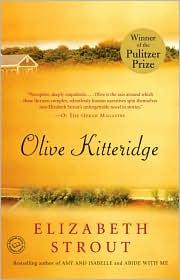
Olive Kitteridge is a linked short-story collection set in the small coastal town of Crosby, Maine, structured around a retired schoolteacher who is difficult, sharp-tongued, occasionally cruel, and deeply, secretly observant of the people around her.
Elizabeth Strout · 2008 · 5h 0m
Full summary and key takeaways →The 12 questions
- 1.
Olive appears in some stories as a main character, in others only in passing. How does that structural choice change the way you understand her compared to a traditional protagonist?
- 2.
Olive fails her son Christopher badly and knows it. Does the novel ask you to forgive her? Do you?
- 3.
Several characters in the book are suicidal. How does Strout handle those scenes — does the treatment feel true, or evasive, or something else?
- 4.
Olive and Henry's marriage is central to the book even though it's mostly shown in gaps and silences. What do you think kept them together? Was it love, or something else?
- 5.
The book is set in a specific kind of coastal Maine town — white, working-class, economically precarious. How much does that setting shape the emotional logic of the stories?
- 6.
Olive intervenes in crises throughout the book, sometimes helpfully, sometimes intrusively. Is she a force for good in Crosby, or does she cause as much damage as she prevents?
- 7.
Which story affected you most? What made it land?
- 8.
Strout's prose is extremely spare — no authorial commentary, minimal description, heavy reliance on dialogue and small gesture. How does that style shape what the book can do emotionally?
- 9.
The book ends with Olive alone, reaching tentatively toward something. Does that ending feel earned? What would the dishonest version of that ending look like?
- 10.
Olive is a middle-school math teacher — a profession with specific power over children. Does her teaching life add anything to how you read her?
- 11.
The book was adapted into an HBO miniseries with Frances McDormand. How does a story built on interiority and omission translate to a visual medium?
- 12.
What does the novel suggest about aging — specifically about whether people become more themselves or less themselves as they get older?
How to run the discussion
- Pick six to eight, not all of them. An hour of real discussion covers fewer questions than anyone expects, and racing the list is what makes a book club feel like homework.
- Open with what people noticed, not what they concluded. Asking for a verdict first hardens opinions before anyone has heard each other.
- Let the disagreement run. The questions below that split a room are the ones worth the time; the ones everyone answers the same way can be skipped.
- Ask the quiet person a specific question. A direct, narrow question is far easier to answer than an open invitation to contribute.
Themes worth steering toward
If the conversation stalls, these are the threads that usually restart it.
Common questions
What are good book club questions for Olive Kitteridge?
Here are 12 book club questions for Olive Kitteridge by Elizabeth Strout, ordered to open easily and end somewhere worth arguing about. The strongest openers ask what each reader noticed rather than what they concluded, and the discussion usually turns on marriage and distance, grief and depression, small-town life.
How long should a book club discussion of Olive Kitteridge last?
Most groups run 60 to 90 minutes of actual discussion. That is roughly six to eight questions, not all of them, so pick the ones that suit your group rather than working down the list in order.
What are the main themes in Olive Kitteridge?
Marriage and distance, Grief and depression, Small-town life, Aging and regret, Grudging connection. Those are the threads most likely to divide a room, which makes them the useful places to steer a discussion that has gone quiet.
Picking the next one? See books like Olive Kitteridge or questions for other book club picks.
