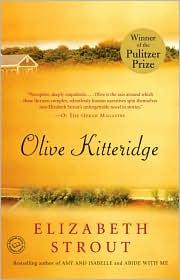
Olive Kitteridge by Elizabeth Strout is a 2008 literary fiction book about marriage and distance, grief and depression, small-town life. Strout builds a complete character portrait through accumulation — Olive never dominates any single story, but her presence across all of them creates something more dimensional than a conventional first-person narrative would allow.
Summary
Olive Kitteridge is a linked short-story collection set in the small coastal town of Crosby, Maine, structured around a retired schoolteacher who is difficult, sharp-tongued, occasionally cruel, and deeply, secretly observant of the people around her. She is not the protagonist of every story — sometimes she appears as a peripheral figure, a neighbor glimpsed through a window, an intruder on someone else's grief. But her presence shapes the emotional landscape of the book the way a rock formation shapes a coastline: immovably, without caring.
What the book is really about is the gap between the lives people build and the lives they wanted — marriages that calcified, children who left, kindnesses that came too late. Strout writes about depression and suicidality with unsentimental directness, and about the way ordinary Maine life can hold enormous amounts of private suffering. Olive herself is never quite sympathetic, never quite a villain. She sees things other people miss, intervenes in moments of crisis with blundering effectiveness, and fails the people closest to her in ways she can barely articulate.
The linked-story structure is exactly right for this material. Each chapter is complete, with its own characters and situation, but Olive's appearances accumulate into something resembling a portrait — one that the reader assembles rather than receives. Strout's prose is spare and precise; she is particularly good at dialogue that carries enormous unspoken weight. The book won the Pulitzer Prize in 2009 and has since been recognized as one of the essential American novels of its decade.
Readers who like their fiction emotionally honest and formally inventive will find this absorbing. Those who need a protagonist they can root for may struggle — Olive is not designed to be liked, and the book doesn't apologize for her. It is not a comfortable read. It is the kind of book that makes you think about your own marriage, your own silences, and who will see you clearly when the moment comes.
Talk to Olive Kitteridge like its author wrote you back.
Get the ideas that fit your life — not generic summaries.
- Chat with the book
- Audiobook-style main ideas
- Adapts to your life and goals
- Helps you take action
Key takeaways
- 1.
Strout builds a complete character portrait through accumulation — Olive never dominates any single story, but her presence across all of them creates something more dimensional than a conventional first-person narrative would allow.
- 2.
The book argues, quietly and without sentimentality, that depression is everywhere in ordinary American life — in marriages, in aging, in people who seem fine from the outside.
- 3.
Olive's emotional illiteracy is not framed as unusual. Most of the characters in the book are unable to say what they mean, and the novel is about what happens in that gap.
- 4.
The linked-story form lets Strout show the same town through dozens of private windows — a technique that builds an unusually complete picture of a community.
- 5.
Marriage in the book is mostly shown as a long endurance event, with moments of unexpected grace. The novel doesn't romanticize it or condemn it.
- 6.
The book treats suicidality as a recurring fact of ordinary life rather than a dramatic event — perhaps its most quietly radical move.
- 7.
Olive's few moments of genuine connection are all the more affecting for how rarely they appear. The book earns its emotional payoffs by withholding them.
- 8.
Strout's prose is designed to disappear — plain, rhythmically unobtrusive, lethal in its precision. The plainness is a craft choice that rewards attention.
Discussion questions
Use these on your own, with a book club, or as chat starters in Superbook. Book club version, ready to copy or print →
- 1.
Olive appears in some stories as a main character, in others only in passing. How does that structural choice change the way you understand her compared to a traditional protagonist?
- 2.
Olive fails her son Christopher badly and knows it. Does the novel ask you to forgive her? Do you?
- 3.
Several characters in the book are suicidal. How does Strout handle those scenes — does the treatment feel true, or evasive, or something else?
- 4.
Olive and Henry's marriage is central to the book even though it's mostly shown in gaps and silences. What do you think kept them together? Was it love, or something else?
- 5.
The book is set in a specific kind of coastal Maine town — white, working-class, economically precarious. How much does that setting shape the emotional logic of the stories?
- 6.
Olive intervenes in crises throughout the book, sometimes helpfully, sometimes intrusively. Is she a force for good in Crosby, or does she cause as much damage as she prevents?
- 7.
Which story affected you most? What made it land?
- 8.
Strout's prose is extremely spare — no authorial commentary, minimal description, heavy reliance on dialogue and small gesture. How does that style shape what the book can do emotionally?
- 9.
The book ends with Olive alone, reaching tentatively toward something. Does that ending feel earned? What would the dishonest version of that ending look like?
- 10.
Olive is a middle-school math teacher — a profession with specific power over children. Does her teaching life add anything to how you read her?
- 11.
The book was adapted into an HBO miniseries with Frances McDormand. How does a story built on interiority and omission translate to a visual medium?
- 12.
What does the novel suggest about aging — specifically about whether people become more themselves or less themselves as they get older?
Themes
Frequently asked questions
-
Is Olive Kitteridge a novel or a short story collection?
Technically a linked short-story collection, but it reads with the coherence of a novel. Each story is complete on its own, but Olive's appearances across all of them accumulate into a full portrait. The Pulitzer committee classified it as a novel.
-
Is Olive Kitteridge depressing?
It deals frankly with depression, grief, and failed relationships, so yes, in places. But it's not hopeless — Strout finds moments of genuine grace and connection throughout. It's the kind of book that makes you feel the weight of life, not crushed by it.
-
Do I need to like Olive to enjoy the book?
No, and the book doesn't ask you to. Olive is difficult, occasionally cruel, and nearly incapable of expressing love. The novel is interested in understanding her, not defending her. Many readers find her more compelling precisely because she is so unlike a conventional heroine.
-
Is there a sequel?
Yes. Olive, Again (2019) picks up Olive in later old age and continues the linked-story structure. Most readers find it a worthy companion, though the first book remains the stronger of the two.
-
Who shouldn't read Olive Kitteridge?
Readers who need narrative momentum and plot. Very little happens in a conventional sense — the book is entirely about interior states, relationships, and small moments. If you need a story to be going somewhere, this will frustrate you.