Psychology · Book club
On Becoming a Person: A Therapist's View of Psychotherapy book club questions
Here are 12 book club questions for On Becoming a Person: A Therapist's View of Psychotherapy by Carl R. Rogers, ordered to open easily and end somewhere worth arguing about. Copy them, print them, or bring them up one at a time.
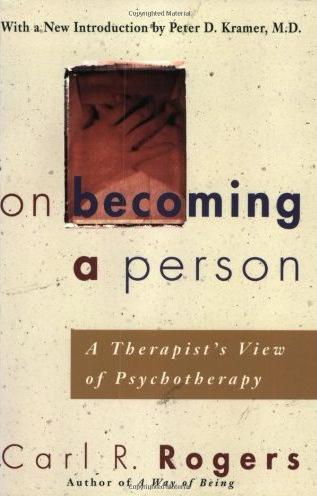
Carl Rogers wrote this book in 1961 as an attempt to communicate his therapeutic approach to readers outside the consulting room.
Carl R. Rogers · 1961 · 6h 0m
Full summary and key takeaways →The 12 questions
- 1.
Rogers argues that unconditional positive regard — accepting someone without conditions — is both rare and transformative. Who in your life has offered that to you, and what effect did it have?
- 2.
Think of a relationship where you perform a role rather than showing up genuinely. What would change if you let down that performance?
- 3.
Rogers says psychological distress often comes from internalizing others' conditions of worth — learning that love is conditional. Where have you absorbed that lesson, and is it still running?
- 4.
The book was written in 1961. Which of Rogers's ideas feel more relevant now than they would have then, and which feel more contested?
- 5.
Rogers applies his conditions to education, not just therapy. Think of a teacher or mentor who helped you grow. Were congruence, empathy, or positive regard present in that relationship?
- 6.
What's the difference between empathy as Rogers describes it — accurate perception of another's inner world — and sympathy or agreement?
- 7.
Rogers believed people have a natural tendency toward growth if the environment permits it. Where in your life is the environment impeding rather than permitting that tendency?
- 8.
The fully functioning person lives more in the present and trusts their organism more than their internalized rules. Where do you over-rely on rules at the expense of experience?
- 9.
Rogers is explicit that he distrusts expertise when it places the locus of evaluation outside the person. Do you agree? When is external evaluation necessary?
- 10.
The book is assembled from lectures and papers rather than written as a single argument. How does that structure affect how you engage with Rogers's ideas?
- 11.
Rogers's framework was considered radical in 1961. Which ideas in psychology that feel similarly radical right now do you expect to look obvious in sixty years?
- 12.
If you were to describe your own 'conditions of worth' — the beliefs you hold about what you must be or do to deserve love — what would they be?
How to run the discussion
- Pick six to eight, not all of them. An hour of real discussion covers fewer questions than anyone expects, and racing the list is what makes a book club feel like homework.
- Open with what people noticed, not what they concluded. Asking for a verdict first hardens opinions before anyone has heard each other.
- Let the disagreement run. The questions below that split a room are the ones worth the time; the ones everyone answers the same way can be skipped.
- Ask the quiet person a specific question. A direct, narrow question is far easier to answer than an open invitation to contribute.
Themes worth steering toward
If the conversation stalls, these are the threads that usually restart it.
Common questions
What are good book club questions for On Becoming a Person: A Therapist's View of Psychotherapy?
Here are 12 book club questions for On Becoming a Person: A Therapist's View of Psychotherapy by Carl R. Rogers, ordered to open easily and end somewhere worth arguing about. The strongest openers ask what each reader noticed rather than what they concluded, and the discussion usually turns on self-actualization, empathy, psychotherapy.
How long should a book club discussion of On Becoming a Person: A Therapist's View of Psychotherapy last?
Most groups run 60 to 90 minutes of actual discussion. That is roughly six to eight questions, not all of them, so pick the ones that suit your group rather than working down the list in order.
What are the main themes in On Becoming a Person: A Therapist's View of Psychotherapy?
Self-actualization, Empathy, Psychotherapy, Personal growth, Authenticity. Those are the threads most likely to divide a room, which makes them the useful places to steer a discussion that has gone quiet.
Picking the next one? See books like On Becoming a Person: A Therapist's View of Psychotherapy or questions for other book club picks.
