Philosophy · Book club
On Liberty book club questions
Here are 12 book club questions for On Liberty by John Stuart Mill, ordered to open easily and end somewhere worth arguing about. Copy them, print them, or bring them up one at a time.
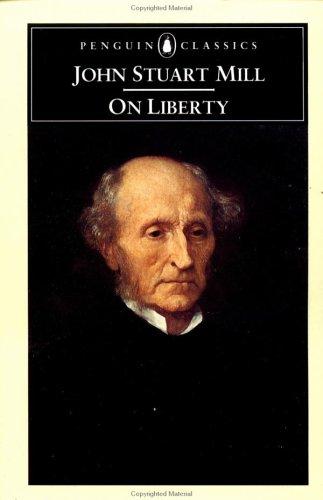
On Liberty, published in 1859, is John Stuart Mill's defense of individual freedom against both governmental coercion and social pressure.
John Stuart Mill · 1859 · 3h 15m
Full summary and key takeaways →The 12 questions
- 1.
The harm principle sounds simple. Can you think of cases where it is genuinely difficult to apply — where the line between self-regarding and other-regarding action is unclear?
- 2.
Mill argues that a true belief that has never been challenged becomes a dead dogma. Do you think that's an accurate description of how people relate to uncontested convictions?
- 3.
How does the distinction between legal coercion and social pressure affect Mill's argument? Is the harm principle as useful against the latter as against the former?
- 4.
Mill's fourth argument for free speech — that suppression harms the dissenter — is often overlooked. How does it change the analysis of modern debates about content moderation?
- 5.
Mill defends individuality partly on social grounds — diverse people generate better ideas and progress. Does that kind of instrumental defense feel stable, or does it invite the objection that individuality is only worth protecting when it's productive?
- 6.
Mill includes a paternalistic exception for societies not yet in 'the maturity of their faculties.' How do you evaluate that exception, and what does it reveal about the argument's foundations?
- 7.
Think of an area of your own life where you feel the pressure of social conformity more than legal coercion. How does Mill's framework apply there?
- 8.
On Liberty was jointly shaped by Mill's collaboration with Harriet Taylor. Does acknowledging that co-authorship change how you read the arguments?
- 9.
Mill says a person's liberty extends only to actions that are primarily self-regarding. Is there such a thing, or is every personal choice entangled with effects on others?
- 10.
The free speech arguments in On Liberty were written for an era without broadcast media, social platforms, or algorithmic amplification. Which parts of the argument survive that change, and which don't?
- 11.
Mill defends eccentricity and nonconformity as valuable to society. Do you think modern liberal democracies actually protect eccentricity, or do they substitute new forms of conformism for old ones?
- 12.
How does Mill's grounding of liberty in utility — rather than in rights — create vulnerabilities in the argument? Are those vulnerabilities fatal?
How to run the discussion
- Pick six to eight, not all of them. An hour of real discussion covers fewer questions than anyone expects, and racing the list is what makes a book club feel like homework.
- Open with what people noticed, not what they concluded. Asking for a verdict first hardens opinions before anyone has heard each other.
- Let the disagreement run. The questions below that split a room are the ones worth the time; the ones everyone answers the same way can be skipped.
- Ask the quiet person a specific question. A direct, narrow question is far easier to answer than an open invitation to contribute.
Themes worth steering toward
If the conversation stalls, these are the threads that usually restart it.
Common questions
What are good book club questions for On Liberty?
Here are 12 book club questions for On Liberty by John Stuart Mill, ordered to open easily and end somewhere worth arguing about. The strongest openers ask what each reader noticed rather than what they concluded, and the discussion usually turns on individual freedom, political authority, free speech.
How long should a book club discussion of On Liberty last?
Most groups run 60 to 90 minutes of actual discussion. That is roughly six to eight questions, not all of them, so pick the ones that suit your group rather than working down the list in order.
What are the main themes in On Liberty?
Individual freedom, Political authority, Free speech, Liberalism, Harm principle. Those are the threads most likely to divide a room, which makes them the useful places to steer a discussion that has gone quiet.
Picking the next one? See books like On Liberty or questions for other book club picks.
