Summary
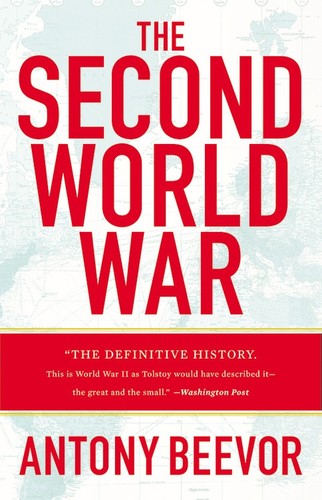
Antony Beevor's The Second World War, published in 2012, is a single-volume narrative history of the entire conflict from 1939 to 1945. Beevor is best known for his campaign histories — Stalingrad, Berlin, D-Day — and this book draws on that research while attempting something more ambitious: a connected account of all theaters, all major powers, and the experience of both soldiers and civilians across six years of global war.
The book's strength is breadth without superficiality. Beevor moves between the Eastern Front, the Pacific, North Africa, and Western Europe with sufficient detail to give each theater its own texture. He is especially good on the interaction between political decisions and military outcomes — how Churchill's strategic priorities clashed with American ones, how Stalin's interference cost the Red Army hundreds of thousands of lives, how Japanese military culture created a catastrophic disconnect between ambition and logistics.
Beevor is also attentive to what modern military history calls the experience of combat: the breakdown of unit cohesion, the role of fear and improvisation, the treatment of prisoners, and the immense suffering of civilian populations caught in the path of advancing and retreating armies. His treatment of the Eastern Front is particularly stark — the scale of Soviet and German casualties, and the systematic atrocities committed by both sides, are not softened.
The book is not a revisionist history. Beevor does not argue for dramatically new interpretations, and specialists will find the synthesis familiar. Its value is accessibility and coherence — the ability to hold the whole war in view while retaining the human grain. For readers who know individual campaigns but lack a global picture, or who want a reliable single-volume account without having to read multiple campaign histories, it remains one of the better options available.
Talk to The Second World War like its author wrote you back.
Get the ideas that fit your life — not generic summaries.
- Chat with the book
- Audiobook-style main ideas
- Adapts to your life and goals
- Helps you take action
Key takeaways
- 1.
World War II was not a single conflict but a series of overlapping wars — in Europe, the Pacific, North Africa, and Asia — each with its own logic and turning points.
- 2.
Stalin's political control of Soviet military operations, particularly in the early years, cost the Red Army catastrophically in lives and strategic positioning.
- 3.
Allied victory was not inevitable. The interaction of American industrial capacity, Soviet manpower, and British strategic persistence created a coalition that could outlast the Axis — but any of several earlier decisions could have broken it.
- 4.
The Eastern Front dwarfed all other theaters in scale and brutality. Roughly three-quarters of all German military casualties were suffered against the Soviet Union.
- 5.
Japanese strategic planning was fatally undermined by a military culture that prioritized aggression and will over logistics and supply, producing a series of overextensions that could not be sustained.
- 6.
The treatment of civilians — through bombing, occupation, forced labor, and deliberate starvation — was not incidental to the war but central to the strategy of multiple combatants.
- 7.
Coalition warfare between the major Allied powers was marked by persistent tensions over strategy, resources, and the postwar political order, tensions that shaped the peace as much as the fighting.
- 8.
Decisions made in the war's final year — about the borders of occupation zones, the treatment of Germany, the use of atomic weapons — set the framework for the Cold War that followed almost immediately.
Discussion questions
Use these on your own, with a book club, or as chat starters in Superbook.
- 1.
Beevor covers all major theaters of the war in a single volume. Which theater do you think gets the least attention in popular history, and what would a fuller treatment change in our understanding?
- 2.
Stalin's interference in Soviet military operations early in the war was catastrophic. What does that tell us about the relationship between political control and military effectiveness?
- 3.
How do you assess Churchill's strategic decisions — particularly his insistence on the Mediterranean theater — against American preferences for a direct cross-Channel attack?
- 4.
Beevor gives significant attention to the experience of civilians. Does that shift in focus change the moral calculus of any particular decision or campaign for you?
- 5.
The Eastern Front is sometimes described as a war of extermination on both sides. How does that framing hold up against the evidence Beevor presents?
- 6.
Japanese military culture produced both remarkable tactical effectiveness and strategic catastrophe. What does that suggest about the relationship between military culture and strategic success?
- 7.
The atomic bombings of Hiroshima and Nagasaki appear near the end of the book. How does the preceding 600 pages of civilian suffering affect how you read Beevor's treatment of that decision?
- 8.
The alliance between the United States, Britain, and the Soviet Union was deeply unstable. What held it together, and when did it begin to fracture?
- 9.
Beevor writes popular military history rather than academic history. What are the advantages and limitations of that genre for a subject of this scale?
- 10.
Which individual commander or political leader do you think made the single decision with the greatest effect on the war's outcome, and why?
- 11.
How does reading a single-volume global history of the war compare to the experience of reading focused campaign narratives like Stalingrad or D-Day?
- 12.
What does the book suggest about the conditions required for the kind of international cooperation that defeated the Axis, and whether those conditions could be recreated today?
Themes
Frequently asked questions
-
Is The Second World War by Antony Beevor a good single-volume history?
Yes, for readers who want comprehensive coverage of all theaters in one accessible narrative. It is most useful for those who know the war primarily through films or individual campaign histories and want a coherent global picture. Specialists will find the synthesis familiar but the writing clear.
-
How long is The Second World War by Beevor?
The main text runs to about 800 pages. At average reading pace it takes 15 to 20 hours. The chapters are organized chronologically with thematic attention to different theaters, making it possible to read in sections.
-
What makes Beevor's account different from other histories of World War II?
Beevor integrates the experience of combatants and civilians across all theaters in a single narrative, drawing on declassified archives from multiple countries. He is particularly strong on the Eastern Front and consistently attentive to the human cost of command decisions.
-
Who should read The Second World War?
Anyone who wants a reliable, readable, single-volume overview of the entire conflict. It works well as a first serious history of the war or as a connective tissue between more specialized accounts.
-
What does Beevor say caused the Allied victory?
He emphasizes the combination of American industrial production, Soviet manpower, and the cumulative effect of strategic decisions that kept the coalition intact despite persistent internal tensions. He does not attribute victory to any single factor but shows how the Axis powers' overextensions eventually became unsustainable.
Similar books
Sapiens: A Brief History of Humankind
Yuval Noah Harari
Guns, Germs, and Steel
Jared Diamond
Unbroken: A World War II Story of Survival, Resilience, and Redemption
Laura Hillenbrand
