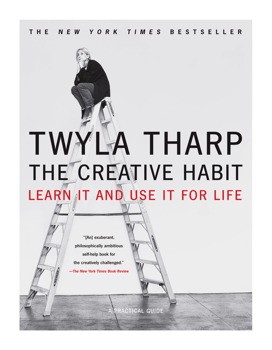
The Creative Habit by Twyla Tharp is a 2003 self-help book about creativity, habits, craft. Creativity is a habit that can be cultivated, not a mysterious gift. Consistent daily practice is the primary driver of creative output, not inspiration or talent.
Summary
The Creative Habit is legendary choreographer Twyla Tharp's account of how creativity works in practice — not as inspiration but as habit, discipline, and preparation. Tharp has created more than 160 dances over fifty years of professional work, and her argument, grounded in that experience, is that creativity is not a gift that descends on the prepared; it is a skill developed through consistent practice, systematic preparation, and ruthless attention to craft.
The book opens with Tharp's most famous personal ritual: she wakes at five-thirty, puts on her workout clothes, and takes a taxi to the gym. This small act of starting — getting in the taxi — is the creative habit in miniature. It is the ritual that makes the work possible. Tharp argues that rituals are not superstition but neurological scaffolding: they signal to the brain that creative work is beginning, reducing the willpower cost of getting started.
The central concept is the box: Tharp begins every project with a physical box into which she deposits everything related to it — clippings, notes, objects, recordings, sketches. The box externalizes memory and serves as the archive of preparation that fuels creation. She argues that creative inspiration is largely the result of preparation and immersion — what looks like a sudden insight is usually the product of accumulated material that the mind has been working on in the background.
Tharp covers creative memory (the deep archive of absorbed influences that inform your instincts), scratching (the practice of generating many ideas to find the ones worth developing), accidents (learning to recognize and use unexpected creative results), and the process of collaboration and feedback. Throughout, she is honest about creative failure, the role of obsession in sustained work, and the gap between aspiration and execution that every serious practitioner lives with.
Talk to The Creative Habit like its author wrote you back.
Get the ideas that fit your life — not generic summaries.
- Chat with the book
- Audiobook-style main ideas
- Adapts to your life and goals
- Helps you take action
Key takeaways
- 1.
Creativity is a habit that can be cultivated, not a mysterious gift. Consistent daily practice is the primary driver of creative output, not inspiration or talent.
- 2.
Rituals lower the activation energy of starting. They are neurological scaffolding that signals to the brain that work is beginning, reducing resistance.
- 3.
The box — a physical or conceptual container for everything related to a project — externalizes memory, preserves preparation, and provides material to work with when inspiration is absent.
- 4.
Scratching is the essential early-stage creative practice: generating many ideas, exploring widely, and allowing connections to form before committing to a direction.
- 5.
Creative memory is built from everything you have absorbed deeply — books, movement, music, observation. It is the material your instincts draw from. Feeding it is a long-term creative investment.
- 6.
Accidents and unexpected results are not interruptions to creative work but opportunities. Tharp argues the ability to recognize and use accidents is one of the most important creative skills.
- 7.
Obsession — the compulsive return to a problem or idea — is often the signal that something important is there. Following obsession rather than suppressing it is part of the creative process.
- 8.
All creative work involves a gap between aspiration and execution. Learning to tolerate this gap without abandoning the work is a core creative skill.
Discussion questions
Use these on your own, with a book club, or as chat starters in Superbook. Book club version, ready to copy or print →
- 1.
Tharp's morning taxi ritual is her most famous practice. What is the ritual — however small — that most reliably gets you into a state ready for your most important work?
- 2.
She argues that creativity is built from preparation and accumulated material. What are you currently absorbing — reading, observing, experiencing — that feeds your creative thinking?
- 3.
What's the creative project in your life right now? Do you have the equivalent of a box — some organized repository of material related to it?
- 4.
Tharp describes scratching as generating many ideas before committing to any. How patient are you in the early stages of a project? Do you commit too early or too late?
- 5.
What is the gap between your creative aspiration and your current execution in the work most important to you? How do you tolerate that gap?
- 6.
Have you experienced a creative accident — an unexpected result that turned out to be better than what you planned? How did you respond to it?
- 7.
Tharp distinguishes between skills that can be developed and those that are fundamentally limited by natural ability. What creative skills do you believe are genuinely limiting your work?
- 8.
She talks about creative memory as the deep archive of absorbed influences. What early experiences or works have most deeply shaped your creative instincts?
- 9.
What is the obsession you keep returning to in your creative work — the question or idea you can't leave alone? Have you followed it or suppressed it?
- 10.
The book is about dance, but Tharp applies the principles universally. What is the closest translation of the 'box' concept for your specific creative work?
- 11.
If you committed to a daily creative practice — however brief — for the next ninety days, what would you practice and what specifically would be your starting ritual?
Themes
Frequently asked questions
-
Is The Creative Habit worth reading?
Yes, especially for anyone in a creative field who wants a practitioner's account of how sustained creative work actually functions. Tharp is honest, experienced, and specific in ways that most books on creativity are not. Even if you don't work in a performing art, the structural principles transfer.
-
How long does it take to read The Creative Habit?
About four to five hours. The book is well-organized and the chapters are self-contained. The writing is direct and draws heavily on Tharp's own experience, making it unusually concrete for a book about creativity.
-
What is the main idea of The Creative Habit?
Creativity is not inspiration — it is habit, preparation, and discipline. Building daily practice rituals, maintaining a box of project material, and developing deep creative memory are the reliable foundations of sustained creative output.
-
How does The Creative Habit compare to The War of Art?
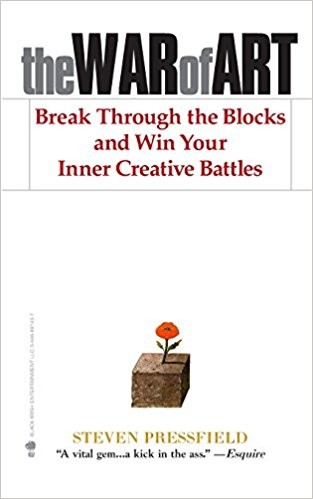
Both are about doing creative work consistently. The War of Art is shorter and more confrontational, focused on overcoming Resistance. The Creative Habit is more practical and more descriptive of the specific habits and techniques of a working creative professional. Tharp is more interested in how creativity functions; Pressfield is more interested in why it fails.
-
Who should read The Creative Habit?
Anyone who does creative work professionally or wants to, and who wants to understand how sustained creative production actually works from someone who has done it for fifty years. Also useful for people who rely on inspiration and find their output inconsistent.