Self-help · Book club
On Writing Well book club questions
Here are 12 book club questions for On Writing Well by William Zinsser, ordered to open easily and end somewhere worth arguing about. Copy them, print them, or bring them up one at a time.
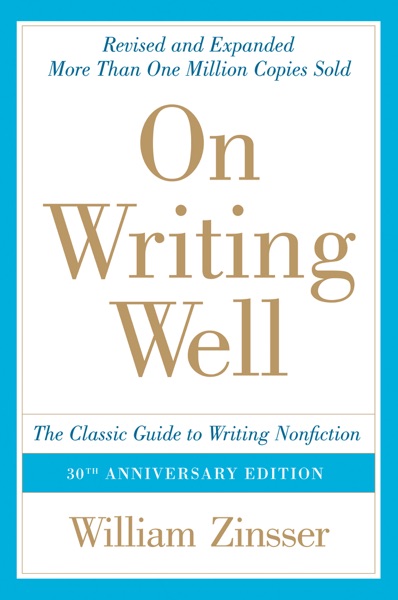
On Writing Well is William Zinsser's case that good nonfiction writing is not a talent you either have or don't, but a craft built on a small number of learnable principles — most of them reducible to the instruction to cut.
William Zinsser · 1976 · 4h 15m
Full summary and key takeaways →The 12 questions
- 1.
Zinsser says clutter is the primary problem in most writing. Look at something you wrote recently — an email, a report, a message. How much of it could you cut without losing anything?
- 2.
He argues that voice is the thing that makes writing worth reading. Who is a writer — in any form — whose voice you find distinctly pleasurable? What makes it work?
- 3.
Zinsser distinguishes between clarity of expression and simplicity of thought. Are there topics you hesitate to write about because you fear sounding simple? Is that fear accurate?
- 4.
He insists that rewriting is the real craft. How much do you actually revise what you write, and what usually stops you from revising more?
- 5.
The book was first published in 1976 and has been updated through seven editions. What in the core advice has aged, and what is as true now for email and social media as it was for journalism?
- 6.
Zinsser writes about finding and keeping a consistent voice across different forms — travel writing, science writing, memoir. What is the voice you have that you might not be using enough?
- 7.
He says writing is a form of thinking, not just a transcription of it. Have you ever discovered what you actually thought about something by writing it out? What changed in the writing?
- 8.
His chapters on business writing argue that corporate prose has specific pathologies — jargon, passive voice, abstraction — that make it unreadable. Where do you see those pathologies most egregiously?
- 9.
Zinsser says leads need to earn the reader's continued attention. How often do you decide, based on the first paragraph, whether to keep reading something?
- 10.
He covers memoir specifically: the problem of writing about yourself without being self-indulgent. What is the difference between a memoir that earns its personal material and one that doesn't?
- 11.
The book's own prose is a demonstration of its principles. What specific choices does Zinsser make in his writing that you'd like to borrow?
- 12.
If you applied Zinsser's cutting principle aggressively to one thing you communicate regularly, what would that be and what would it look like after the cuts?
How to run the discussion
- Pick six to eight, not all of them. An hour of real discussion covers fewer questions than anyone expects, and racing the list is what makes a book club feel like homework.
- Open with what people noticed, not what they concluded. Asking for a verdict first hardens opinions before anyone has heard each other.
- Let the disagreement run. The questions below that split a room are the ones worth the time; the ones everyone answers the same way can be skipped.
- Ask the quiet person a specific question. A direct, narrow question is far easier to answer than an open invitation to contribute.
Themes worth steering toward
If the conversation stalls, these are the threads that usually restart it.
Common questions
What are good book club questions for On Writing Well?
Here are 12 book club questions for On Writing Well by William Zinsser, ordered to open easily and end somewhere worth arguing about. The strongest openers ask what each reader noticed rather than what they concluded, and the discussion usually turns on writing, clarity, craft.
How long should a book club discussion of On Writing Well last?
Most groups run 60 to 90 minutes of actual discussion. That is roughly six to eight questions, not all of them, so pick the ones that suit your group rather than working down the list in order.
What are the main themes in On Writing Well?
Writing, Clarity, Craft, Nonfiction, Style. Those are the threads most likely to divide a room, which makes them the useful places to steer a discussion that has gone quiet.
Picking the next one? See books like On Writing Well or questions for other book club picks.
