Self-help · Book club
One Small Step Can Change Your Life book club questions
Here are 11 book club questions for One Small Step Can Change Your Life by Robert Maurer, ordered to open easily and end somewhere worth arguing about. Copy them, print them, or bring them up one at a time.
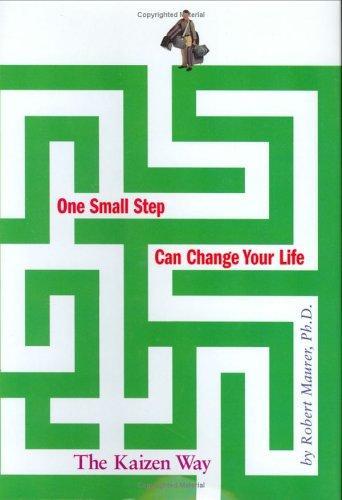
Robert Maurer's book is built around a single Japanese concept: kaizen, the practice of continuous improvement through very small steps.
Robert Maurer · 2004 · 2h 45m
Full summary and key takeaways →The 11 questions
- 1.
Maurer argues that most change attempts fail because they're too large for the brain's threat-detection system to accept. Can you identify a goal you've tried and failed to start where this explanation fits?
- 2.
What's the smallest possible version of a change you currently want to make — small enough that doing it today feels genuinely easy?
- 3.
The amygdala responds to novelty and challenge. How does that mechanism explain procrastination more precisely than 'lack of discipline'?
- 4.
Maurer works with clinical patients who have strong resistance to change. How applicable is his approach to people who are motivated but inconsistent rather than resistant?
- 5.
He distinguishes between kaizen (small continuous improvement) and innovation (large leaps). Which mode does your work or personal life favor, and which do you think you need more of?
- 6.
The book is short and the ideas are simple. Does simplicity make you trust the method more or less?
- 7.
Which of the kaizen tools — small questions, small actions, small rewards, small moments — feels most useful for something you're currently working on?
- 8.
Have you ever started something with a very small action and found it naturally grew into a larger practice? What did that progression look like?
- 9.
Maurer's examples include patients dealing with weight, addiction, and chronic illness. Does applying the same framework to those problems and to routine productivity goals make sense to you?
- 10.
The book was published in 2004. How does it hold up against more recent habits literature, and what does it add that books like Atomic Habits don't cover?
- 11.
What's the gap between where you are and where you want to be in some area of life? What would the first genuinely small action toward closing that gap look like?
How to run the discussion
- Pick six to eight, not all of them. An hour of real discussion covers fewer questions than anyone expects, and racing the list is what makes a book club feel like homework.
- Open with what people noticed, not what they concluded. Asking for a verdict first hardens opinions before anyone has heard each other.
- Let the disagreement run. The questions below that split a room are the ones worth the time; the ones everyone answers the same way can be skipped.
- Ask the quiet person a specific question. A direct, narrow question is far easier to answer than an open invitation to contribute.
Themes worth steering toward
If the conversation stalls, these are the threads that usually restart it.
Common questions
What are good book club questions for One Small Step Can Change Your Life?
Here are 11 book club questions for One Small Step Can Change Your Life by Robert Maurer, ordered to open easily and end somewhere worth arguing about. The strongest openers ask what each reader noticed rather than what they concluded, and the discussion usually turns on kaizen, incremental change, habits.
How long should a book club discussion of One Small Step Can Change Your Life last?
Most groups run 60 to 90 minutes of actual discussion. That is roughly six to eight questions, not all of them, so pick the ones that suit your group rather than working down the list in order.
What are the main themes in One Small Step Can Change Your Life?
Kaizen, Incremental change, Habits, Fear, Self-improvement. Those are the threads most likely to divide a room, which makes them the useful places to steer a discussion that has gone quiet.
Picking the next one? See books like One Small Step Can Change Your Life or questions for other book club picks.
