Memoir · Book club
Open: An Autobiography book club questions
Here are 11 book club questions for Open: An Autobiography by Andre Agassi, ordered to open easily and end somewhere worth arguing about. Copy them, print them, or bring them up one at a time.
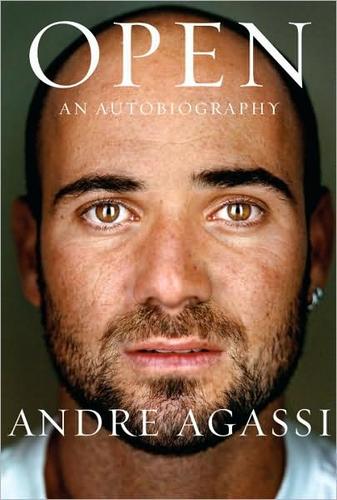
Andre Agassi's autobiography opens with one of the most famous confessions in sports memoir: he hates tennis.
Andre Agassi · 2009 · 7h 40m
Full summary and key takeaways →The 11 questions
- 1.
Agassi says he hates tennis on page one. Does the book convince you that this is true, or does it eventually reveal a more complicated relationship?
- 2.
His father's parenting would today be described as abusive. Does Open engage seriously with that characterization, or does it find another framework?
- 3.
The crystal meth confession generated major controversy when the book was published. Does knowing about the drug use change how you think about his career?
- 4.
Agassi's marriage to Brooke Shields is portrayed as a mutual mistake. Is the portrait of Shields fair? Does Agassi take appropriate responsibility?
- 5.
The Andre Agassi Foundation and charter school appear as the turning point in his self-understanding. Is that transformation convincing?
- 6.
J. R. Moehringer is credited as collaborator. Does the knowledge that the book is ghostwritten change how you read it as autobiography?
- 7.
Agassi's main rival, Pete Sampras, appears throughout as a contrast — emotionally opaque where Agassi is emotionally exposed. What does the comparison reveal about both men?
- 8.
The book argues that performing for external validation is hollow. Is that a lesson the book actually teaches, or does it fall into its own trap by being partly a performance of authenticity?
- 9.
What does Open suggest about the ethics of raising children to be elite athletes? Where is the line between preparation and exploitation?
- 10.
Agassi found meaning in his career only at the end. Is that a hopeful story or a cautionary one?
- 11.
Which sections of the memoir did you find most surprising? Most honest?
How to run the discussion
- Pick six to eight, not all of them. An hour of real discussion covers fewer questions than anyone expects, and racing the list is what makes a book club feel like homework.
- Open with what people noticed, not what they concluded. Asking for a verdict first hardens opinions before anyone has heard each other.
- Let the disagreement run. The questions below that split a room are the ones worth the time; the ones everyone answers the same way can be skipped.
- Ask the quiet person a specific question. A direct, narrow question is far easier to answer than an open invitation to contribute.
Themes worth steering toward
If the conversation stalls, these are the threads that usually restart it.
Common questions
What are good book club questions for Open: An Autobiography?
Here are 11 book club questions for Open: An Autobiography by Andre Agassi, ordered to open easily and end somewhere worth arguing about. The strongest openers ask what each reader noticed rather than what they concluded, and the discussion usually turns on identity, sports, rebellion.
How long should a book club discussion of Open: An Autobiography last?
Most groups run 60 to 90 minutes of actual discussion. That is roughly six to eight questions, not all of them, so pick the ones that suit your group rather than working down the list in order.
What are the main themes in Open: An Autobiography?
Identity, Sports, Rebellion, Perfectionism, Redemption. Those are the threads most likely to divide a room, which makes them the useful places to steer a discussion that has gone quiet.
Picking the next one? See books like Open: An Autobiography or questions for other book club picks.
