Science fiction · Book club
Oryx and Crake book club questions
Here are 12 book club questions for Oryx and Crake by Margaret Atwood, ordered to open easily and end somewhere worth arguing about. Copy them, print them, or bring them up one at a time.
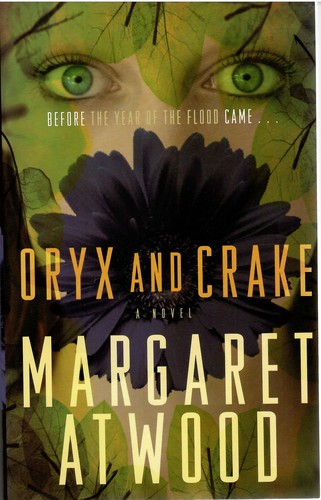
Snowman — formerly Jimmy — may be the last human being alive.
Margaret Atwood · 2003 · 7h 0m
Full summary and key takeaways →The 12 questions
- 1.
Crake argues that Homo sapiens are a failed species and his solution is the only rational response. Can you construct the strongest version of his case? Where does it break down?
- 2.
Oryx is never fully known — to Jimmy, to Crake, or to the reader. Is that opacity a limitation of the novel, or is it the point Atwood is making about how men perceive women?
- 3.
The Compound/Pleebland divide maps onto contemporary debates about gated communities, tech company campuses, and private school systems. How far does the analogy hold?
- 4.
Jimmy is not gifted in the way Crake is, and both of them know it. How does that power imbalance shape their friendship, and does the novel suggest Jimmy was used by Crake from the beginning?
- 5.
The Crakers were engineered to lack many human traits: violence, hierarchy, sexual jealousy, religious instinct. Which of these do you think Atwood views as most fundamental to what we are?
- 6.
Snowman lies to the Crakers about the nature of Crake and Oryx, essentially founding a religion. Is this presented as necessary, manipulative, tender, or all three?
- 7.
The novel is set in the near future but drawn from present conditions. Which element of Atwood's speculation felt most prescient or most already-here when you were reading?
- 8.
Compared to The Handmaid's Tale, Oryx and Crake takes on corporate capitalism rather than religious patriarchy. Which dystopia does Atwood seem more personally invested in?
- 9.
Jimmy's mother's decision to defect from the Compound is presented sympathetically but also has devastating consequences. How does the novel evaluate her?
- 10.
The ending leaves Snowman facing three Crakers and what may be another human survivor. Does the novel give you enough to speculate on what he will do, and what do you think that says?
- 11.
The Crakers have built-in peacekeeping mechanisms — purring that resolves conflict, for instance. Is this presented as utopian, horrifying, or something the novel refuses to adjudicate?
- 12.
The novel's title points to two people who shape the story but both die before its present tense. What does Atwood achieve by centering the book on someone defined by absence and grief?
How to run the discussion
- Pick six to eight, not all of them. An hour of real discussion covers fewer questions than anyone expects, and racing the list is what makes a book club feel like homework.
- Open with what people noticed, not what they concluded. Asking for a verdict first hardens opinions before anyone has heard each other.
- Let the disagreement run. The questions below that split a room are the ones worth the time; the ones everyone answers the same way can be skipped.
- Ask the quiet person a specific question. A direct, narrow question is far easier to answer than an open invitation to contribute.
Themes worth steering toward
If the conversation stalls, these are the threads that usually restart it.
Common questions
What are good book club questions for Oryx and Crake?
Here are 12 book club questions for Oryx and Crake by Margaret Atwood, ordered to open easily and end somewhere worth arguing about. The strongest openers ask what each reader noticed rather than what they concluded, and the discussion usually turns on biotechnology and ethics, class and segregation, love and obsession.
How long should a book club discussion of Oryx and Crake last?
Most groups run 60 to 90 minutes of actual discussion. That is roughly six to eight questions, not all of them, so pick the ones that suit your group rather than working down the list in order.
What are the main themes in Oryx and Crake?
Biotechnology and ethics, Class and segregation, Love and obsession, Environmental collapse, Corporate power. Those are the threads most likely to divide a room, which makes them the useful places to steer a discussion that has gone quiet.
Picking the next one? See books like Oryx and Crake or questions for other book club picks.
