Science · Book club
Other Minds: The Octopus, the Sea, and the Deep Origins of Consciousness book club questions
Here are 12 book club questions for Other Minds: The Octopus, the Sea, and the Deep Origins of Consciousness by Peter Godfrey-Smith, ordered to open easily and end somewhere worth arguing about. Copy them, print them, or bring them up one at a time.
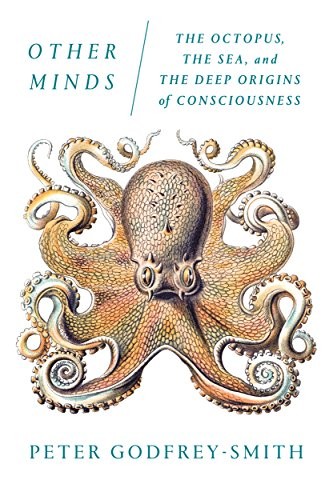
Peter Godfrey-Smith is a philosopher of science and a scuba diver who began spending time with octopuses off the coast of Sydney, and Other Minds is the result of that dual perspective.
Peter Godfrey-Smith · 2016 · 5h 0m
Full summary and key takeaways →The 12 questions
- 1.
Godfrey-Smith argues that the octopus is an 'independent experiment in mind.' What would it mean for consciousness research if all the species with complex inner lives turned out to be closely related to us?
- 2.
Octopuses have most of their neurons in their arms. How does that challenge the assumption that mind and body are clearly separate, with the brain in charge?
- 3.
The book suggests that subjective experience may have evolved because it was useful — that experiencing the world is better than just processing it. Do you find that argument convincing?
- 4.
Godfrey-Smith is both a philosopher and a diver who spent time with specific octopuses. How does the personal observation change the book's argument compared to a purely theoretical account?
- 5.
If an octopus is conscious in some meaningful sense, what does that require of how we treat it — in the wild, in aquariums, in cooking?
- 6.
The Cambrian explosion produced most of the major animal body plans in a relatively short period. What does that suggest about whether complex animal life was likely or improbable on Earth?
- 7.
Godfrey-Smith is careful not to over-claim consciousness for cephalopods. At what point do you think the evidence would be strong enough to say with confidence that a non-human animal has inner experience?
- 8.
Octopuses don't live long enough to transmit learned behavior across generations. What does the absence of culture suggest about what culture requires?
- 9.
The book distinguishes between different components of consciousness — sensation, memory, self-modeling. Is there a single one of those you'd point to as the most essential? Why?
- 10.
How does reading about an animal as alien as an octopus change how you think about the inner lives of animals you're more familiar with — dogs, fish, birds?
- 11.
The final chapters are partly memoir. Does mixing personal observation with scientific argument strengthen or weaken the book's case for you?
- 12.
If consciousness evolved independently in cephalopods and vertebrates, does that make it more or less likely that consciousness exists elsewhere in the universe?
How to run the discussion
- Pick six to eight, not all of them. An hour of real discussion covers fewer questions than anyone expects, and racing the list is what makes a book club feel like homework.
- Open with what people noticed, not what they concluded. Asking for a verdict first hardens opinions before anyone has heard each other.
- Let the disagreement run. The questions below that split a room are the ones worth the time; the ones everyone answers the same way can be skipped.
- Ask the quiet person a specific question. A direct, narrow question is far easier to answer than an open invitation to contribute.
Themes worth steering toward
If the conversation stalls, these are the threads that usually restart it.
Common questions
What are good book club questions for Other Minds: The Octopus, the Sea, and the Deep Origins of Consciousness?
Here are 12 book club questions for Other Minds: The Octopus, the Sea, and the Deep Origins of Consciousness by Peter Godfrey-Smith, ordered to open easily and end somewhere worth arguing about. The strongest openers ask what each reader noticed rather than what they concluded, and the discussion usually turns on consciousness, evolution, animal cognition.
How long should a book club discussion of Other Minds: The Octopus, the Sea, and the Deep Origins of Consciousness last?
Most groups run 60 to 90 minutes of actual discussion. That is roughly six to eight questions, not all of them, so pick the ones that suit your group rather than working down the list in order.
What are the main themes in Other Minds: The Octopus, the Sea, and the Deep Origins of Consciousness?
Consciousness, Evolution, Animal cognition, Marine biology, Philosophy of mind. Those are the threads most likely to divide a room, which makes them the useful places to steer a discussion that has gone quiet.
Picking the next one? See books like Other Minds: The Octopus, the Sea, and the Deep Origins of Consciousness or questions for other book club picks.
