Historical fiction · Book club
Pachinko book club questions
Here are 12 book club questions for Pachinko by Min Jin Lee, ordered to open easily and end somewhere worth arguing about. Copy them, print them, or bring them up one at a time.
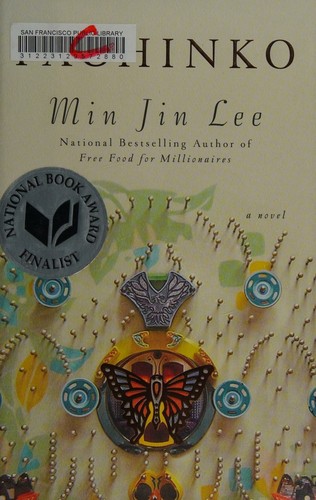
Pachinko follows four generations of a Korean family from a small fishing village in early twentieth-century Korea to Osaka and Yokohama in postwar Japan.
Min Jin Lee · 2017 · 11h 45m
Full summary and key takeaways →The 12 questions
- 1.
Sunja's original sin — becoming pregnant by Hansu — shadows the whole novel. Does the novel judge her? Does it ask us to?
- 2.
Noa discovers his parentage and walks away from his family entirely. Is that defensible? How does the novel want us to read that choice?
- 3.
Hansu is one of the most morally complex characters — a man who helps the family while never fully entering it. Is he a villain, a benefactor, or something the novel refuses to resolve?
- 4.
The novel spans 80 years across four generations. What is gained and what is lost by that scale compared to a novel that stays close to one character?
- 5.
Pachinko is largely unknown outside Korea and Japan. Does reading this novel feel like receiving a history, or like being given a story that stands apart from its historical context?
- 6.
Solomon tries hardest to integrate into mainstream Japanese society and fails most visibly. What does the novel say about assimilation as a strategy?
- 7.
The women in the novel — Sunja, Kyunghee, Etsuko — carry much of the moral weight. How does Lee handle gender alongside ethnicity in the novel's treatment of oppression?
- 8.
The title is both literal (the pachinko industry) and figurative (the random, chaotic nature of the balls). Does that metaphor earn its place, or is it too neat?
- 9.
Lee spent thirty years researching and writing this novel. Does the weight of that research show in the reading, and is that a strength or a burden?
- 10.
Compare the generational structure of Pachinko with another multigenerational novel you've read. What does spanning generations allow that a single-life narrative can't?
- 11.
The discrimination the Zainichi Koreans face is persistent, legal, and mundane — not the dramatic violence of some historical fiction. Does that ordinariness make the novel more or less affecting?
- 12.
The novel ends in 1989 but the situation it describes persists into the present. Does knowing that change how the ending lands?
How to run the discussion
- Pick six to eight, not all of them. An hour of real discussion covers fewer questions than anyone expects, and racing the list is what makes a book club feel like homework.
- Open with what people noticed, not what they concluded. Asking for a verdict first hardens opinions before anyone has heard each other.
- Let the disagreement run. The questions below that split a room are the ones worth the time; the ones everyone answers the same way can be skipped.
- Ask the quiet person a specific question. A direct, narrow question is far easier to answer than an open invitation to contribute.
Themes worth steering toward
If the conversation stalls, these are the threads that usually restart it.
Common questions
What are good book club questions for Pachinko?
Here are 12 book club questions for Pachinko by Min Jin Lee, ordered to open easily and end somewhere worth arguing about. The strongest openers ask what each reader noticed rather than what they concluded, and the discussion usually turns on generational trauma, identity and belonging, discrimination and perseverance.
How long should a book club discussion of Pachinko last?
Most groups run 60 to 90 minutes of actual discussion. That is roughly six to eight questions, not all of them, so pick the ones that suit your group rather than working down the list in order.
What are the main themes in Pachinko?
Generational trauma, Identity and belonging, Discrimination and perseverance, Family and sacrifice, Shame and dignity. Those are the threads most likely to divide a room, which makes them the useful places to steer a discussion that has gone quiet.
Picking the next one? See books like Pachinko or questions for other book club picks.
